By Kanav Narayan Sahgal
Lack of queer-affirming training, fewer queer counsellors, and unequal legal rights keep LGBTQ+ communities from seeking crucial mental health care.
On a humid day in May 2011, Peter* finally made a decision.
He couldn’t bear being gloomy and uninterested in everything he did, so he strode into a government hospital in South Bombay hoping to see a doctor who could help him with what he had self-diagnosed as depression. But what he saw made him even more uneasy and disoriented. “People were pushing around, rushing in every direction,” he said, describing the waiting room as noisy, crowded, and tense.
While that is the expected scene in any government hospital across the country, for people who have been constantly shamed, it feels like all eyes are on them. “I felt like everyone was desperate [for something], just like me,” he said, admitting the chaos was a lot to take in.
Back then, Peter was a 37-year-old gay man who was hurting as he had just been turned down in a romantic relationship. “I couldn’t handle that rejection,” he said, “and the sadness that followed.”
Peter, who works in the handloom textile industry, was randomly referred to some junior doctors, he recalled. They flipped over his notes, asking him the reason for his visit. “How do you know you are gay?,” one of them asked him curiously. Unwilling to answer that question, Peter skirted around it, barely aware that he was angry at the doctors, at the medical system, and at the society.
After a few minutes, the doctors handed him some pills, without telling him what they were. “I was nervous to take them,” he said, “I didn’t want to get hooked on something.”
Much later, he learnt that they were anti-depressants. He couldn’t help but wonder if the doctors had accepted his self-diagnosis, made under stress and extreme sadness, without any further inquiries.
After a few weeks, the doctors admitted defeat. They told him they weren’t sure how best to support him and directed him to Humsafar Trust, a Mumbai-based non-profit that works for the rights of the LGBTQ+ community. “Therapy is a lot of hard work,” he said, even as he continued seeking professionals after his initial scary experience.
For those belonging to minority communities, this work might be harder.
Minority stress vs ‘general’ stress
In 2003, Ilan H Meyer, an American psychiatric epidemiologist, floated a theory to better understand the social, psychological, and structural factors contributing to mental health inequalities facing sexual minority populations.
He propounded that ‘minority’ stress is distinguished from ‘general’ stress—stress that all people may experience—by its origin in prejudice and stigma. “Thus, a stressor, such as losing one’s job, could be a general stressor or a minority stressor depending on whether it was motivated by prejudice against sexual and gender minority people as opposed to, for example, economic downturns that impact all people regardless of sexual and gender identity.”
As a result of heightened anxieties around feared rejection by family and friends, bullying, physical assault, and religious biases, queer communities can benefit from access to specially trained mental health care professionals. “People bring a lot of baggage to therapy, and a lot more handholding and support is needed,” said Pia Sahni, managing director, AdagioVR, a company providing mental health solutions through immersive virtual reality.
She added that many of her queer clients face a litany of health challenges—including insomnia, eating disorders, loneliness, suicidal ideation, depression, and so on—that makes it tougher for them to navigate life than it does for cis-heterosexual individuals with similar challenges.
“One has a lot of baggage,” said Peter, “[like] childhood sexual abuse or parents’ divorce.”
Unpacking those with people who do not understand queerness is scary for Peter. “I don’t know if I have the mental strength to go through all this myself,” he said.
Peter’s experience is a testament to a lack of understanding of queer communities.
Asking gay patients how they knew they were gay is a line that well-trained mental health practitioners do not cross.
Peter is an exception merely because he sought mental health care. “Although they [individuals belonging to LGBTQ+ communities] require medical and psychological treatment, they are afraid to ask for help and access mental health services,” according to a 2023 paper published in the journal Frontiers in Psychology.
The study found queer individuals in India were more likely to turn to self-medication or informal networks because medical spaces felt unsafe.
Smaller towns, bigger worries
Mridul*, 21, is a gay man from Kapurthala, a town 165-kilometres northwest of Chandigarh, Punjab’s capital city. He dreams of becoming a psychologist but sees severe gaps in his curriculum. In his five years of studying psychology at undergraduate and postgraduate levels, he said, references to queer mental health surfaced only in passing, usually clubbed under what were called ‘special populations’.
In the UGC-approved syllabi, he said, there are no specific courses or curricula that focus on the queer community. This creates a glaring gap between Mridul’s lived experiences and his curriculum.
In addition, few gay people are counsellors themselves. Mridul is a welcome exception.
29-year-old Tanisha Goveas studied psychology at undergraduate level in a Mumbai college. “The only time queer issues came up was in evolutionary psychology, but even then, it was discussed from a purely biological angle,” she said.
She has since been an independent practising psychologist who substituted her studies with short-term courses like the Queer Affirmative Counselling Practice on queer mental health to make up for what was missing in her university studies. “Today, a large part of my clientele is queer,” she said.
Although the QACP course and Resource Book are now into their 6th year and nearly 1000 mental health practitioners have been trained in India and abroad, a lot requires to be done.
One challenge Goveas has faced as a practitioner is to help queer individuals navigate accepting their sexuality and coming out. For instance, she often hears clients declare that they can only come out once their parents are dead. To steer through emotions as heavy as that can be challenging for anyone, she said, especially when what they are saying is only practical and true.
For one of her transgender clients, the decision to medically transition became possible only after a parent passed away. Holding space for a person like that through a long period of time requires patience and specialised training, she said.
Law adds barriers
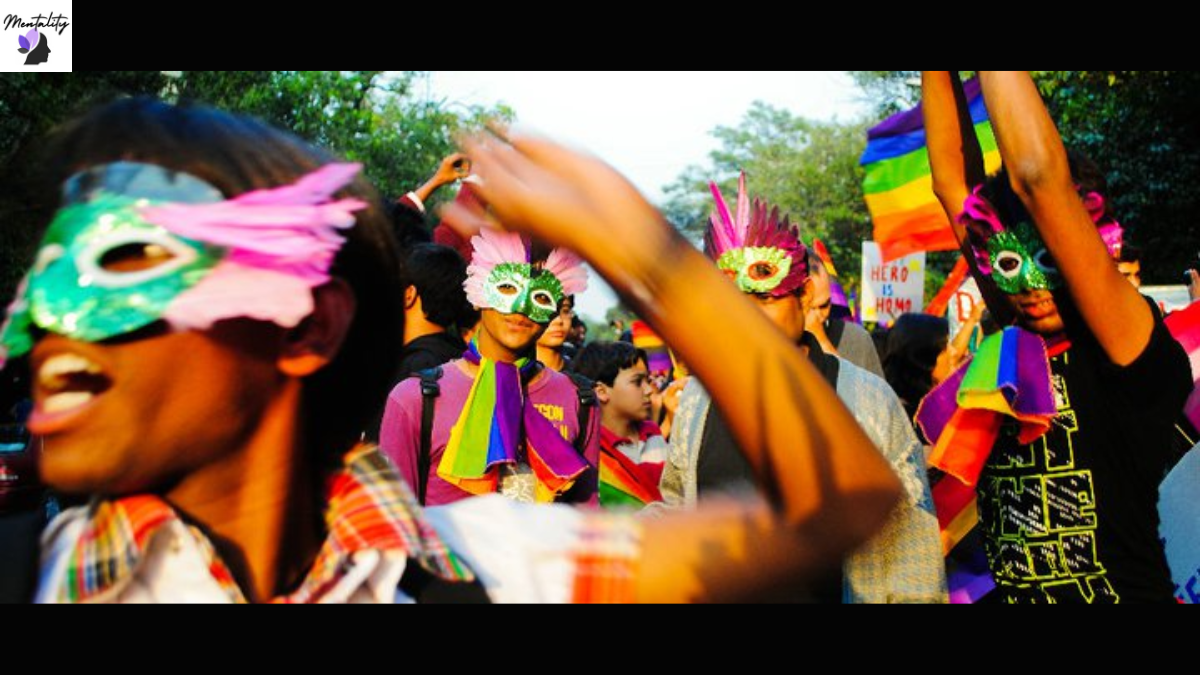
Even as the number of pride parades have grown and queer representation in pop culture has increased, the law in India has proven to be slow to catch up. When your identity has no clear legal sanction, there are layers of stressors that are hard to make sense of.
Indian courts have swung like a pendulum on queer issues over the past decade or so. In 2009, after the Delhi High Court decriminalised homosexuality, members of the LGBTQ+ communities began to feel like they could breathe in fresh air.
Merely four years later, the Supreme Court overturned that decision by claiming that it was up to the Parliament to legislate on the matter, and not for the judiciary to adjudicate.
Recalling those days, Goveas said that many of her clients in long-term relationships were devastated. “I had done expectation management sessions beforehand,” she said, “but it still hit people hard.”
However, in 2018, the Supreme Court finally decriminalised consensual same-sex relationships between adults. In October 2023, though, it ruled that there is no fundamental right to marry and therefore declined to recognise same-sex marriages.
Some couples even broke up due to severe stress over a sustained period, Goveas said.
Ashna, a 20-year-old Kolkata-based student, tried therapy multiple times. “I felt it was harder for me as a queer person than for someone who isn’t queer to seek care,” she said, especially when the law dilly-dallied. She agonised over the lack of clarity in the Indian legal system, which doesn’t grant queer individuals equal rights in every aspect.
For queer clients, said Goveas, equal legal rights would give them confidence to face family expectations, workplace microaggressions, and the constant question of physical safety.

Author: Kanav Narayan Sahgal
Kanav is the Programme and Communications Manager at Nyaaya, the Access to Justice vertical of the Vidhi Centre for Legal Policy, India. He is based out of Kolkata.