
By Preeti Swaminathan
As cities grow vertically, more and more children are growing up with fewer spaces to play outdoors. Lack of group play severely impacts their social skills, increasing their screen time.
As the sun was about to set, Rishi Deshmukh, 7, leaned against his living room window on the 12th floor of a high rise in Thane, a gentrified neighbourhood in the Mumbai Metropolitan Region. Forlorn, he watched a small play area on the ground floor, as a football rolled around near his feet. The security guard forbids children from playing ball games in the play area, he said. “So, I stay upstairs.”
His mother, Meera Deshmukh, worried Rishi might be becoming an indoor child. “He wants to run until he is exhausted,” she said, but there are no places around where he can do that.
In crowded cities like Mumbai, high‑rise buildings with few accessible parks, playgrounds or open lawns, restrict children’s opportunities for outdoor play. “Physical space is closely linked to mental wellbeing,” said Mumbai-based paediatrician, Dr Samir Dalwai. “Without playgrounds, parks and safe pedestrian paths, we see isolation, anxiety and reduced cognitive and emotional growth.”
A 2024 study published in the Journal of Environmental Psychology on high‑rise buildings in Pune found that current provision of play spaces is often poorly planned and under‑utilised, failing to meet children’s actual play needs. “If we design cities assuming children will stay indoors,” said Mumbai-based urban designer, Jasmine Saluja, “that is exactly what will happen.”
“Play is not recreational excess, it is neurological nourishment,” said Dr Dalwai and urged a different way to think about designing our cities.
Neurourbanism is an approach to transforming cities into intentionally mentally healthy living environments. Saluja is a proponent of it. “High‑rise living often prioritises density and developer profits over meaningful public and community space,” she said.
Given how much land costs in big cities, builders barely leave the mandated setback space or the area surrounding a building that needs to be left unaltered in order to assure the fire safety of the structure. This space is often utilised for mandatory car parking, and the residual space is scattered landscape parcels. Therefore, there is no question of a mandated play area. “You get podiums and ornamental lawns that look attractive on brochures but are unusable for real play,” said Saluja.
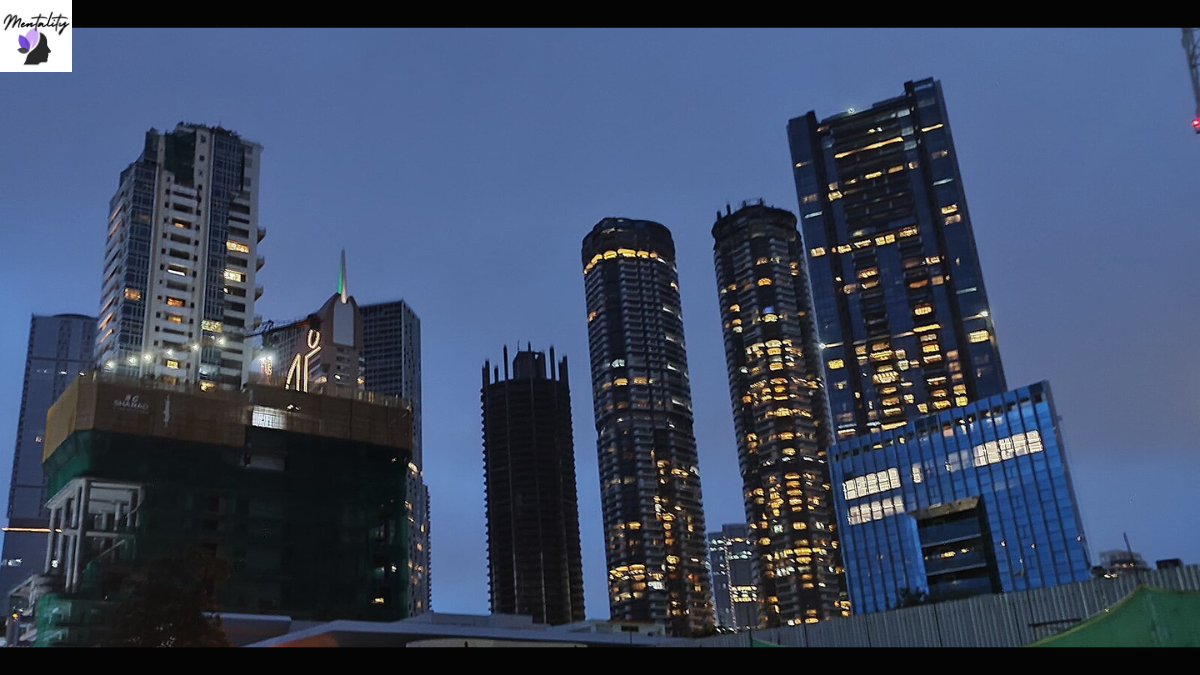
Few play areas inside housing complexes
In more expensive housing complexes or older buildings with a little more space, there might be play areas for children, but there is a loss of community living. Many parents constantly find the need to watch over their kids as they play.
Anjali Rao, who lives in Nerul, Navi Mumbai, is a mother of an 11‑year‑old boy. She said she is worried about her son’s safety from strangers and oncoming traffic. “Even if we want them to play outdoors, the risks feel too real,” she said.
This anxiety is compounded by increasing social isolation in urban life. Neighbours no longer interact or share the kind of trust they once did, Rao added.
A lack of community or group play negatively impacts development of social skills and in managing social dynamics, said Gurugram-based Dr Pramit Rastogi, a child and adolescent psychiatrist. “As a result, many kids struggle to interact with peers in real‑world settings. Some even feel anxious outdoors because they have no ‘practice’,” he said. “They eventually adapt, but with compromised emotional regulation, social confidence and problem‑solving skills.”
Anjali Rao’s 11-year-old son has become increasingly hesitant in social settings. “He is comfortable talking to people he knows, but, in unfamiliar spaces, he becomes quiet and withdrawn,” said Rao. “If plans change suddenly or if he is asked to go somewhere unfamiliar, he gets anxious and irritable,” she added.
While his symptoms have not required medical intervention, Rao said the family has adapted to the changes consciously. They limit screen time, encourage board games and indoor physical activity, and visit parks during quieter hours on weekends. “We are managing, but it feels like constant course correction. Children are adapting, but not always in ways that feel healthy,” she said. The family continues to live in a high-rise building.

Other play areas in cities
If there is no space inside the building complexes, public parks and open spaces are the next best option. However, cities are rapidly gobbling up those spaces too. In April 2025, residents of Chennai raised concerns about vanishing playgrounds thanks to rapid infrastructure development.
“When we were kids, we played everywhere: streets, parks, empty plots,” says Amit Saraf, father to sixth‑grader Anmol in Malad. A 2025 study found Anmol’s neighbourhood of Malad and Andheri West, another neighbourhood, had barely 30 percent of designated public open spaces accessible and usable for recreation and play. “There is hardly any open space nearby, so they [kids] end up playing games that don’t let them release physical energy,” he said. Saraf lives on the fourth floor of a six-floor building.
Large tracts listed as public spaces in Malad remain either encroached upon or underdeveloped, according to the study by Mumbai’s Urban Design Research Institute and NAGAR, a not-for-profit. “When children grow up with limited access to outdoor play, we see restlessness, irritability, difficulty coping with boredom, and dependence on gadgets,” said Dr Rastogi.
Screen time increase
One unintended consequence of lack of play areas in cities is screens becoming surrogate playgrounds. Many children prefer online games not just for convenience, but because virtual play removes obstacles such as distance, traffic, and safety fears. Aadya Sharma, 9, who lives in Vashi, Navi Mumbai, said online games are easier. “We can all meet online.”
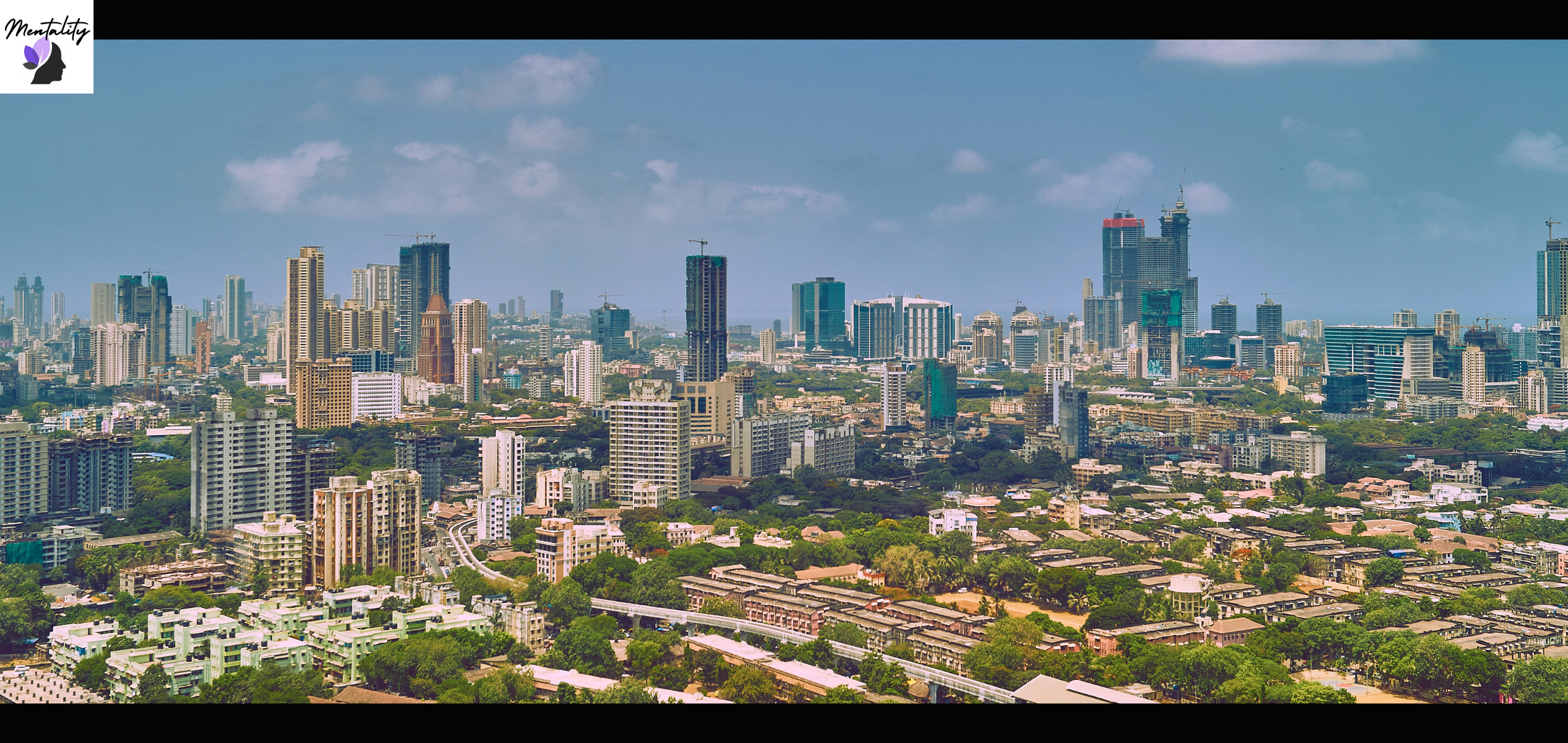
A 2024 study published in the International Journal of Contemporary Pediatrics examining urban preschool children found that those with higher daily screen exposure showed significantly more behavioural problems such as withdrawal, somatic complaints, aggression, and rule-breaking behaviours, reduced attention spans, and lower parent‑reported emotional regulation compared with peers who had more outdoor playtime.
Remya Ramdas, a homemaker and mother of a 9-year-old and a 3-year-old from Thane, lives on the fifth floor of a high-rise building. Her children are becoming less socially interactive, she said. “Kids prefer to stay inside their rooms with a mobile phone, disconnected from real relationships and conversations,” she added.

Author: Preeti Swaminathan
Preeti Swaminathan is a Mumbai-based journalist, writer, and editor who has worked in publishing, communications, and has published work in The Times of India, The Economic Times, Health & Nutrition, and other publications.