
Representative image for a television studio (Image Credit: Shahbaz Zaman/Pexels)
By Rejimon Kuttappan
I would come home from a studio at eleven in the night and ride my bike slowly, because my hands were still shaking and I did not want my family to see that. After reaching home, I would scroll through the abuse on my phone and feel my chest tighten. This was the slow work of being ground down by people who did not want to win the argument;instead, they wanted to make sure the argument cost me something every time.
This story begins in early 2020 when COVID-19 locked the world down and left thousands of Keralite migrant workers stranded across the Gulf region. Many were in labour camps with no air conditioning, in hospital corridors with no interpreters, or in airport queues that moved nowhere.
By then, I had spent over a decade reporting from the region, first as the Chief Reporter at the Times of Oman, later as a freelancer for Al Jazeera, The Hindu, and Middle East Eye.
Kerala was terrified. Families wanted to know if loved ones were alive. The state government was projecting calm, but I was seeing otherwise. I became one of the few voices on Indian television who could speak from the field, without being solely reliant on press releases and official briefings for information.
I reported on what I saw from rooms I had walked into, tea I had drunk, about the men I knew, and so on.
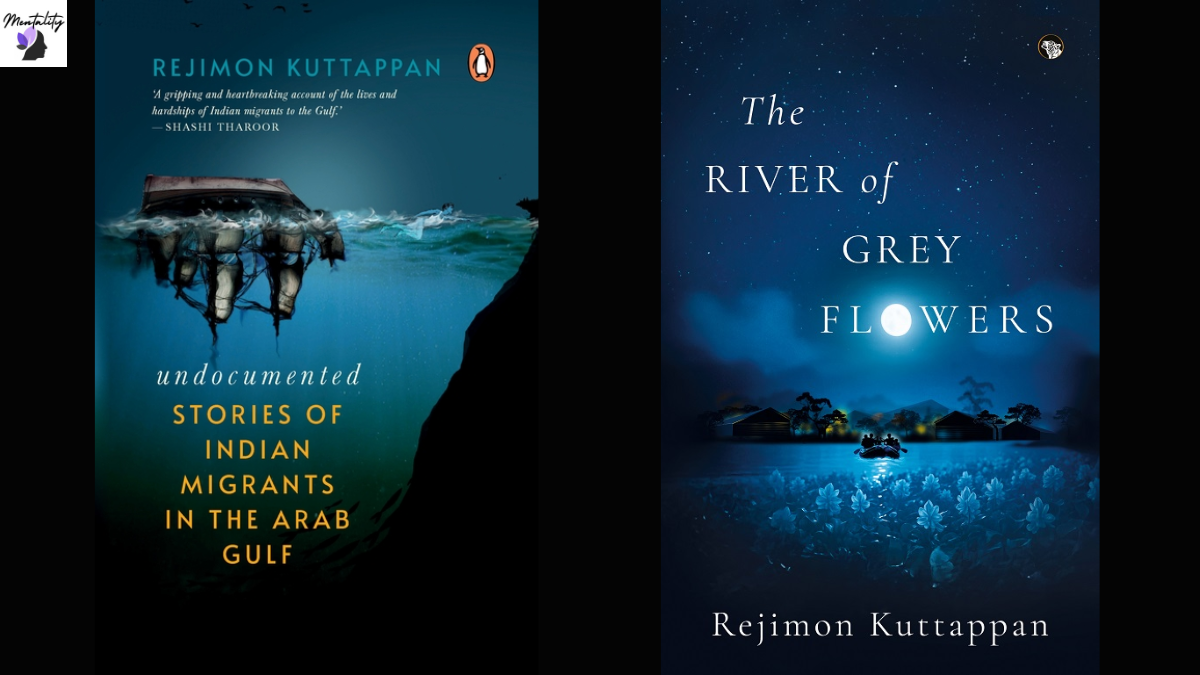
My book, Undocumented, published by Penguin in 2021, had examined the systemic exploitation of Indian migrant workers in the Gulf. My work with Human Rights Watch, the International Labour Organisation, the International Trade Union Confederation, and the Corporate Accountability Lab, had firmly established me as a credible voice on the issue.
That year, on many evenings, I appeared on multiple channels, rushing from one studio to the next, speaking often on the same topic, because each channel wanted someone willing to contradict the official line with evidence. I carried printouts in a folder that grew heavier by the week. I quoted International Labour Organisation reports. I read WhatsApp messages from workers in Muscat and Doha and Riyadh, messages that said the opposite of what the government was saying. Viewers noticed. The channels confirmed it in their ratings: my segments drove engagement, because I brought what political panellists could not.
I brought names. I brought dates. I brought the inconvenience of specifics.
The cost of being vocal
I paid a heavy cost for being so vocal.
First, government supporters began trolling me online. Other trolls came in coordinated waves, calling me anti-national, questioning my credentials, and suggesting I was on some foreign payroll for the crime of citing ILO data.
Soon, it moved offline: a threat delivered indirectly through a mutual contact and pressure on editors I worked with, quiet calls, the kind that don’t show up in any paper trail. There were whisper campaigns in the press clubs I had spent years in as a colleague. None of it was designed to refute what I was saying. All of it was designed to exhaust me into stopping.
While I did not stop, something inside me began to change in ways I could not name at first. I would come home from a studio at eleven at night, riding my bike slowly, because my hands were still shaking and I did not want my family to see. After reaching home, I would scroll through the abuse on my phone and feel my chest tighten in a way I had never felt in a decade of Gulf reporting, where the dangers were physical and, therefore, legible.
This was different.
This was the slow work of being ground down by people who did not want to win the argument, they wanted to make sure the argument cost me something every time.
Since I had also published stories on other issues like the experiences of fishermen from the Kerala floods, my fears as a Dalit father, and farm distress, I was called on news channels to talk about issues other than migrant rights alone.
TV debates as performances
The call usually comes around noon. A producer’s voice, or sometimes the star anchor himself, bright with the practised warmth asks: Can you come on the eight o’clock debate?
I listen. I ask who else is on the panel. And these days, more often than not, I painfully say no.
Here is the thing about television debates in Kerala, and I say this with sadness rather than contempt: they are not really debates. Some might say that about many other news channels across the country.
They are performances dressed as debates.
A political leader from the ruling party arrives with talking points, not facts. A spokesperson from the opposition shouts over everyone to manufacture the clip that will go viral by morning. The anchor, trapped between TRP pressure and whatever editorial instinct survives in them, lets the cacophony run because noise looks like passion on the screen. And I would sit there, a freelance journalist with no party backing, no PR team, no salary from a media house, having spent the whole afternoon preparing my three or four points, only to watch the hour dissolve into a shouting match in which nobody heard anyone.
Journalism— a calling
Journalism has given me everything: a livelihood, a vocation, a way to be useful to people whose suffering would otherwise go unrecorded. I had walked through construction sites in Doha where men had not been paid for nine months. I had sat with mothers in Tamil Nadu whose sons had last called from a scam compound in Cambodia. I had built whatever I had, slowly, by taking the work seriously. And here was this medium, television, with a reach no print piece could match, treating that seriousness as optional, as a garnish or as the thing you added between the shouting if there was time.
I never wanted to go on air without doing my homework. That rule was not a virtue. It was the only capital I had. And it was expensive. As a freelancer supporting a family, every afternoon spent preparing for a debate was an afternoon not spent on paid work, the investigative reports, the field research for organisations like the US Department of Labor and Kelley Drye, or the book manuscripts that actually paid the bills. The preparation was non-negotiable because it was the source of whatever credibility I carried. But the return on that preparation was being eroded, hour by hour, by co-panellists who arrived with nothing but volume.
Every time I say yes to a debate, I am betting my credibility on that hour. If the format does not let me deliver what I have prepared, if the co-panellists turn the discussion into a circus, I have spent that credibility for nothing. And I do not have so much of it that I can afford to spend it carelessly.
Every no I said felt like a small betrayal of the audience who had trusted me. Every no carried a flicker of fear: What if the channel stops calling? What if someone else takes my slot and does it well enough that they forget me?
These are the anxieties of a freelancer without institutional scaffolding, and I will not pretend I have transcended them. I have not. I have only learned to sit with them.
It has been six years now since those first frantic evenings of 2020. I have published five books. I have investigated forced labour in India’s shrimp, steel, and sandstone industries. I have helped rescue undocumented Indians in the Arab gulf, which became the book Undocumented, and save youngsters trafficked to scam compounds in Myanmar, Cambodia, and Laos, work that became the spine of my debut novel, The River of Grey Flowers, published by Speaking Tiger in 2026. I have been selected for the United Nations International Migration Review Forum in New York. The work has grown deeper, wider, and more consequential than any television hour could contain.
The viewers who write to me, who stop me at airports and railway stations, or who message me after a sharp exchange on screen, they do not know how many debates I turned down that week. They only see the ones where I showed up, armed with numbers and names and the quiet stubbornness of someone who has walked through the labour camps they are arguing about. That is the version of me I want them to see. Not because it is a performance, but because it is the only version that feels honest when I look at myself in the mirror after the studio lights go down.
I am the panellist who says no. It has taken me a long time to stop apologising for it, to producers, to viewers, and most of all to myself. The stress of saying no is real. But it is the stress of someone who still owns his voice. And that, in the end, is the only thing I have built that I am unwilling to hand over.

Author: Rejimon Kuttappan
Rejimon Kuttappan is an independent journalist, forced labour consultant, and author of River of Grey Flowers (Speaking Tiger, 2026.)