
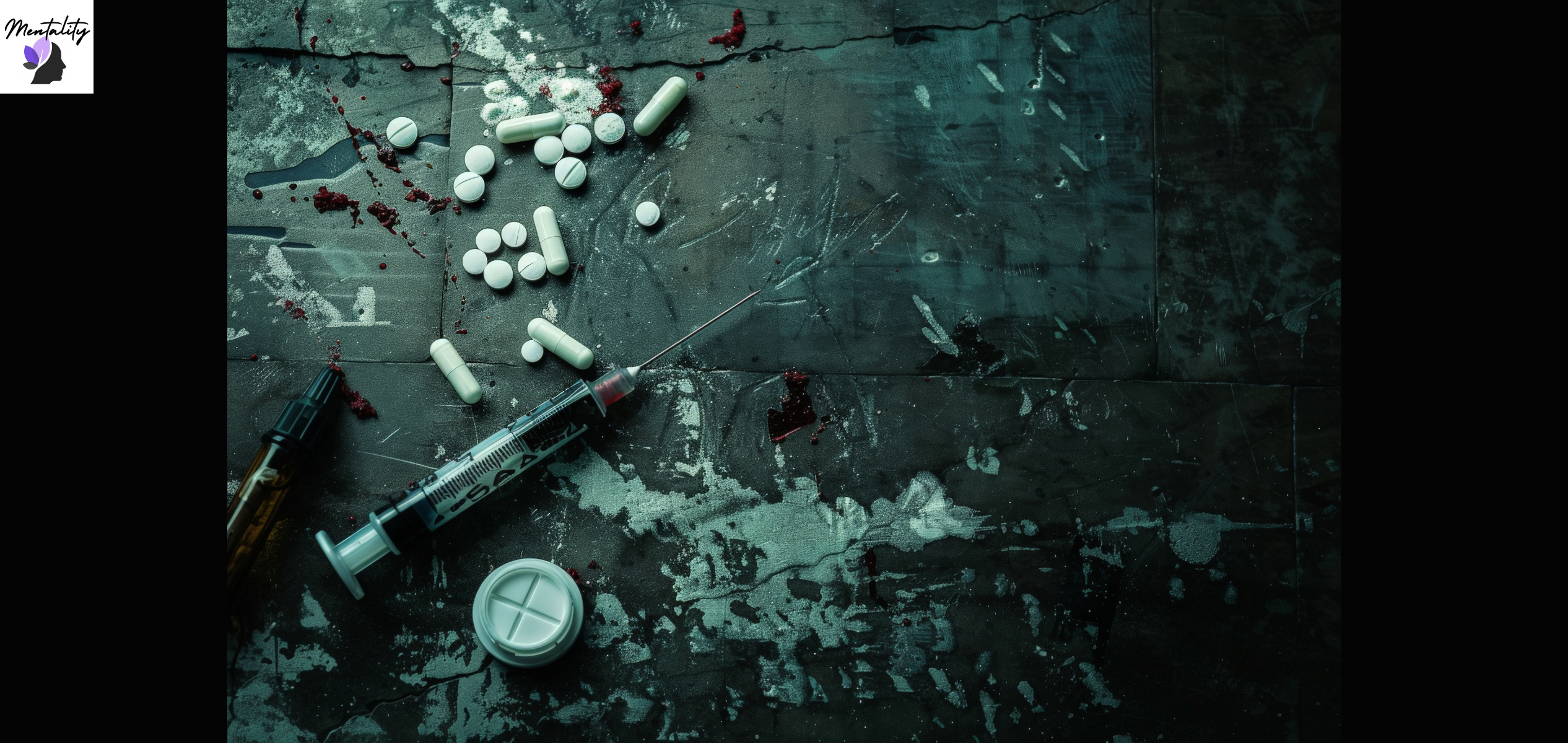
A representative image show drug abuse (Image Credit: Magnific)
By Surinder Kumar
Despite efforts by the administration, one in three youth in Himachal Pradesh consume synthetic like chitta, which has driven neighbouring Punjab’s youth to the edge.
Shanti, the mother of a 24-year-old man who has been abusing heroin, sits amidst photographs of her son during his school years. In several of them, he is smiling as he is receiving awards and distinctions for being good at studies.
She lives with her son and her husband in Rampur, a town 130 kilometres from Shimla, the capital of Himachal Pradesh. “In the past four-five years (since her son began abusing heroin), my house feels almost haunted,” she said.
Her son’s room has shelves covered in dust, filled with schoolbooks and old photographs. Situated on a picturesque mountain, overlooking green valleys, this would have been nostalgic but for the burn marks on some shelves. “My son is a smart person who has merely made bad choices,” she said.
Her son, who requested anonymity, has been dependent on chitta or synthetic heroin for the past three to four years. He was in a rehabilitation centre on two separate occasions last year. She said her son set fire to some of the shelves during periods of intense drug craving.
Chitta is dangerous as there is a high possibility of death from overdose as victims tend to inject it, said Dr Suman Lata, Assistant Professor, Department of Psychiatry, Indira Gandhi Medical College & Hospital (IGMC) Shimla
She added that environmental cues–such as specific places, people, or paraphernalia like needles, bottles, white powder, or even cigarette packs–become deeply conditioned triggers, capable of provoking strong cravings long after use of chitta has stopped.
Himachali youth and chitta
According to the 2011 census, which has the latest available figures, every third person in Himachal Pradesh is between the ages of 15 and 34 years. Latest government reports from 2025 show that 27% of that population abuse drugs, and 35% of these users consume synthetic drugs like chitta and cannabis derivatives.
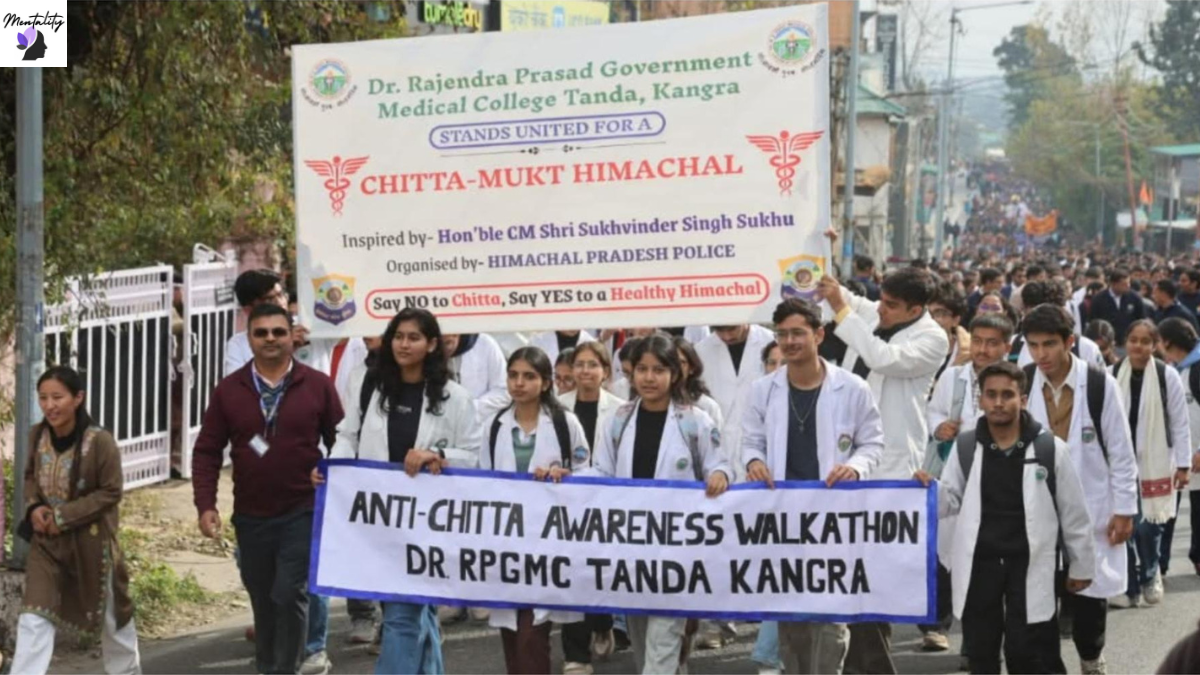
In the past, ganja or cannabis used to be the most widely abused substance in the state. Today, chitta has become synonymous with all addictive substances in Himachal, so much so that the International Day Against Drug Abuse and Illicit Trafficking on 26 June, was observed across Himachal Pradesh as ‘Anti-Chitta Day’.
Dr Lata said opioids, specifically chitta, create physical dependence, forcing users to consume progressively higher doses to achieve the same effect. “Withdrawal is extremely severe, marked by intense body pain, diarrhea, rapid heart rate, and acute psychological distress, which often compels continued use,” she added. Unsafe injection practices significantly increase the risk of HIV and hepatitis transmission.
Rising income levels and the state’s proximity to Punjab, Jammu & Kashmir, and Chandigarh have created multiple routes to smuggle substances like chitta, said a police officer in Shimla on the condition of anonymity.
In 2015, a 27-year-old man moved from Shimla to Jalandhar to pursue his graduate studies, B.Tech in Computer Science. Although he had had a great academic record, the college expelled him due to his dependence on chitta within a year. “He was overwhelmed with guilt, shame, and fear,” his brother said.
His father, who was a school teacher in Shimla, still finds it hard to grapple with the family’s lost reputation.
Many like him – who migrate for work and studies – make their way back home with substance dependence issues.
Fighting drug abuse
The drug smuggling economy in Himachal Pradesh has increasingly evolved into a source of income for many despite stringent laws, said Sanjay Chauhan, Ex-Mayor of Shimla.
In March 2025, the Himachal Pradesh Legislative Assembly introduced the Himachal Pradesh Drugs and Controlled Substances (Prevention, De-Addiction and Rehabilitation) Bill and the Himachal Pradesh Organised Crimes (Prevention and Control) Bill. They are yet to be enacted.
Although drug-dependent patients who voluntarily seek de-addiction treatment are granted conditional immunity from prosecution under Section 64A of the Narcotic Drugs and Psychotropic Substances Act, some experts say that Himachal Pradesh has not been great at implementing it. This has made reporting of such cases hard in the state.
But fighting drug corridors is not as easy in a mountainous state like Himachal, where even access to medical facilities is sometimes tough.
A 28-year-old man in Dalhousie tehsil of Chamba has been abusing chitta for around eight years. His father said the treatment hardly reaches the secluded areas of the state. Each time he visits a government hospital, he said, there are lengthy wait times, faraway de-addiction centers, and minimal access to counseling. “To top this, unless my child fully quits, the treatment is deemed ‘unsuccessful’,” he said.
Small rays of hope
Aashish Kumar, now 30, lives in Shoghi, a suburb situated approximately 7 kilometers from the Tara Devi entry point to the capital Shimla. He recalls how his struggle began in the fourth grade when he casually experimented with gutka, leading him to abuse chitta for many years. What started as a way to fit in with friends resulted in acute dependency, making him contemplate death.
“Chitta doesn’t just destroy the body-it breaks homes, shatters relationships, and crushes parents’ hopes,” he said. By a stroke of luck, Kumar said, he realised he was destroying his own life and causing pain to his family. This led him to quit chitta.
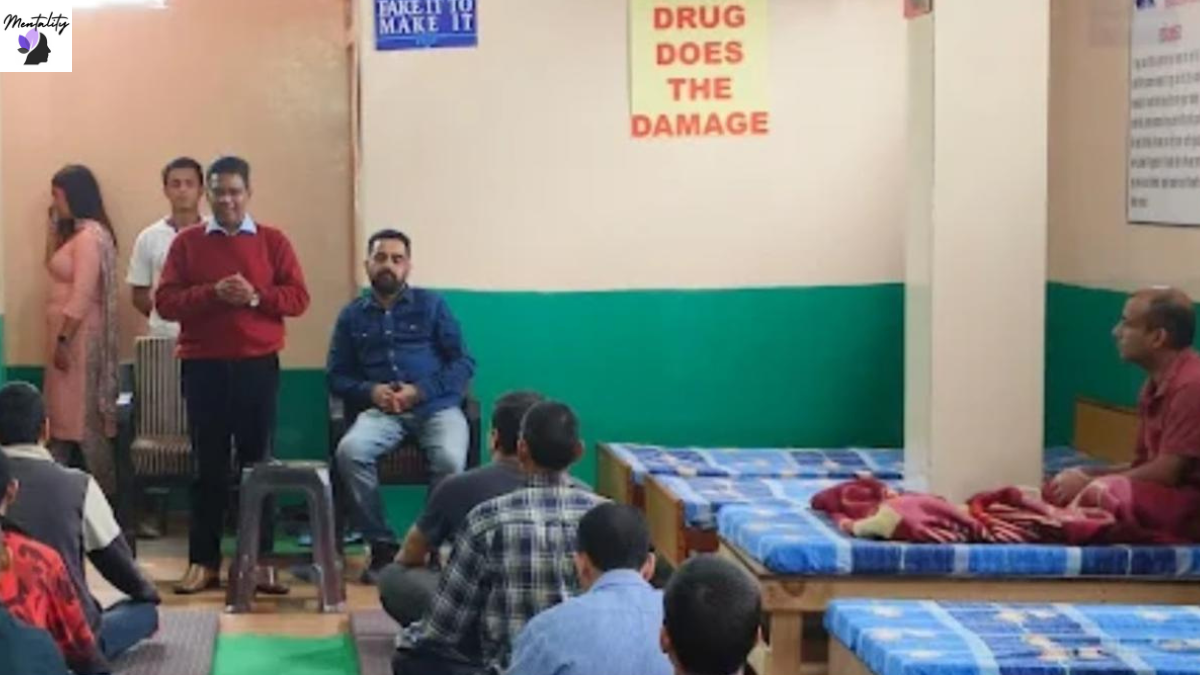
For the past ten years, Aashish has been running a rehabilitation centre in Shoghi (approximately 700 meters from the main road) and helps others who want to win over their dependency. Nearly 500 young individuals have already walked the halls of his de-addiction centre.
For most people like Shanti, stories like that of Aashish bring more hope than efforts by the administration. “We live in constant fear that my son might relapse,” she said. “On some days, he seems fine; on some days, we lose him again.”
Author: Surinder Kumar
Surinder Kumar is a freelance journalist focusing on environment, climate change, rural livelihoods, and policy issues across Himachal Pradesh.