
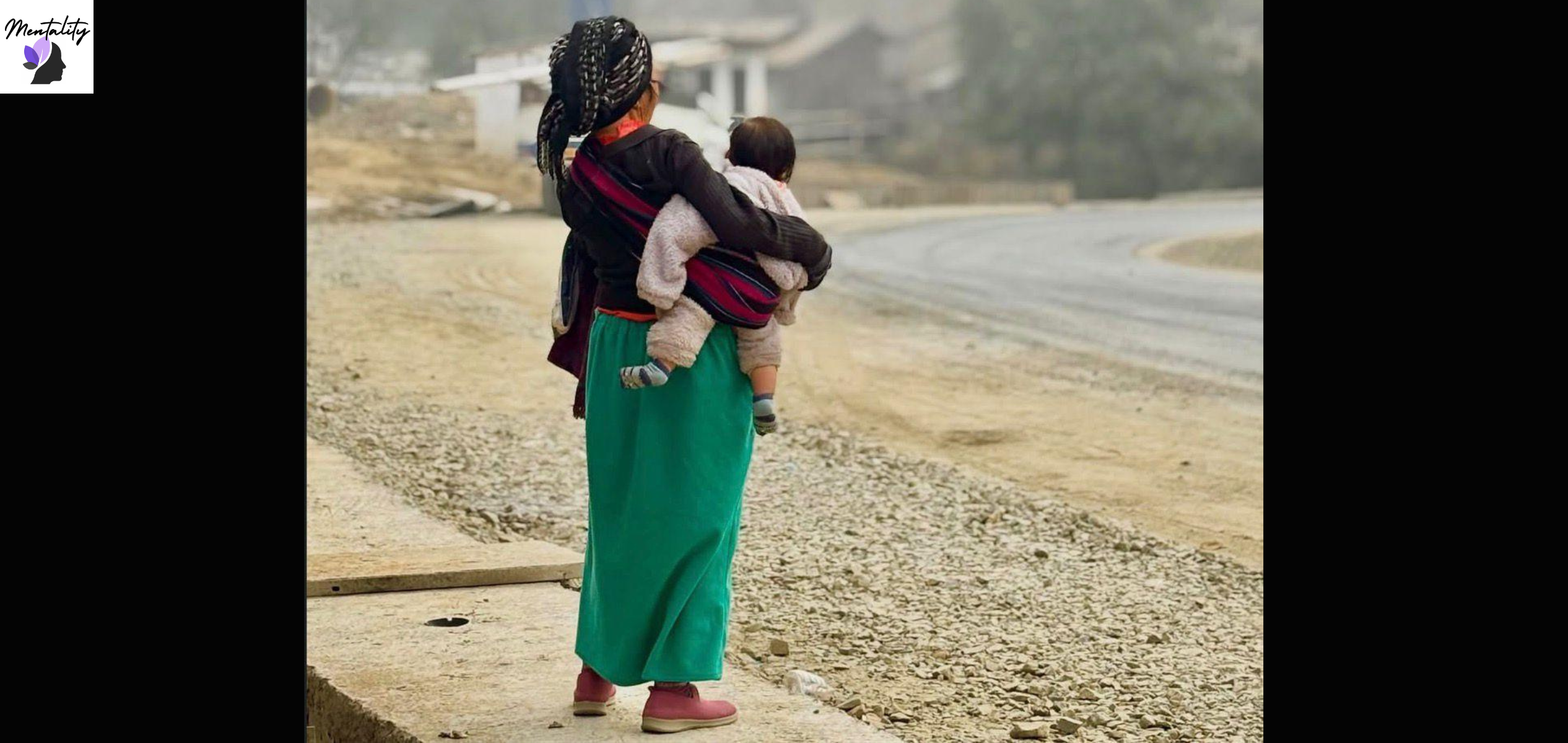
Many Manipuri women migrated to become their families’ primary breadwinners (Image Credit: Chebawk Duria)
By Gaurav Kumar
Working in Delhi alongside people from the “other” community meant learning to separate their everyday working relationships from the conflict they had left behind. Many said they were carrying memories of violence, displacement, and loss.
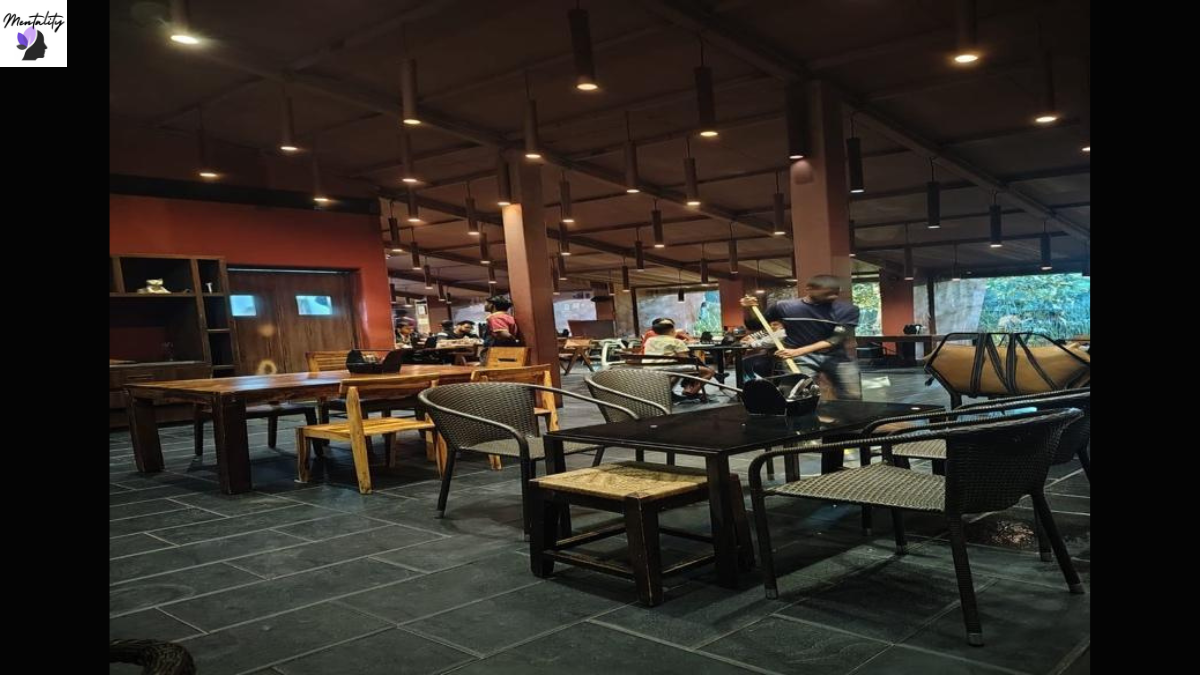
Twenty-four-year-old Thangjam Ningol Devi moved quickly between tables, carrying plates of chow mein and fried rice in a small cafe, wedged between a grocery store and a mobile repair shop in New Delhi’s Munirka.
Devi is from Manipur’s Kangpokpi district and belongs to the Meitei community. About 60,000 people like Devi were forced to move due to Manipur’s violent ethnic conflict, which started in 2023, between the majority Meitei community and the minority Kuki-Zo communities.
Two years ago, Devi was forced to leave Kalapahar, a village 66 kilometers from the district headquarters of Kangpokpi. “I came hoping Delhi would give me stability,” Devi said. “But life here is also a struggle.”
The economy in Devi’s village collapsed due to the clashes. Her family members, who worked as farm labourers and sold vegetables in the local market, were left without a source of income.
Many Manipuris migrated to neighbouring states like Mizoram and Meghalaya; some decided to make the journey to distant Delhi. Devi now rents a tiny room near the café with three other women—it can barely hold two thin mattresses and a stove.
At times, their identity of being from the northeastern states, supersedes other identities resulting in discrimination.
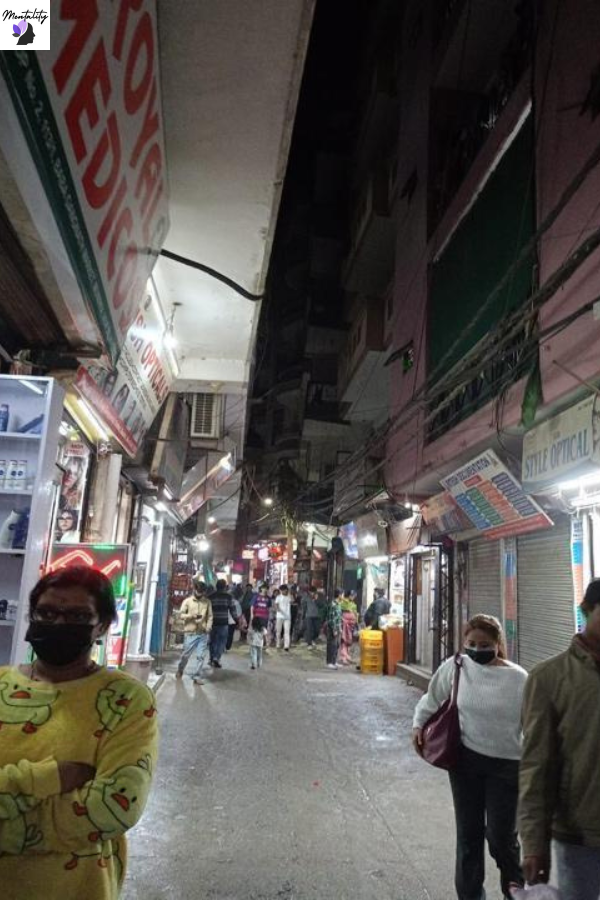
Complex trauma among Manipuri migrants
In February 2026, a video surfaced online showing a couple shouting racial slurs at migrants from Arunachal Pradesh in South Delhi’s Malviya Nagar. In March 2026, a Manipuri woman who objected to racist remarks was beaten up in a public park in Delhi’s Saket. “Sometimes people treat us like we are not from this country,” she said, about being repeatedly asked if she is from China or using slurs to refer to women from the Northeastern states.
Many women like Devi experience what we term ‘compound trauma’—a simultaneous exposure to multiple trauma categories, said Dr. Priya Sharma, a trauma psychologist specialising in forced migration and post-conflict mental health.
First, there is direct trauma from the ethnic violence itself: witnessing communal attacks, experiencing displacement, losing economic security.
Second, there is migration-related trauma: social dislocation, severing of community bonds, loss of cultural identity anchors, and economic precarity in an unfamiliar urban setting.
Third, there is discrimination-based trauma: repeated exposure to xenophobic micro-aggressions and racial othering, added Dr Sharma.
Devi said that the discrimination reinforces the insecurity she feels in New Delhi. It is one of the primary reasons she lives in Munrika, where she is surrounded by others from India’s North Eastern Region.
“When displaced or conflict-affected migrants face discrimination, it forces the individual to relive the experience of being ‘othered’,” said Dr Sharma. In Devi’s case, first by the violence in Manipur when she was targeted for her ethnicity and now in Delhi where she was targeted for her appearance, accent, and perceived outsider status.
Economic dependence on migrants
Twenty-four-year-old Laishram Chanu, left Manipur on 27 May 2023. “My father told me it was no longer safe for me to stay,” she recalled. “So we packed quickly and I left for Guwahati.”
From there, she travelled to Delhi by train with a friend who had moved earlier. The journey took nearly two days. When they arrived in the capital, Chanu said everything was overwhelming. “At first I was afraid to even cross the road,” she said. “But slowly you learn.”
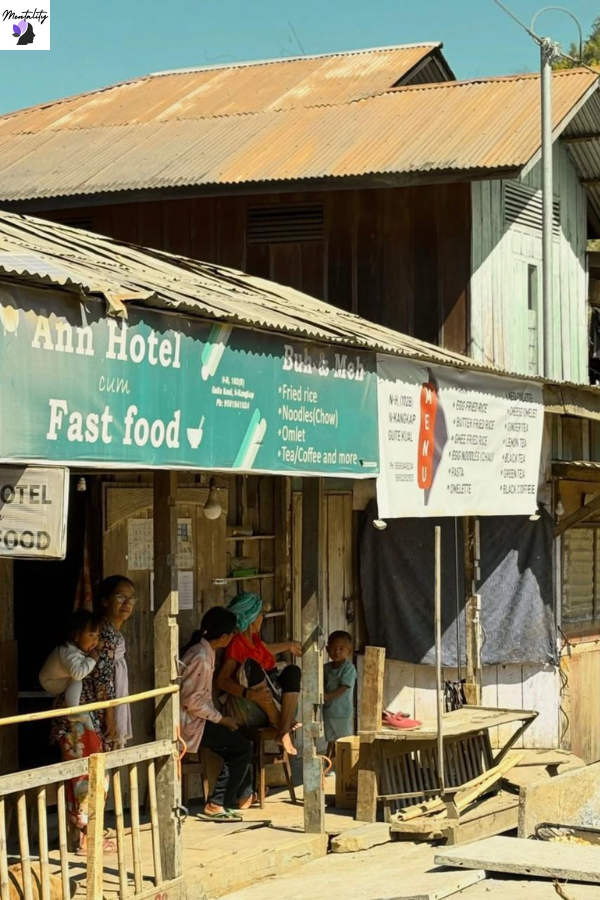
The women who came after 2023 escaped immediate physical violence, but they arrived in a city where survival becomes an overwhelming priority, said Alem Pamei, a New Delhi-based human rights activist from Manipur’s Tamenglong district. “Most end up in informal employment—eateries, salons, or grocery stores serving migrant communities—without contracts or labour protections,” he added.
Chanu wakes up at five each morning and boards a bus from Munrika to Safdarjung, where she works at a small eatery that serves food from several northeastern states.
She works till the eatery closes at 11 pm, sometimes past midnight, she said. “I send most of my salary home,” Chanu said, who earns about 12,000 rupees a month. “My parents depend on that money.”
Thounaojam Rina, a Kuki who is originally from Churachandpur town, now works at a salon in South Delhi’s upscale Green Park area. “Before the conflict, I helped my mother run a small grocery shop. But when everything closed, we had no income,” she said.
Women are often among the first to migrate because they can more easily find service-sector jobs in cities, said Dr Langthianmung Vualzong, a political science professor at Indira Gandhi National University in New Delhi, who is from Manipur. However, she said, they carry the trauma deep inside them. “Without addressing the psychological and social dimensions of displacement, we are simply relocating the crisis from the villages to the cities, from relief camps to rental rooms,” she said. “The trauma does not disappear; it becomes invisible and privatised.”
Relief camps for Manipuris
In January this year, the Manipur government announced that it would resettle 10,000 of the more than 40,000 internally displaced persons (IDPs) by 31 March 2026. The deadline passed with only a fraction rehoused, and the goal of emptying all relief camps has now been deferred to December 2026 amid protests over missed timelines and stalled aid.
The state government has set aside 734 crore rupees from the 2026-27 state budget for rehabilitation and resettlement of IDPs. Additionally, the government announced plans to strengthen women-led self-help groups and provide financial assistance, apart from generating employment for youth and supporting skill development programmes.
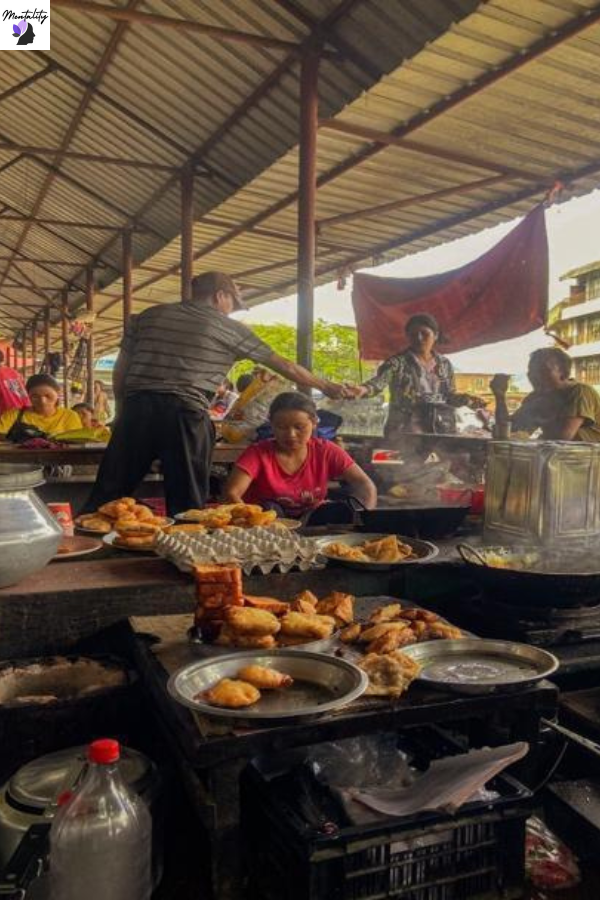
Working alongside the ‘other’
Thoughts of whether there is a future that will resemble the peaceful past hangs over several Manipuri migrant women. “I watch people walk past me in Green Park with their families, shopping, laughing,” Chanu said, and added she wonders, “Will I ever have that again? Will my mother ever have her shop back?”
“For someone who has been forced to leave home, physical safety does not necessarily mean that the psychological process of displacement is over,” said Dr Lao Thuing, a psychologist who practices in the neighbourhood and has worked with people from the North East living in Delhi. “They may be working, earning money, and living in a new place, but a part of them remains connected to what they lost and uncertain about what comes next. When that uncertainty continues for months or years, it can become emotionally exhausting.”
Both Chanu and Devi said that working in Delhi alongside people from the “other” community was something they had to learn to navigate after leaving Manipur.
For them, the experience is still emotionally difficult even though work was primarily about survival and supporting their families, rather than continuing the divisions of the conflict.
They said they were carrying memories of violence, displacement and loss. Being around people from the “other” community did not erase those memories; instead, it meant learning to separate their everyday working relationships from the conflict they had left behind.
Devi shares meals with her flatmates, who are from the different states of the North Eastern Region, after work each evening.
One evening while chopping vegetables, one of her roommates joked, “If we were in Manipur, we would never eat noodles this many times a week.”
The others laughed. Then the room fell silent.
*Thangjam Ningol Devi was wrongly identified as belonging to the Kuki community. We regret the error and have corrected the copy to reflect it.

Author: Gaurav Kumar
Gaurav Kumar is a New Delhi-based international affairs journalist and researcher covering conflict, geopolitics, human rights, and civil liberties, reporting on how political violence, displacement and social divisions shape the lives of affected communities.