
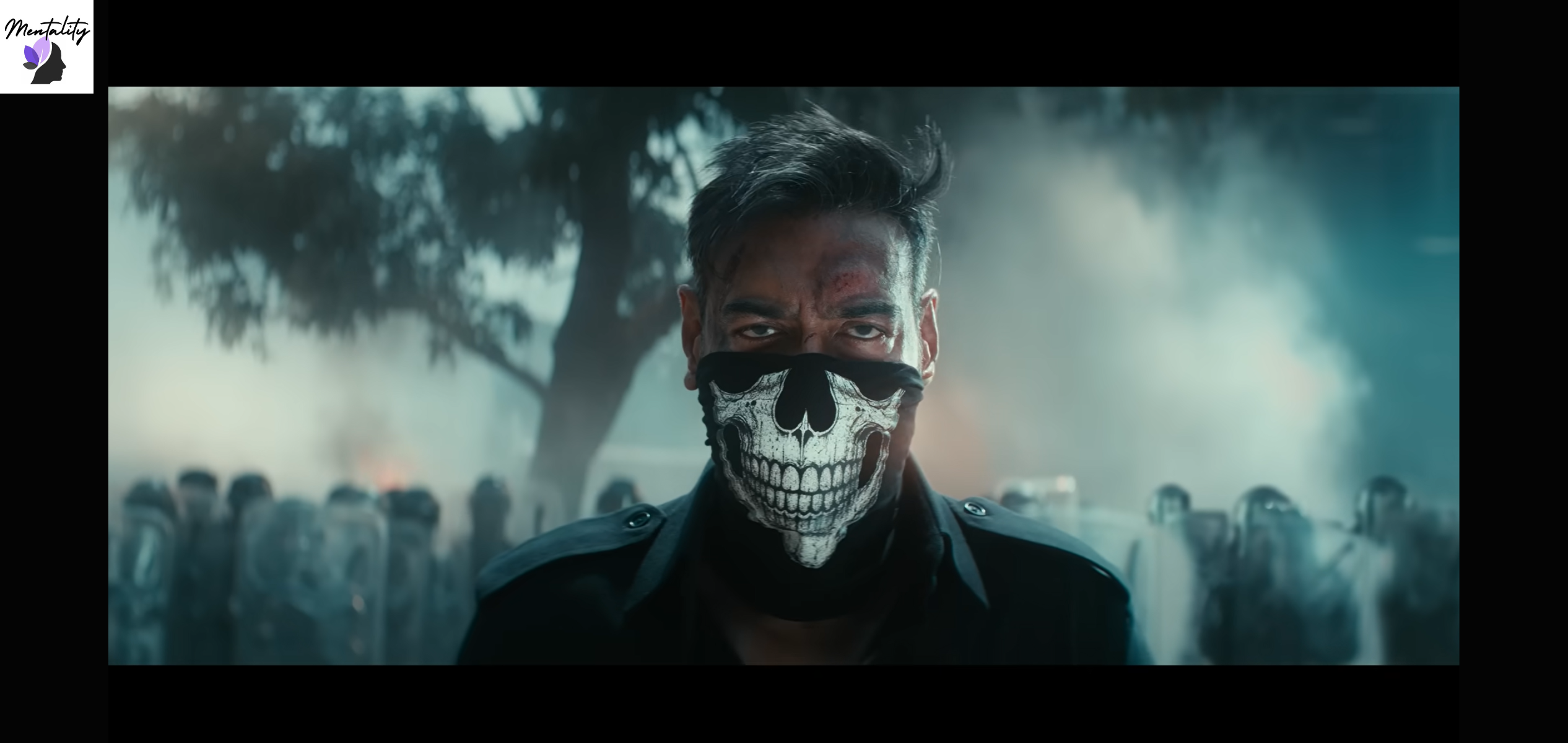
A screengrab of the official announcement of Ajay Devgn’s new film, Chauhaan (Image Credit: JioStudios)
By Ilhak Tantray, Umer Farooq Zargar
A teaser of Ajay Devgn’s new film, Chauhaan, refers to pellet gun wounds as “limited damage” retraumatising its victims in Kashmir, Manipur, and Delhi. Kashmiris say they are living with the dire consequences of pellet gun use long after everyone else has moved on.
This time, a teaser of Chauhaan, set to release in October 2027, has reopened wounds that had hardly healed among many Kashmiris. The film, produced by Jio Studios and Colour Yellow Productions is set in 2018, when Kashmir saw protests almost on a daily basis. “Stone pelting” was a phrase used in headlines whenever there was a reference to Kashmir.
According to the Jammu and Kashmir Coalition of Civil Society (JKCCS) , close to 600 people were killed in violence between protesters, armed militants and security forces that year.
Chauhaan stars Ajay Devgn, famous for action films such as Singham and Vijaypath.
The two and a half minute teaser begins with scenes of paramilitary forces donning anti-riot gear on one side and stone throwing protesters on the other. Ajay Devgn’s voice announces that use of pellet guns against the protesters will cause “limited damage,” over the images of a screaming protester’s bloodshot eyes wide open.
When Marsala Nisar of Shopian district watched the teaser, she said she was transported to one of the “darkest days of her life.” Her daughter Hiba Nisar was less than two years old when she was hit by pellet guns, as her parents and siblings were fleeing after teargas smoke filled their homes. “For us, the damage was never ‘limited’,” said Nisar, referring to the dialogue in the teaser. “My daughter lost an eye when she was just 19 months old. Hearing those words felt as though our years of pain had been reduced to a single line of dialogue.”
Research shows that cues—such as visual images, sounds, or themes—in films and other media can trigger intrusive memories, emotional distress, or heightened physiological arousal even many years after the original event, said Areeba Manzoor, a Srinagar-based psychologist. “When survivors perceive their experiences as trivialised or misrepresented, it can intensify feelings of isolation, anger, and mistrust,” she said.
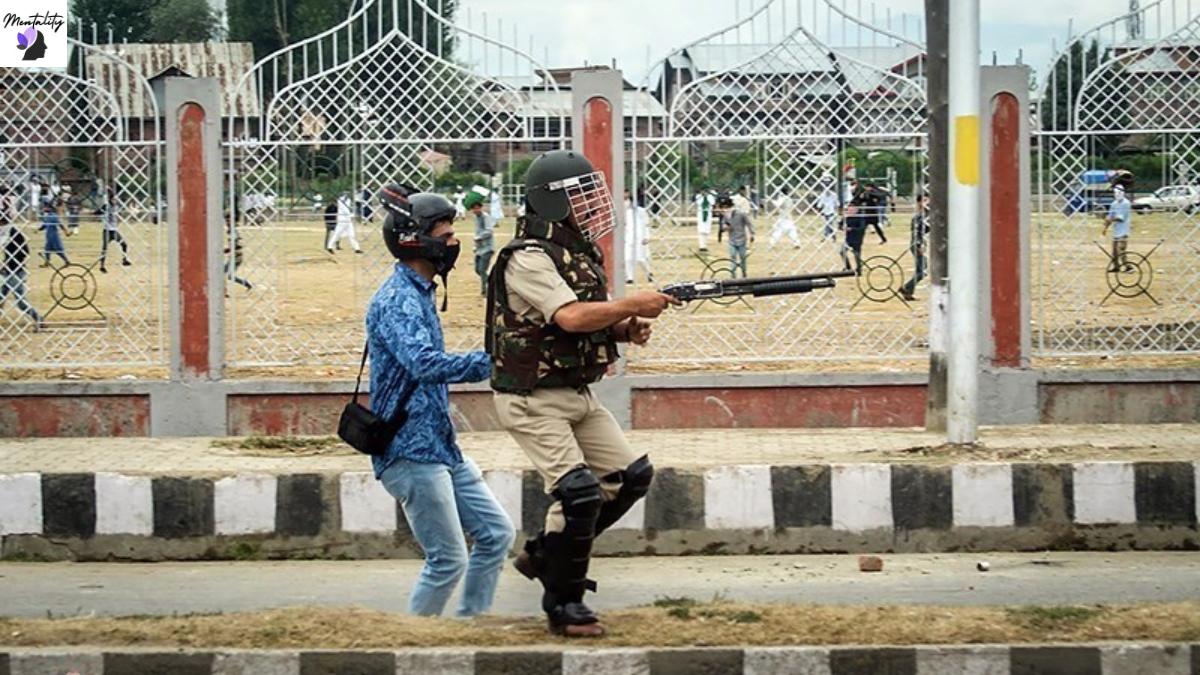
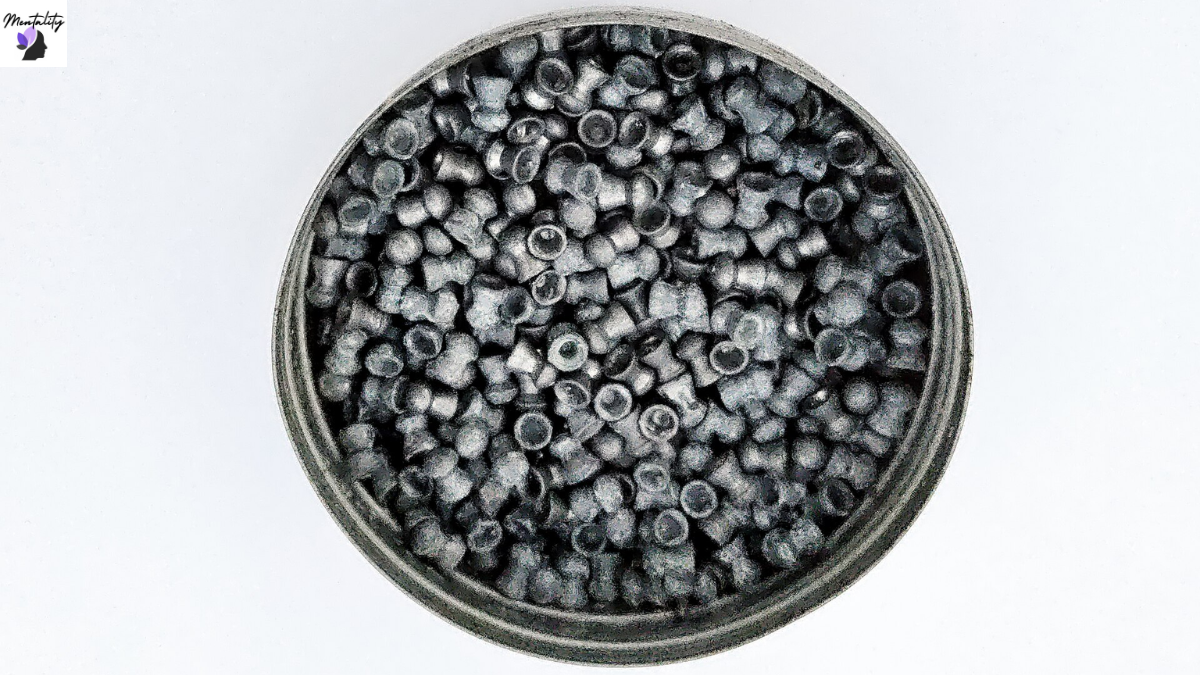
Pellet guns, classified as a “non-lethal” weapon on paper, are shotguns that fire cartridges loaded with multiple pellets. Rapid Action Force, a specialised riot-control unit under the Central Reserve Police Force, has used it as crowd-control equipment in Kashmir multiple times, during the 2023 violence in Manipur, 2024 farmers protests in the National Capital Region, and in the Cockroach Janata Party protests in Delhi earlier in 2026, which sought the resignation of the then Education Minister, Dharmendra Pradhan.
Back in 2020, Human Rights Watch, an international non-profit, urged the Indian state to stop using metal pellets to disperse crowds.
Films should be taken seriously
Filmmakers should adopt a trauma-informed approach when depicting events involving living survivors, said Alisa Yousuf, a psychology researcher at Kashmir University. “Responsible storytelling requires empathy, sensitivity, and an awareness that many people continue to live with the physical and psychological consequences of these events,” she said, so that the story does not compound survivors’ suffering.
On the afternoon of 18 September 2010, Amir Kabir Beigh left his home in Old Town Baramulla with his mother’s prescription in hand. He was 18 years old, a Class 12 student preoccupied with exams and family expenses, he said. Though there had been clashes earlier that day, the street toward the government hospital had seemed relatively calm to him when he stepped out.
Near the bridge, Beigh said, a loud sound “like a burst” filled the air, and something struck his face and head. Within seconds everything went dark, he said. That day was the last time he saw the road to the hospital, the river, or his own reflection.
At the hospital when he regained consciousness, he was told pellets had entered his eyes and skull. Later X‑rays revealed dozens of tiny metal balls still lodged in his head. Over the years Beigh travelled to multiple cities across India for surgeries. He remains completely blind.
When filmmakers say these weapons cause “limited damage,” Beigh points out they are speaking of the same pellets that remain inside his head. “There is nothing limited about a lifetime of darkness,” he said.
Speaking to the survivors
From a psychological perspective, filmmakers have an ethical responsibility to approach such stories with sensitivity and respect, said Manzoor. “They should consult directly with survivors or, when appropriate, with primary caregivers or family members to ensure accuracy and context.”
Beigh said he would like that. “I wish those making these arguments would sit with us for a day and see how we live, how our families adapt, and how our futures have been narrowed by a single pull of the trigger.”
Ideally, filmmaking should be participatory, creating space for communities to contribute to research, scripting, and production, said Gaurav Prateek, a film and media studies scholar at Concordia University, Montreal, Canada. “Only through such collaboration can cinema portray violence in ways that are historically grounded, ethically responsible, and attentive to lived complexity.”
Nisar said that her reality is not reflected in the teaser, as she suspected would not be represented in the film either. “As parents, we still ask ourselves if had we stayed inside our house a little longer or stepped out a little earlier, would our daughter’s life have been different? That question has haunted us for years and probably always will.”
Documenting history through films
The media play a powerful role in shaping collective memory by influencing how societies remember history, said Manzoor. Most popular Hindi films released after Jammu and Kashmir was brought under New Delhi’s direct control in 2019, have painted protests in the region as destabilising. Films like The Kashmir Files (2022), and Article 370 (2024), have shaped how national audiences imagine Kashmir.
Calling pellet guns “limited damage” does more than serve the narrative that the Indian military is the saviour, while protesters are disorderly, militant, or anti‑national, said Prateek. “It is part of a representational politics that normalises brutal state violence and diminishes the lived experiences of those who have borne its consequences,” he added.
Insha Mushtaq Lone was 14 years old in July 2016. She was watching protests from her window when Indian security forces fired pellets into her eyes, blinding her. “Learning to live without sight has been like learning to live on another planet,” she said. “People talk about ‘rehabilitation’ as if it is just a policy, but for me it means re‑learning how to be a daughter, a student, a friend, without the eyes I once had.”
Lone has called for a ban on pellet guns throughout the country.
“When media representations align with survivors’ experiences and acknowledge the complexity of the trauma, they can foster recognition, empathy, and social understanding,” said Manzoor. “Conversely, when portrayals distort, simplify, or politicize historical violence, survivors may feel invisible or betrayed, as if their reality has been replaced by a public narrative that does not reflect their truth.”
Lone said she wants to ask the filmmakers if they would use “limited damage” if their children woke up one day and could never see again? “For us, this is not a metaphor. It is not a debate on television,” she said. “It is the darkness we learn to navigate every hour, the faces we can no longer see, the books we now read with our fingertips instead of our eyes.”
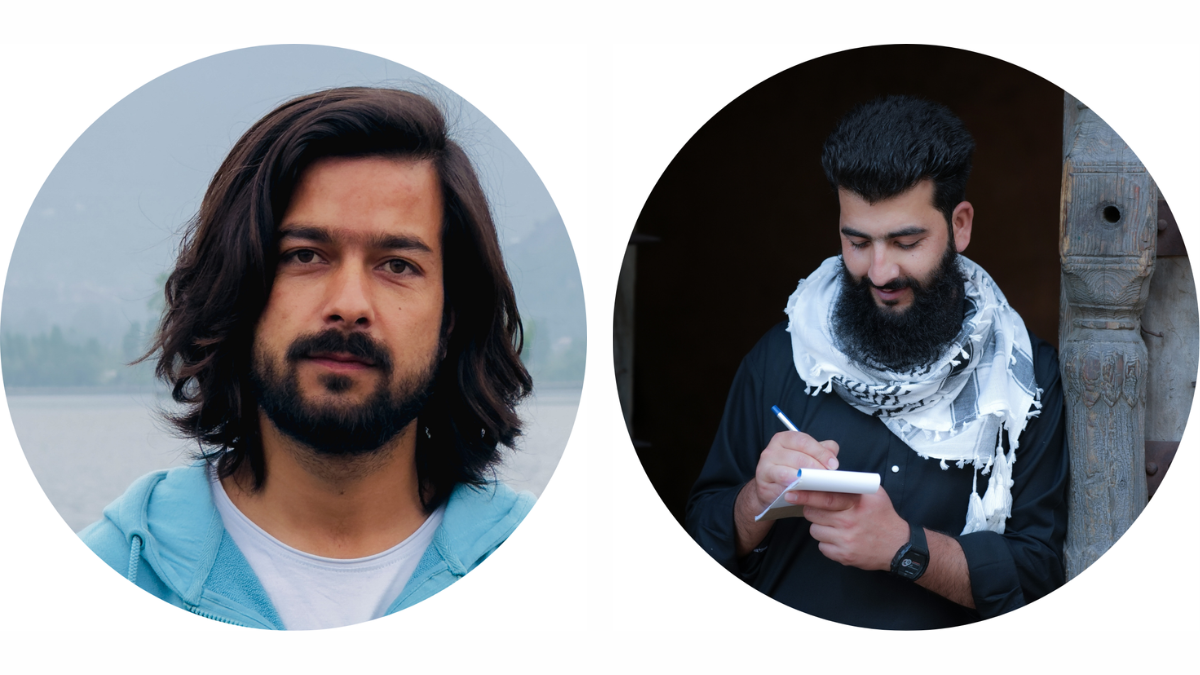
Authors: Ilhak Tantray (L) and Umer Farooq Zargar (R)
Ilhak Tantray and Umer Farooq Zargar are independent journalists based in Kashmir, India. Their reporting focuses on environmental challenges, conflict, social justice, gender, education, and governance, with a particular focus on underreported communities and lived experiences on the ground. Their work has been published by national and international media outlets.