
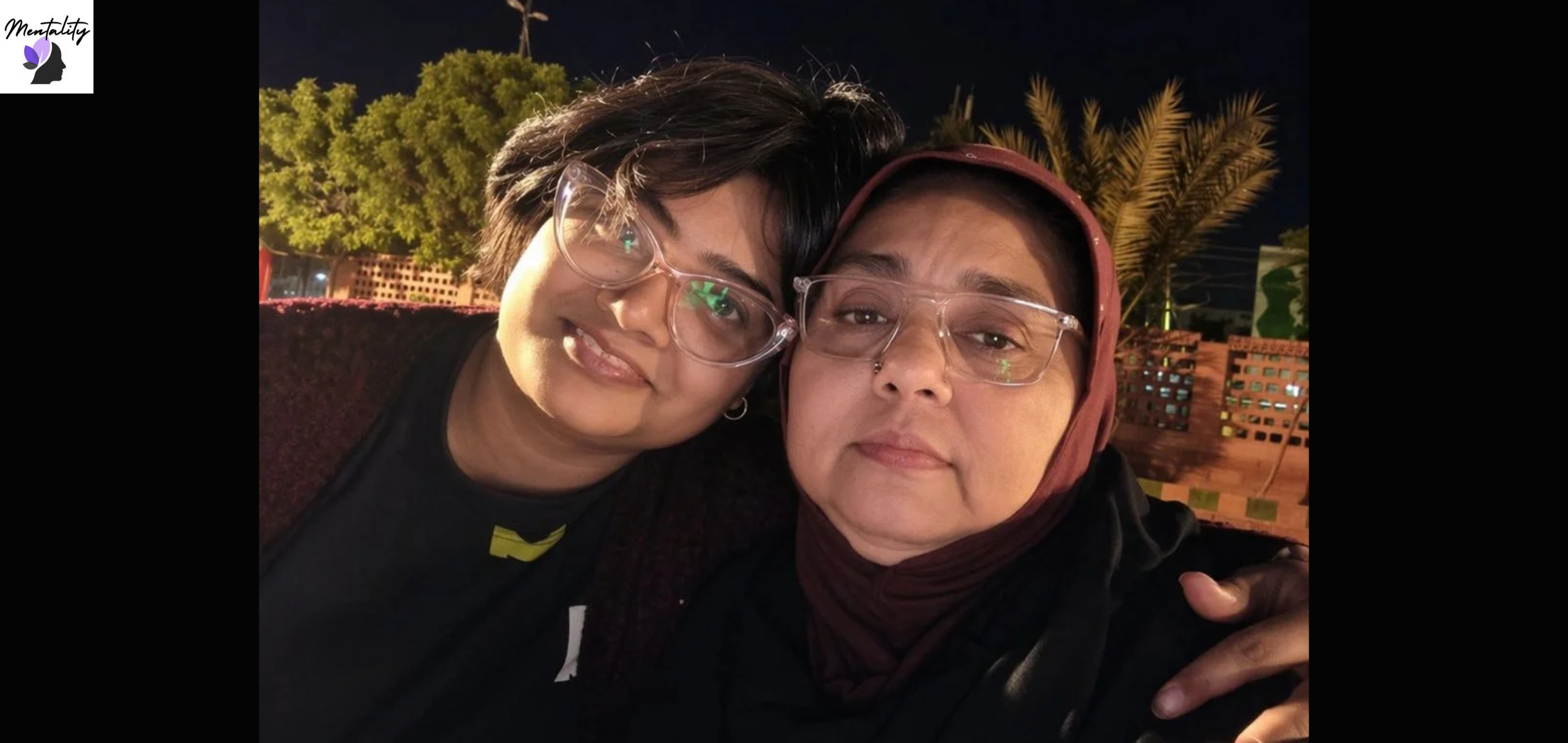
Fizza Abbas (L) and Bajjo (R) (Image Credit: Fizza Abbas)
By Fizza Abbas
My sister took care of everyone but herself. I wish she had been selfish just once. Looking after yourself is not a betrayal of the people you love. It may be the only way you get to stay with them.
On 6 April 2026, I drove home as the sun was going down. Although it was peak summer, when the sky should have been a mild orange, it had begun to turn black already, almost as if twilight had vanished.
As soon as I entered home, I walked in to see my sister lying down in a pitch dark room, matching the darkness outside.
I asked my aunt who was in the room next door if my sister was doing okay. “She hardly sleeps during this time of day,” I said. “Yeah, she said she wasn’t feeling too well,” my aunt replied.
Fifteen days earlier, my sister had been diagnosed with bilateral renal stones, a gallbladder stone, and a fatty liver. The doctors told her she needed an endoscopy. She was afraid of the tube, of the anaesthesia, of whatever they might find. So, she did what women do when they would rather not be cut open: she went to hakeems (practitioner of traditional medicine) and duas (acts of worship) instead.
That evening, I went back to my room without disturbing her and messaged her asking if she needed anything. Half an hour later, she called me to ask if I would eat anything.
That was one of the last things I remember her saying to me. It was typical of Bajjo, my 53-year-old sister, to always check if my brother and I were fed, happy, and comfortable.
People always confused my sister, Kamni Abbas, for my mother.
This was, in part, because my brother and I were much younger than her (I am 32-years-old), but mainly because she would attend our parent-teacher meetings at our schools, drive us to our friends’ homes, buy us stationery, enrol us in different learning institutes, and give in to all our whims without complaints.
My mother couldn’t do any of that since she had to take care of my father, who was very ill, and run a school as a full-time principal. She had to earn not just to put food on our table, but also to pay my father’s huge medical bills. Bajjo became our mother and father.
A few hours after Bajjo had asked me if I would eat anything while battling her fatigue and illness, she puked blood and was rushed to the hospital.
Despite her fear, we forced her to book the endoscopy, which was scheduled for 11 April 2026. But, the burden of years of responsibilities, round-the-clock domestic work, and unacknowledged emotional labour took a toll on her. She died on 8 April 2026, and the medical cause of her death was a cardiac arrest.
Women’s health is not their concern
I have spent years writing about women in Pakistan. But it took Bajjo‘s death for me to see how women are invisibilised at home. It begins at the dinner table, where the eldest daughter serves everyone and eats what is left, or with the headache she sleeps off, the lump she doesn’t mention, and the stomach pain she blames on garmi (the heat). Her health comes last in her list of priorities.
According to the 2024 UN National Development Report, only one in four Pakistani women are involved in decisions about their own healthcare.
Their reasons range from worrying about medical expenses eating into family funds to insufficient time, which they feel belongs to everyone other than themselves.
At times, they also seek permission and company to visit a doctor because a woman going alone to a clinic still invites questions in many societies like ours.
What is the cost of such negligence on her mental health? The admission that she is not indestructible, that the person holding everything together might herself need holding. So she waits, and the waiting is where it goes wrong. Conditions that are manageable when caught early, like diabetes, hypertension, and liver disease, grow quietly in bodies that are never examined.
So, by the time a woman reaches a hospital, she is often not a patient anymore but an emergency. Emergencies get short descriptions on death certificates, like in Bajjo’s case: cardiac arrest.
Bajjos don’t care for themselves
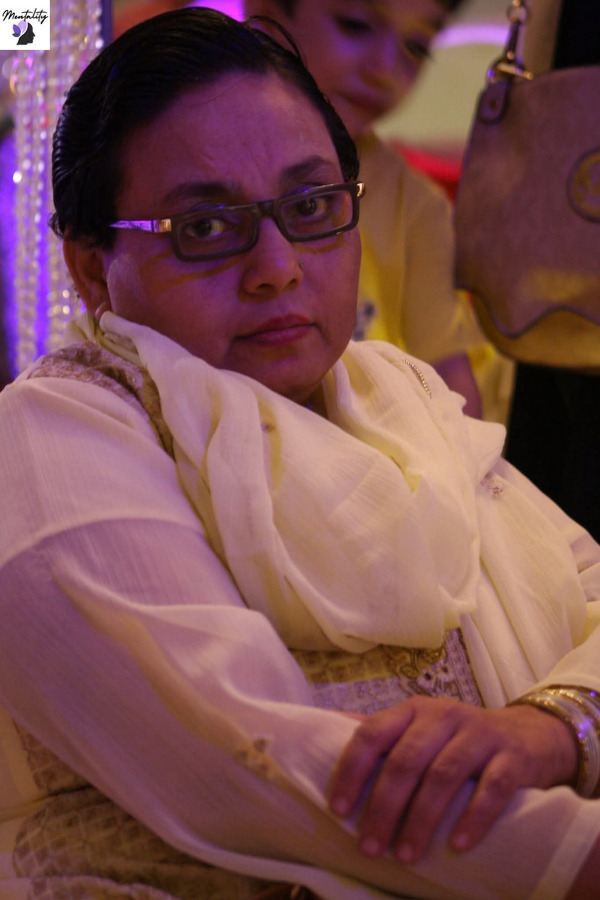
Bajjo’s primary focus was our family. She married twice, both ended. In many South Asian families, that would have made her a woman to be pitied or whispered about. Although our family stood by her, she felt an unexplained debt to us that no one had asked her to pay by making herself indispensable: the one who drove, who paid, who remembered every birthday, and every school fee deadline, as if giving were the only way she knew how to belong, even among people who already loved her without conditions.
I see this in so many women, especially in their thirties. I see the slow shrinking of their own lives until they exist mainly in service of others, their friendships lapsed, their ambitions folded away, and their loneliness hidden behind a fully functioning kitchen. We call it maturity. Sometimes it is just isolation with better manners.
Just a few days before her death, despite her ailing health, Bajjo had fed me aalo palak and roti, made korma for my brother and sister-in-law before they left on a family trip to Islamabad, organised huge dawaats (feasts), clicked pictures with everyone, and took us to Sindbad, a popular amusement park in Karachi, and a local food street in our area.
The clothes she had ordered for my nephew’s birthday arrived a week after her death.
The poor child would still walk to her room with his tiny feet, calling, “Phu”, his name for Bajjo, asking his mother where his favourite aunt was.
I was being Bajjo myself
For weeks after my sister died, I read WebMD and Medscape till three in the morning, typed her symptoms into every search box I could find, and asked doctors I barely knew, as though if I understood the mechanism precisely enough, it would stop being true.
While death is closure, I was looking for a different one.
And since I didn’t find one, I started having nightmares, in which I was trying to control my sister’s imminent passing; they often ended in my own death. I suffered multiple episodes of sleep paralysis to the point I would wake up in the middle of the night crying. This cycle went on for two months until I saw a psychiatrist. I was diagnosed with major depressive disorder (MDD) and put on anti-depressants.
I lost interest in everything: my favourite food, playtime with my nephew, writing, or interacting with my family members. I lost touch with a cousin, who desperately needed me by her side. But I could not bring myself to be there for her, and now, she has severed all ties with me. I am not sure how to survive with the loss of two sisters.
I realise now that I suffered two months of nightmares before I got help. Two months of waking up crying, of telling myself it was just grief, which one experiences when one loses someone, and that I had work, a husband, and a family to show up for.
That voice in my head was the same voice that told Bajjo that her pain could wait until after the dawaat, that a hakeem would do, that a dua on a random WhatsApp forward would help, that she could wait.
I decided to silence it.
I take my medication every morning now, and on some mornings, it feels like an act of defiance against everything she taught me without ever meaning to. I wish she had been selfish just once. I wish she had let us take care of her the way she took care of us. If there is anything I want the women reading this to take from her life and from mine, it is this: looking after yourself is not a betrayal of the people you love. It may be the only way you get to stay with them.

Author: Fizza Abbas
Fizza Abbas is a Karachi-based independent journalist, editor, and poet. She covers gender, culture, and social issues.