
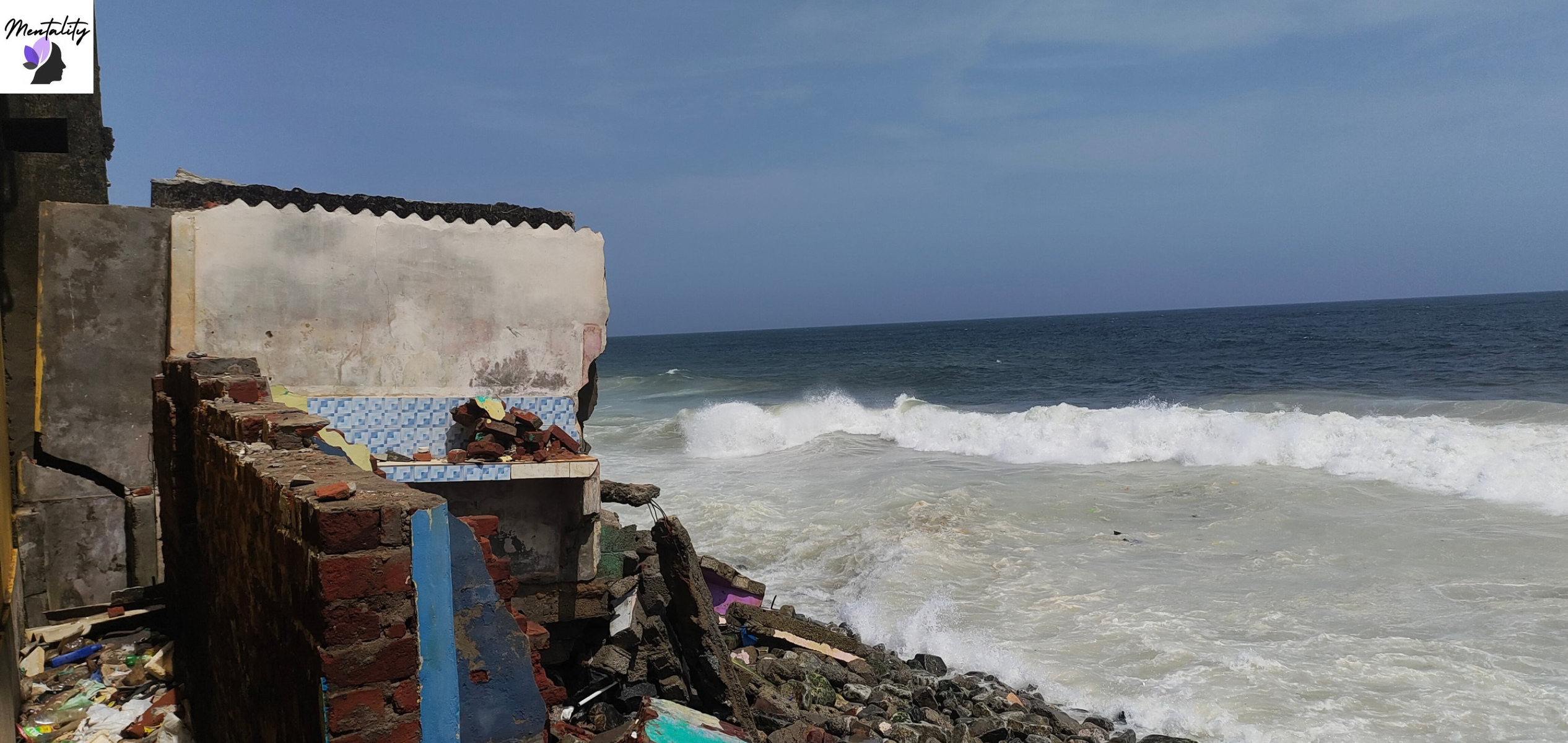
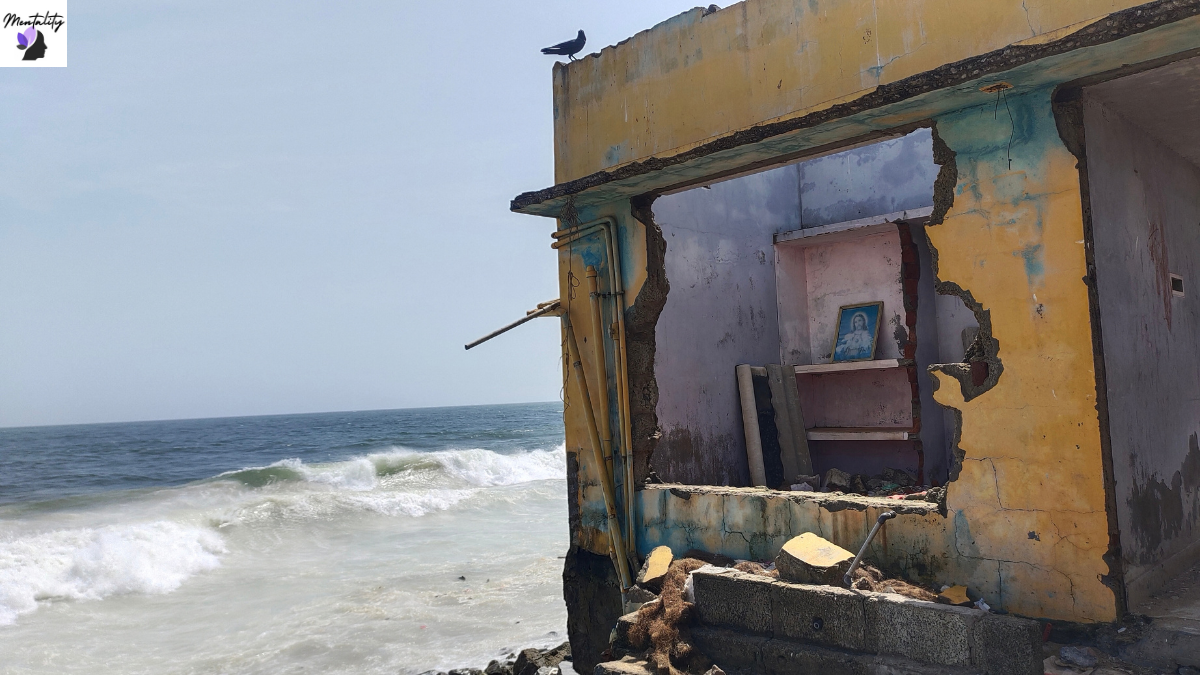
The houses swallowed by the sea and the shore of Pozhiyoor (Image Credit: Arathi MR)
By Arathi MR
Most people in Pozhiyoor showed symptoms of trauma and depression after the flood-induced displacement. What affected them the most though was the disintegration of the social and religious fabric.
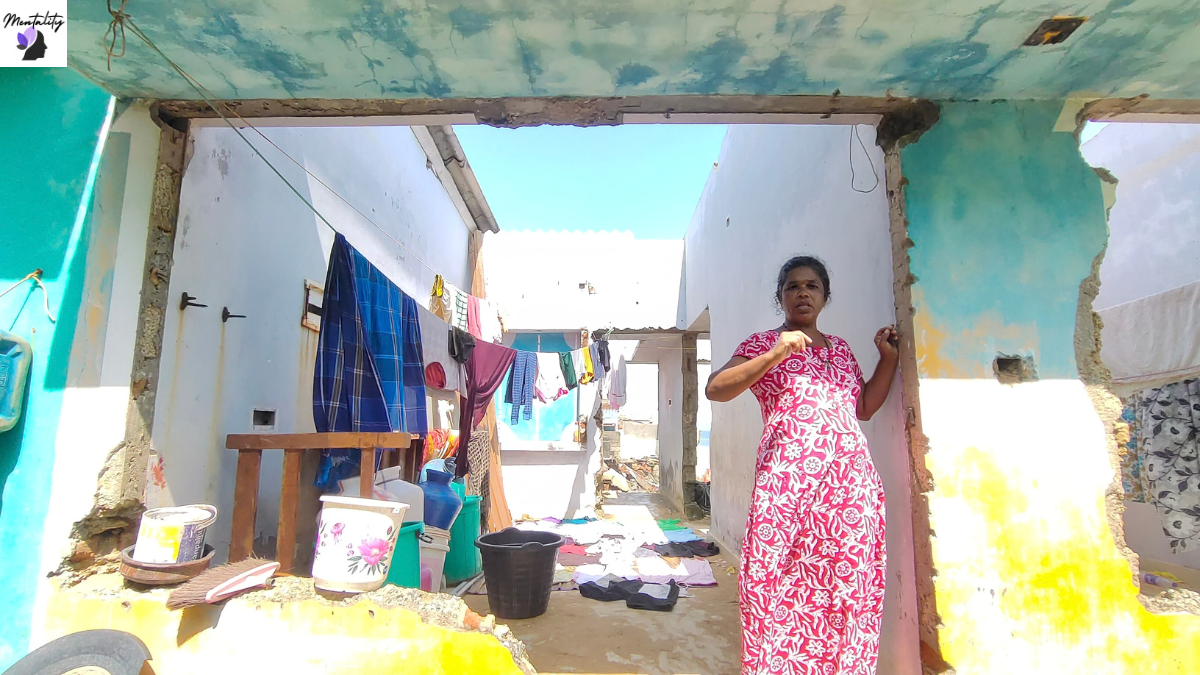
Forty-three-year-old Baby Titus pointed to a green house secured by a rusty lock. “This was our home,” she said even as waves repeatedly crashed on the right side of the house in Pozhiyoor ward of Thiruvananthapuram. The sea repeatedly entered and receded from her house for many days, causing a short circuit. “You would get an electric shock wherever you touched,” she added.
Baby Titus now lives in a rented two-bedroom house next door with her husband and three adolescent children, paying ₹2,000 a month as rent. The owners of that house have moved elsewhere due to sea level rise.
A 2023 study by the Thiruvananthapuram-based think tank Centre for Development Studies noted that repeated exposure to flooding, erosion, and the threat of displacement creates a persistent sense of fear and uncertainty, adding to both physical and psychological distress. “Most people in Pozhiyoor showed symptoms of trauma and depression,” said Dr Shreyas Susan Varghese, a psychiatrist who led a medical camp in Pozhiyoor in 2025 at the request of a local Church. “We understood that relocation had disrupted their important sources of social and emotional support.”
On 28 September 2026, the sea entered 40 more houses in Pozhiyoor.
Faith reinforces hope
A road past St Matthew’s Church in Kollamkode, Pozhiyoor leads to the Arabian Sea, where rows of houses like Titus’s line the shoreline. Only, many of those houses have now been engulfed by the sea. Their remains, along with the granite boulders dumped into the sea for a seawall, are constantly battered by the waves, each surge crashing against them with a frightening roar.
As the shoreline retreats, it takes with it the everyday spaces people navigate to maintain friendships, work, and routines that provide them a sense of belonging.
Pozhiyoor has two main parishes—Kollamkode and Paruthiyoor. There are no official records or figures on how many houses have been lost to coastal erosion or how many families have been displaced in these parts. But according to the parish records of Kollamkode church, of the 2,400 families who once lived there, close to 300 have moved. “They don’t just lose their houses, they lose the church as a place to seek comfort and sometimes counselling,” said Claudia Lang, an anthropologist who studies ecological grief on the Kerala coast.
For generations, the church has been a place where people met neighbours, participated in community activities, shared personal difficulties, and sought emotional support.
“In the past, I could at least go to church and find some solace,” said Jenovi Thobias, 60, whose family had to relocate further away from the coast. “Now, with the knee pain and my age, it’s difficult for me to walk to the church.”
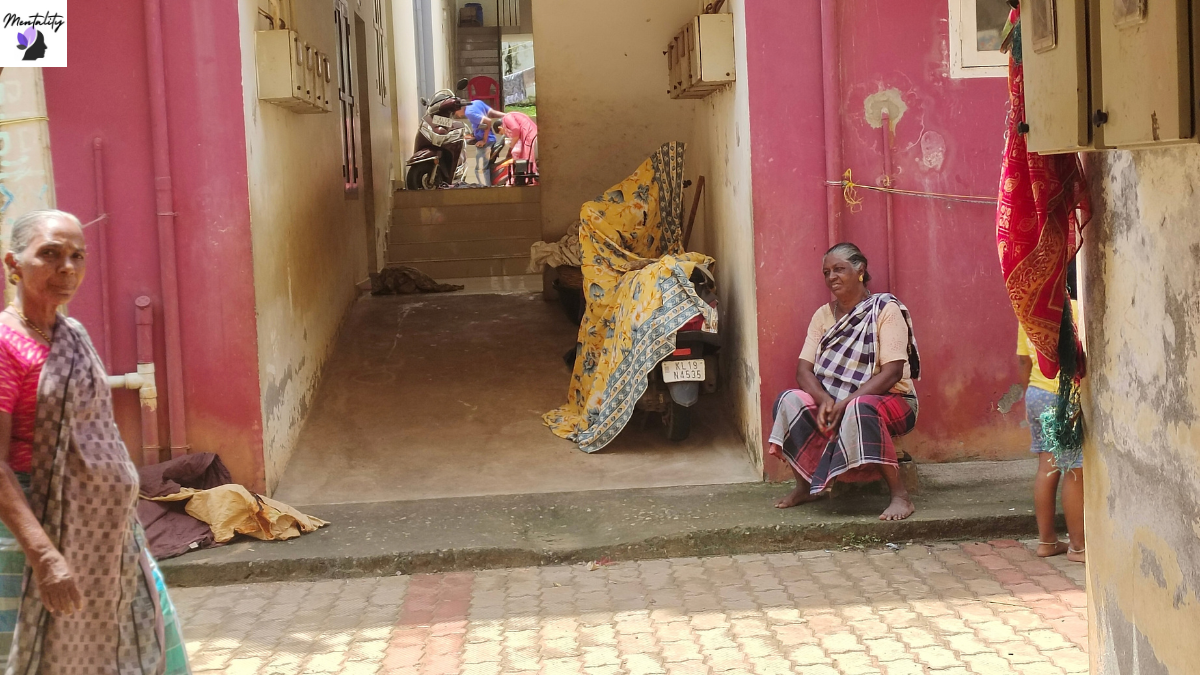
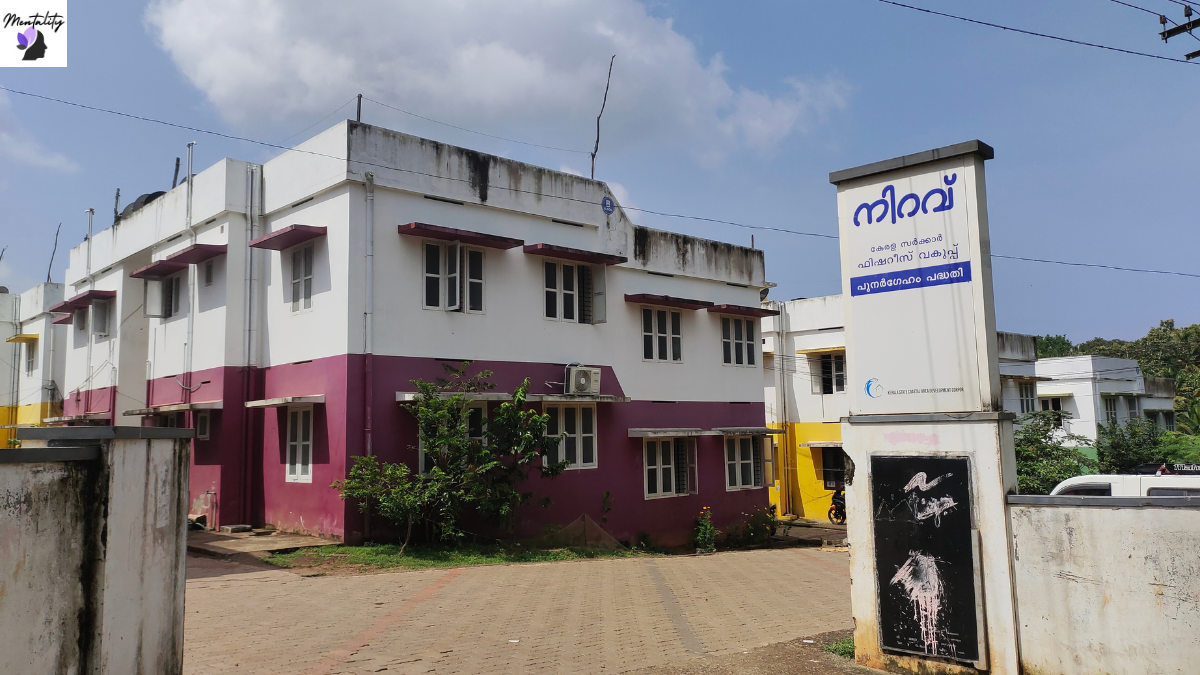
Thobias was one of the people who moved into Niravu Flats, located in Karode Panchayat, which were built under a 2019 coastal rehabilitation scheme called Punargeham for families living within 50 metres of the shoreline across the state with the option to purchase land, construct a house, or move into a flat, with beneficiaries eligible to receive up to ₹10 lakh per family. A total of 128 families from Kulathoor Panchayat, have been relocated to the Niravu flats, around seven kilometres from Pozhiyoor.
In crisis situations, people need hope to move forward, said Magline Philomena Yohannan, a Thiruvananthapuram-based fisherwoman, activist, and community organiser. “Often, faith provides that hope.”
The church selected around 150 volunteers to identify people facing mental health difficulties in the community and now provides counselling to families living in the coastal region, in collaboration with local private hospitals.
Some women use their religious beliefs to rationalise their situation and find a way forward, said Yohannan. “In that sense, church activities and prayer groups function as tools to manage anxiety and reduce loneliness,” she added.
Thobias said she would like to have a chapel nearby so she could pray with her friends.
Relocation vs rehabilitation
A 2022 study on the coastal variations from climate change finds that approximately 2.62 sq km of Thiruvananthapuram’s coast had eroded over a 14-year period, while about 0.7 sq km had been gained through accretion. The study notes that the normal rate of erosion along the stretch was around 5 m a year. Pozhiyoor recorded the highest erosion rate at 10.59 m a year.
Therefore, relocation became a necessity. However, relocating fisher families to Karode, a non-coastal panchayat, has made access to the beach, workplaces, and places of worship tougher and more expensive, said Yohannan. For instance, elderly women in fisher families traditionally collect and cure fish, which is an important source of income and a major part of their daily routine. But after moving into flats, many of them have no space to continue this work. “This inaccessibility and the increased cost of living along with the loss of livelihoods and shrinking living spaces affects their emotional well-being,” she added.
Forty-two-year-old Jose Thobias moved into Karode three years ago. “Earlier, my friends and I would play cricket or football at the beach in the evenings,” he said. “But this place feels like a medical ward. I spend most of my free time sitting here with my mobile phone, scrolling through reels,” he added.
While some families received homes through Punargeham, many have not. “Those who could afford to build or buy a new home with the scheme did so,” said Yohannan. “Others stayed back or moved in with relatives. This uneven rehabilitation has created feelings of resentment within the community, a pattern often seen in government-led rehabilitation programmes,” she added.
Thus, in a community that once lived close together, the displacement introduced new physical and emotional distances. “Displaced people can experience difficulties in maintaining their sense of identity and belonging,” said Dr Varghese. “The loss of familiar surroundings, social connections and everyday routines can create fear and uncertainty, which may contribute to depressive thoughts and emotional distress.”
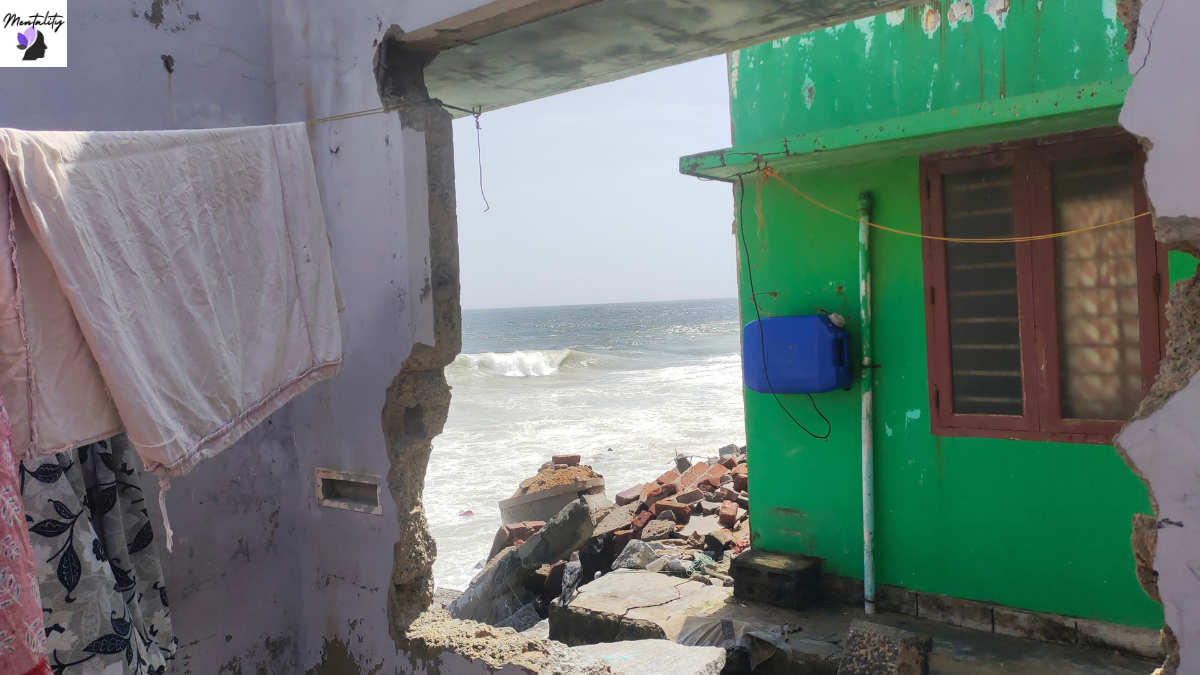
Baby Titus is aware that she has limited time to spend before the sea eats up her current dwelling as well, forcing her to move inland. Until then, she said she spends every night listening anxiously to the sound of every crashing wave, wondering whether the sea is coming into her house.
This article is co-published with Mongabay-India. Mentality and Mongabay-India are collaborating to produce stories on the mental health impacts of environmental changes on coastal communities.

Author: Arathi MR
Arathi MR is journalist and a documentary filmmaker based in Kerala, interested in writing about climate justice, minority rights, caste, gender and its intersectionalities.