
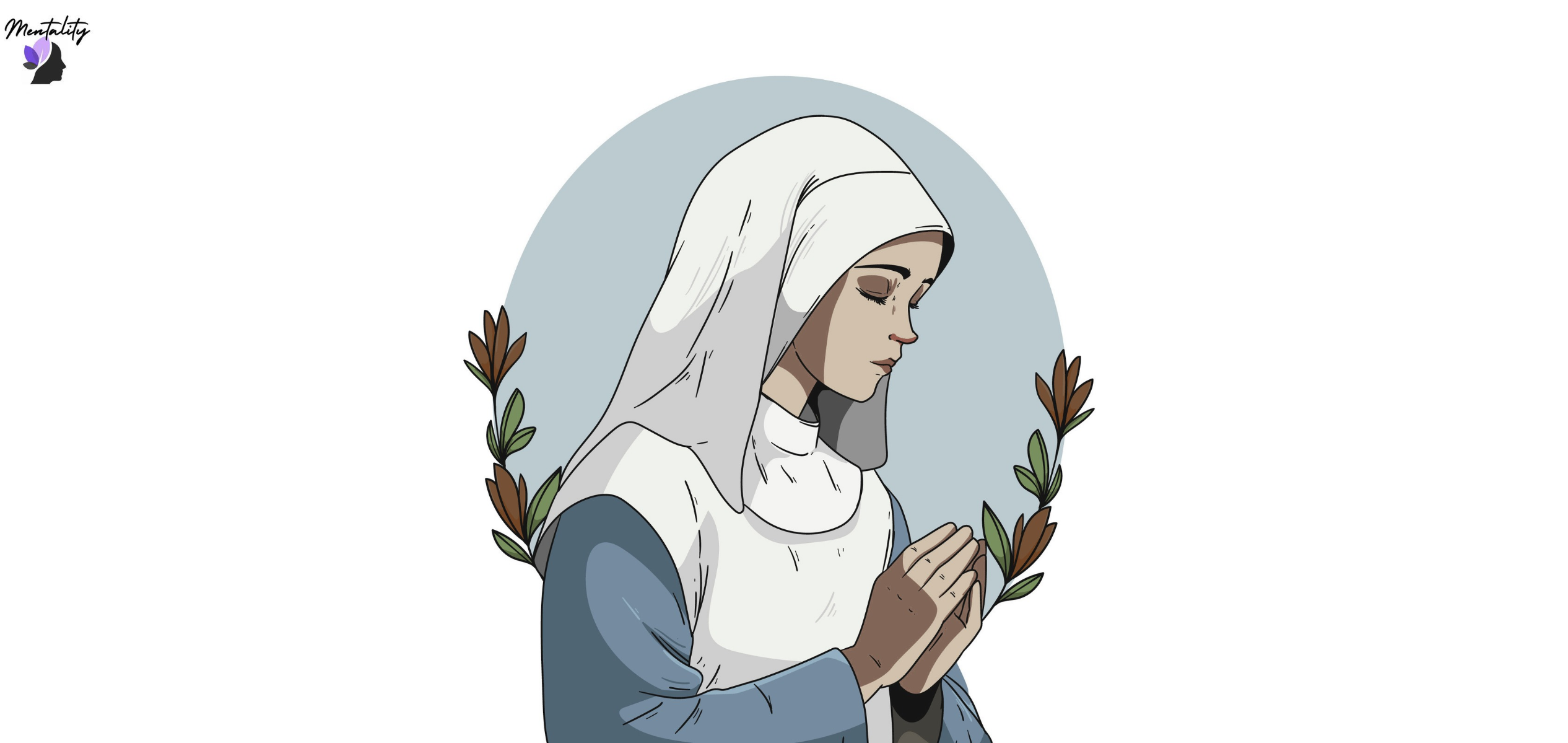
A representative image of a nun (Image Credit: Magnific)
By Hanna Paul
At least 10% of India’s nuns have mental health issues, as they are pulled between the spiritual path and worldly life. Sexual assault cases, behavioural issues from unresolved childhood trauma and rigid structures of the church are also considered factors for deteriorating mental health among the nuns, at times resulting in suicides.
When Sister Rani Augustine was ten years old, she felt a strong connection to God, she said. But she only started the process of becoming a nun after seven more years. “Most join very young,” said Sister Augustine, a psychologist and nun at the Franciscan Mission Sisters of Ajmer, Rajasthan.
The initiation of a Catholic nun is a process that can last between five to ten years. Acceptance involves screening and multiple rounds of interviews. Once accepted, they go through a multi-year training process before becoming anointed as a ‘sister’. All this time is spent away from families, pursuing God and living under strict rules.
“People think holy life is about sitting in a chapel and praying most of the time but that’s far from reality,” said Sister Augustine. “We juggle education, work, and our religious commitments while maintaining our spiritual practice.”
Most nuns end up being school principals or congregation superiors, and some manage orphanages, rehabilitation institutions, and hospitals. They work long hours, often in remote areas or foreign countries. Sister Augustine is from Kerala but has spent more than 20 years in Ajmer.
Such responsibilities could become overbearing for many women who commit themselves to the church.
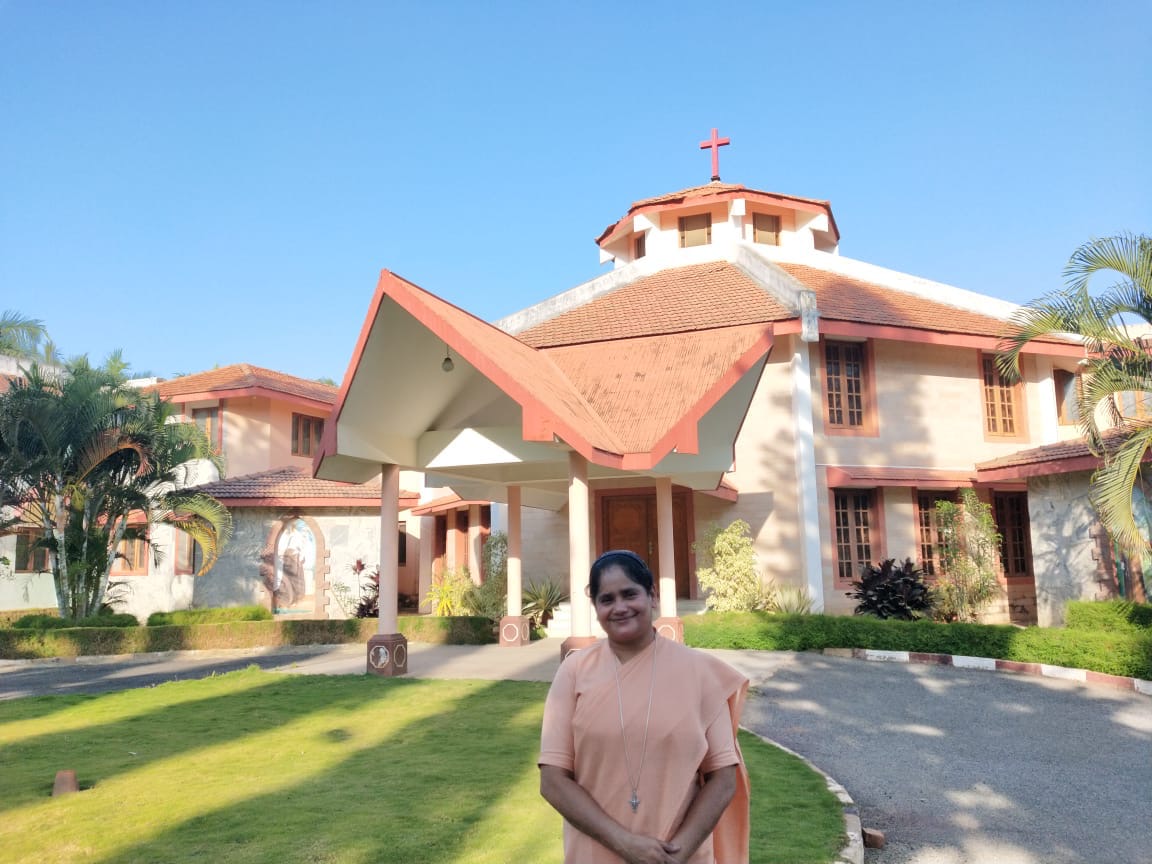
“Although we have responsibilities, we have to be constantly available [to the congregation],” said a psychologist and nun based in Bangalore, who requested anonymity said a psychologist and nun based in Bangalore, who requested anonymity because as she felt her clients might feel unsafe if they saw her speaking about her experience in public. “So, burnout is common,” she said.
When nuns face burnout, they are often deemed unfit to lead a spiritual life, said Sister Jessie D’Souza, a psychologist who has addressed more than 270 nuns at the Karnataka-based Dymphna Institute, named after the Irish saint and patron of mental illness. “There is a stigma attached to [nuns who] struggle with spirituality,” she said.
At least ten percent of the country’s more than 100,000 nuns have mental health issues, said Sister Sally John, an associate professor of psychiatry at the Mahatma Gandhi Institute of Medical Sciences, Wardha. In 2024, she founded Treasure, a sister-led mental health network for women religious. The following year, Catholic Mental Health Ministry’s India chapter was formed to address the mental health needs of those working in the Catholic Church.
“We are all human, all fragile,” said Sister D’Souza, “and we do live an unconventional life.”
Outer world, inner world
The life of a nun is a life of sacrifice, said Sister Biya Chathamkottu, a project co-ordinator of Kerala-based Medical Mission Sisters. “Daily distractions can bring us down if our [spiritual] connection is not strong,” she said. “We could be misled and start chasing ‘outer’ happiness,” she added.
A 2026 study from Poland collected and analysed data from 12 Catholic nuns between the ages of 38 and 53, who were diagnosed with major depressive disorder or mixed depressive and anxiety disorder. The study notes that they struggle to draw a line between their social roles and their personal needs and desires.
A life vowed to God demands obedience, generosity, celibacy, and avoidance of materialism, said the Bangalore-based nun.
Fourteen nuns died by suicide in Kerala between 2000 and 2009. Following which, Father Joy Kalliyath interviewed 60 nuns between the ages of 30 and 40 from four congregations serving Kerala’s Irinjalakuda Diocese as part of his doctoral research. A fourth of the respondents expressed unhappiness over their way of life, the survey results said.
When nuns felt unwanted in their communities, they lost self-respect, Father Kalliyath had observed in the study, which in turn led to disenchantment and depression among them.
Starting young
Since many start the initiation process as adolescents, they are expected to learn the ways of religious life, said Sister D’Souza, even as they go through all the struggles of those who have not chosen such a life. “Mood swings, feelings of rejection, feeling neglected, abandoned, and unmet needs—all of it comes up like a volcano for them,” she added. But they are expected to push these aside and concentrate on their mission.
Many carry baggage from their childhoods. “We lost one of our sisters recently to suicide,” she said. “We later learnt that her father had succumbed to suicide as well,” she added.
The consequences of trauma in their childhoods are usually not addressed properly, said Sister Chathamkottu. “The respective coping mechanisms they developed from these experiences are reflected in their adult personality and behaviour,” she said. Some are avoidant, while others are aggressive.
The latter stages of life come with their own challenges. Between the ages of 30 and 50 is a period of “turmoil, the most difficult time when emotions ride high due to biological changes in the body,” Sister Chathamkottu said. Since these physical changes are not discussed enough, sometimes nuns fail to connect with God.
“They start having doubts about whether this was meant for them. Some wonder what it would be like to go through childbirth, explore their femininity, etc,” she said.
Over the past couple of years, an increasing number of allegations of sexual harassment have come to the fore. Sister Ranit Pallassery became the first Indian nun to speak as a survivor of sexual abuse on camera and in print. “There have been cases of gender discrimination and sexual abuses in our country, which have driven some even to attempt suicide,” said Sister Molly Mathew at the Conference of Religious Women India in 2025. She said the church aims to have greater dialogue within itself.

Pulls of the non-religious life
In the past, a nun’s only contact with her family would be through written letters. Today, access to the phone and internet has made contact with the outer world very easy. “Obedience and respecting authority are difficult for many. They also have access to opportunities. Young women don’t tend to lead the rigid life that we did,” said Sister Chathamkottu. “They want freedom.”
When it was the norm to have six to eight children in the family, it was common among Catholic families, especially in Kerala, for at least one child to turn to the clergy. Moreover, for poor families, sending a child to the convent meant securing food and shelter at least for one offspring.
With smaller families, more individualistic lifestyles and greater opportunities, the number of women joining convents have dwindled. “In Kerala, there is a 70-75% drop in the number of women who were joining convents to be nuns,” said Sebastian Adayanthrath, the Syro Malabar Catholic Church’s auxiliary bishop for Ernakulam-Angamaly.
In order to counter this, the church has shown significant flexibility. “Back in our day, our superiors were very strict. We had little choice when it came to food or responsibilities,” said the Bangalore-based nun. “Nowadays, there is more choice and discussion,” she added.
Many churches have invested in helping the nuns develop healthy coping mechanisms, said Sister Chathamkottu. “Sometimes nuns show their anger in front of the community. We teach them emotional regulation through meditation or breathing exercises,” she said and added that nuns are encouraged to speak up if the workload is too heavy. “We perform inner child healing and talk therapy. Cognitive behaviour therapy is also used,” she added.
Recently women have been seen turning to the religious path later on in life, after their 30’s and 40’s, when they have experienced personal freedom and have more clarity in life. These sisters, called ‘late vocations’, could be the way forward for the clergy in India, many nuns agreed.
Sister Augustine tries to lead by example. Initially a teacher, then a warden and vice-principal of the Sophia College at Ajmer, Sister Augustine was a favourite among her students. She often consoled and counselled her students, the staff, and conducted seminars for psycho-spiritual integration of nuns.
Earlier, “pray more” would have been the only response. Not anymore.

Author: Hanna Paul
Hanna Paul is a journalist based in Kochi writing on the intersection of mental health, food, economy, climate and culture.