

Members of the Chiru tribe (Image Credit: meirilung.wordpress.com)
By Ngangom Suraj
Traditional plant-based medicines have helped generations of Chiru people cope with mental distress; however, deforestation, conflict, and urbanisation has made them sparsely available.
Sixty-year-old Moichung Laino returned to his native, Bungte Chiru village, in Kangpokpi district, after having worked all his life in a bank in Imphal, the capital of Manipur.
Everything had felt different for him in Imphal: the pace, the surroundings, the people, and the environment. “Work-related stress like long screen time and over working hours had frequently caused severe headaches,” he said, talking about headaches he was familiar with. Sometimes they came with deep pangs of sadness. He would pop a pill and the feeling would subside. “However, the symptoms would eventually return after some time.”
Now, back home, he was experiencing headaches despite not having excessive screen exposure or long work hours. Like most people in his village did when experiencing heaviness or anxiety, he decided to visit 40-year-old Rimoichung Laino.
A traditional healer from the Chiru tribe in Manipur, Rimoichung Laino first prefers to speak to his patients in detail before diagnosis, he said. “The dosage is determined according to the patient’s symptoms, as it may vary from one individual to another,” he added.
Rimoichung Laino has decades of experience as a traditional healer. He diagnosed Moichung Laino’s condition to be depression. “For instance, if a person has constant fatigue, headache, rapid heartbeat, insomnia, stomach issues, and eating disorders, I can tell it is a mental health related to stress or depression or anxiety.”
Moichung Laino was prescribed Holmskioldia sanguinea Retz., locally known as Kharamleishok. The plant’s young shoots or the dried form is boiled and consumed twice daily. “After using the remedy for a couple of months, I felt much better,” he said. This helped him discontinue his allopathic medicine he had taken from time to time when in Imphal.
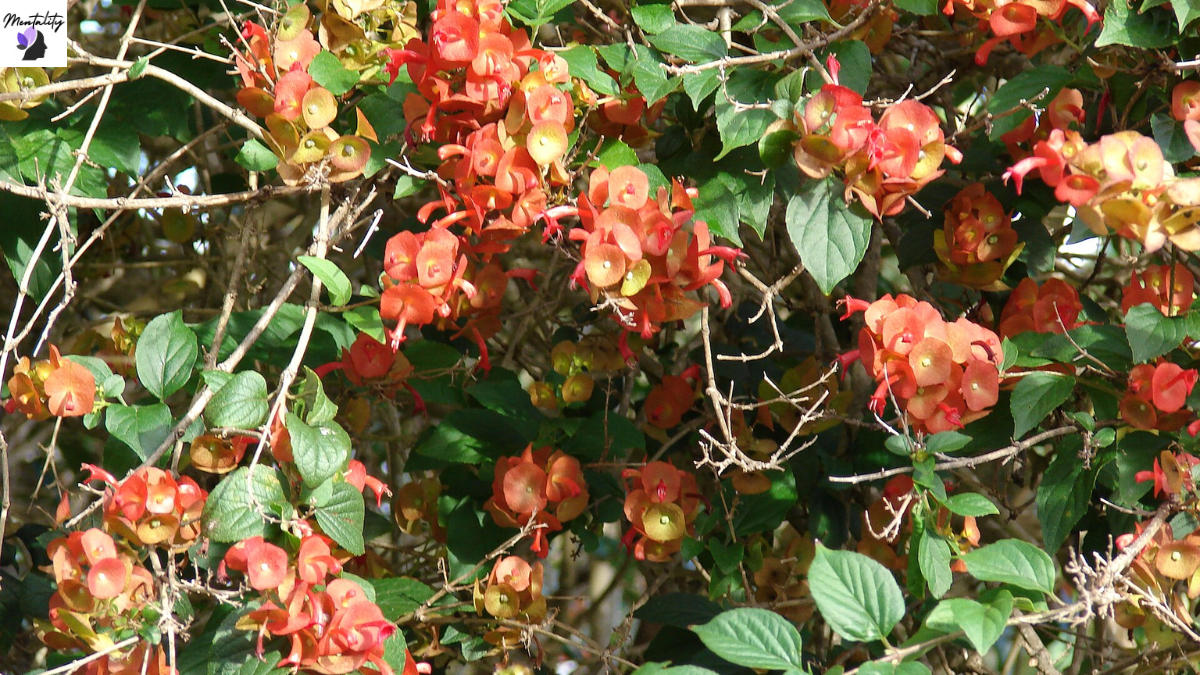
Availability of medicinal plants
Chiru tribe is an indigenous Naga tribe, which is recognized as a Scheduled Tribe and shares kinship ties with other tribes of the Rem identity.
A 2026 study published in the International Journal of Psychology Sciences concluded that depression is prevalent anywhere between 8.26% to 35% among Scheduled Tribes of India. Tribes in places like Manipur have higher prevalence owing to ongoing conflict and prolonged disruption of socio-economic life.
In order to tackle such high rates of prevalence, the study recommended the “integration of traditional healing practices, mental health awareness campaigns in local languages [and] a combination of traditional ethnomedicines with modern medical approaches.”
Moichung Laino has done precisely that. However, there are many obstacles to the use of traditional medicine. With large scale deforestation, the availability of these plants has become scarce. “I am not sure how to get my medication on a sustained basis,” he said.
The conflict in Manipur has made matters worse. “As a member of the Naga community, I am unable to venture into areas perceived as hostile to my community to collect medicinal plants from the forests,” said the traditional healer Rimoichung Laino. “This has severely restricted my access to the natural resources essential to my practice,” he added.

Documenting traditional knowledge
A 2023 study by Imphal-based academics documented ten plants which are used by Chiru tribes as potential antidepressants. “The study was particularly conducted as the traditional medicinal knowledge of Chirus are not documented properly,” said Professor Athokpam Pinokiyo, Department of Botany at Dhanamanjuri University, who conducted the study with her colleagues. “It might disappear soon,” she added.
Traditionally, Chiru tribes collected the medicinal plants from their immediate environment or nearby forests and prepared their traditional medicines afresh as and when required. “The plant parts used for treatment included the whole plant, leaves, fruits, roots, rhizome, the bark of the tree, and inflorescence, with leaves being used the most,” said Pinokiyo.
“At present, the university is conducting two pieces of research to find out how useful the ‘antidepressant’ plants can be in treating mental illnesses,” she said. “So far, the presence of nutraceutical compounds such as flavonoids have been found some plants.”
Traditional vs allopathic medicines
On the face of it, the logic behind diagnosis and prescription seems to be the same in both allopathic and traditional medicines when it comes to mental health issues. “A particular medication that proves effective for one patient may not produce the same results in another, making careful assessment and diagnosis essential before prescribing treatment” said Dr Seram Chaoba Devi, a consultant psychiatrist at Shija Hospitals and Research Institute. “Therefore, dosages may be adjusted over time depending on the patient’s response,” she added.
However, antidepressants are synthetic chemical compounds, which may have side effects with reported withdrawal when stopped. “Plant-based medicines have fewer side effects in comparison,” said Professor Pinokiyo.
A dying profession
At age 15, Rimoichung Laino knew what he would be when he grew up. “I learned the skill to identify medicinal plants and their uses over a period of 20 years,” he said.
His learning came mostly from elders who would take him on walks in the forests around his village.
It was hard: he had to learn the symptoms of different illnesses, doses of medicines, and exceptions to all these rules. However, he said a part of it came naturally to him as his “ancestors had used these plants for hundreds of years.”
But with significant changes in traditional lifestyles, and cities creeping into these once untouched villages, the younger generation is less inclined to being traditional healers, Laino said.
For people like Moichung Laino, who have seen the benefits of these medicines, that is another concern to add to the list.

Author: Ngangom Suraj
Ngangom Suraj is a Manipur-based Freelance journalist