
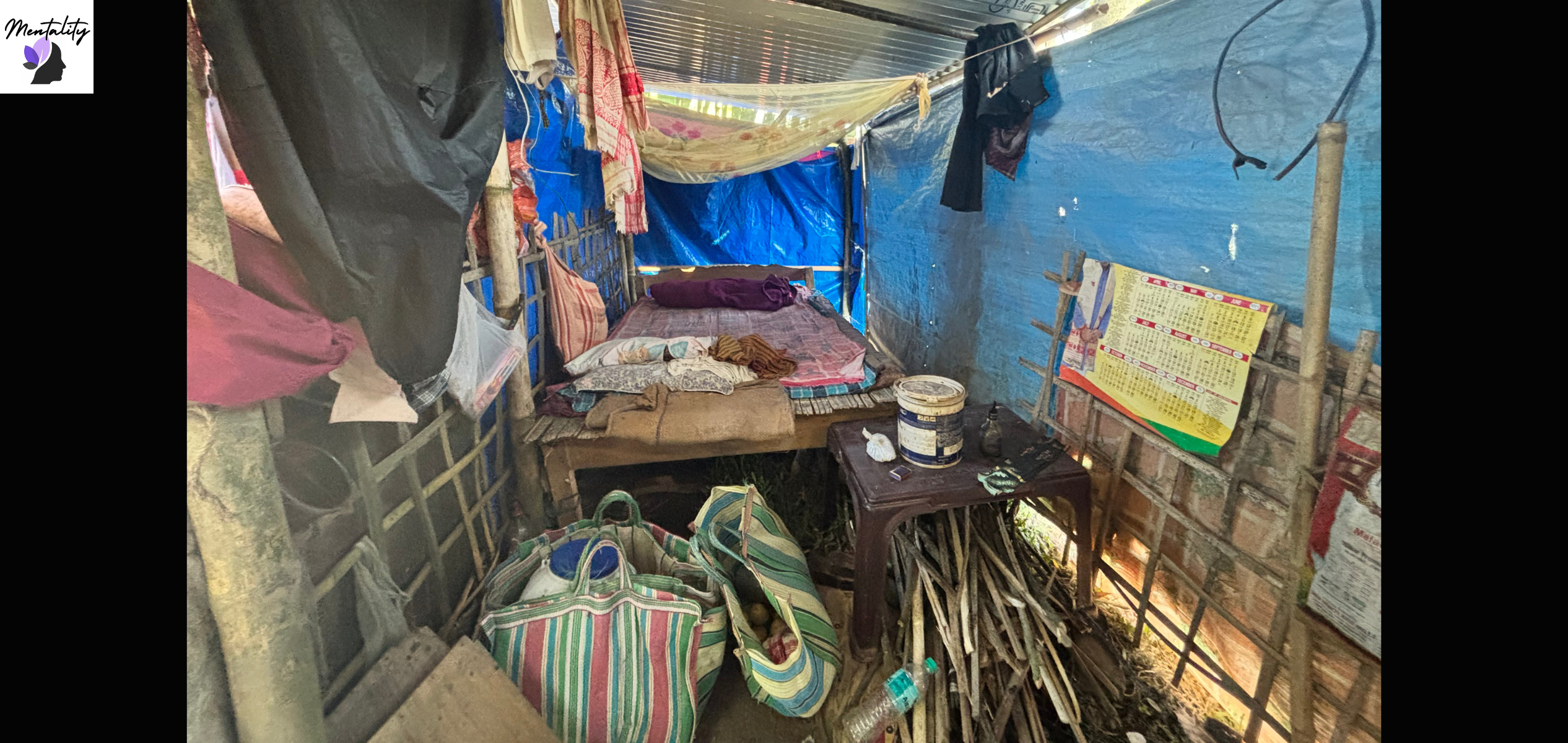
The temporary shelter where Pankaj and his family are currently staying (Image Credit: Sayantani Deb)
By Sayantani Deb
The impacts of experiencing flooding for the first time can last generations. Residents of some districts of Upper Assam speak about the shock and the trauma that followed the floods in July.
On 19 July 2026, at around 5:30 PM, as was her routine, Sikha Moni Bora was making tea in her house made from bamboo in Hujaikan village around 20 kilometers from Teok town in Jorhat, Assam.
At first, she felt some water on her feet. She thought it was a water pipe burst but soon realised the flood water was entering her house. Before she realised, water had risen to her waist. “I am four months pregnant and that day scared me like nothing else had,” she said. “Even during monsoon, our area usually remains quite dry…” she added.
Many parts of Assam flood annually. Roughly 40% of the state’s area is flood-prone, and a large share of its population lives and farms on the floodplain, according to a 2026 report on the floods by Assam University. “An estimated 2.5 million people inhabit the Brahmaputra’s shifting char (river-island) lands, where poverty, insecure land tenure and dependence on flood-sensitive agriculture and livestock concentrate vulnerability,” it reads.
However, the July 2026 floods in Upper Assam affected districts that had never experienced flooding before, displacing roughly 2.12 lakh people across eight districts, claiming more than 108 lives, submerging some 21,000 hectares of cropland and killing more than 11,000 livestock, according to the Assam State Disaster Management Authority (ASDMA) daily flood situation reports.
People living in flood-prone areas prepare for the raging waters in advance and have many generations of training to do so. For instance, granaries in such regions are built on pedestals; bamboo and other light materials are used to build houses; and roads and pavements have spaces for people to take shelter for when water levels reach dangerous levels.
Those affected by the floods in July were caught off guard.
The first time
Bora, 24, called her husband, who was working in their agricultural land a short distance away. He rushed home, to move her to a relatively higher stretch of road. Little did she know that moving to immediate safety was the beginning of months of struggle. “We do not have a proper place to cook, no clean drinking water, or access to toilets,” she said.
The immediate pain is visible, but the long-term impact can emerge in different forms, said Assam-based psychiatrist Dr Nilesh Mohite. “For instance, people are likely to complain about persistent body aches, headaches, palpitations, and disturbed sleep, which can sometimes be linked to anxiety. And, children who cannot articulate anxiety or depression may show changes such as bedwetting, reluctance to attend school, or difficulty concentrating.”
Dr Rajib Panging, a senior psychiatrist at Sivasagar Civil Hospital, is already dealing with increased cases of insomnia, acute stress reaction and psychosis. “If the flood-affected people do not receive necessary mental health care immediately, they may lose their stability and strength of decision making which may lead to more severe psychiatric disorders,” he said and added that they are prone to develop post-traumatic stress disorder (PTSD) anxiety, depression, and phobia.
Children, the worst affected
Sixteen-year-old Pankaj Bora, a student at a local high school lost all his study materials, including the notes he had carefully collected and prepared over the academic year. “This is a very crucial year for me,” said the student who would be taking his Class 10 board exams soon. “And I could not save even a single textbook.”
But studies are not top of mind for Bora. He said he is terrified at the thought of the night when he had to wade through the waters. “Whenever I close my eyes, I see visuals of that horrifying night.”
Clinical psychologist Pallavi Sahu said the fear of academic loss, security, and lack of privacy among adolescents predisposes them to dropping out of schools, social withdrawal, and substance abuse.
“Even after [the school] reopening students are unable to concentrate on their studies,” said Julee Dehingia, a teacher at Hahchara HS School in Sivasagar. Many have lost interest in studies, she added.
Irreversible losses
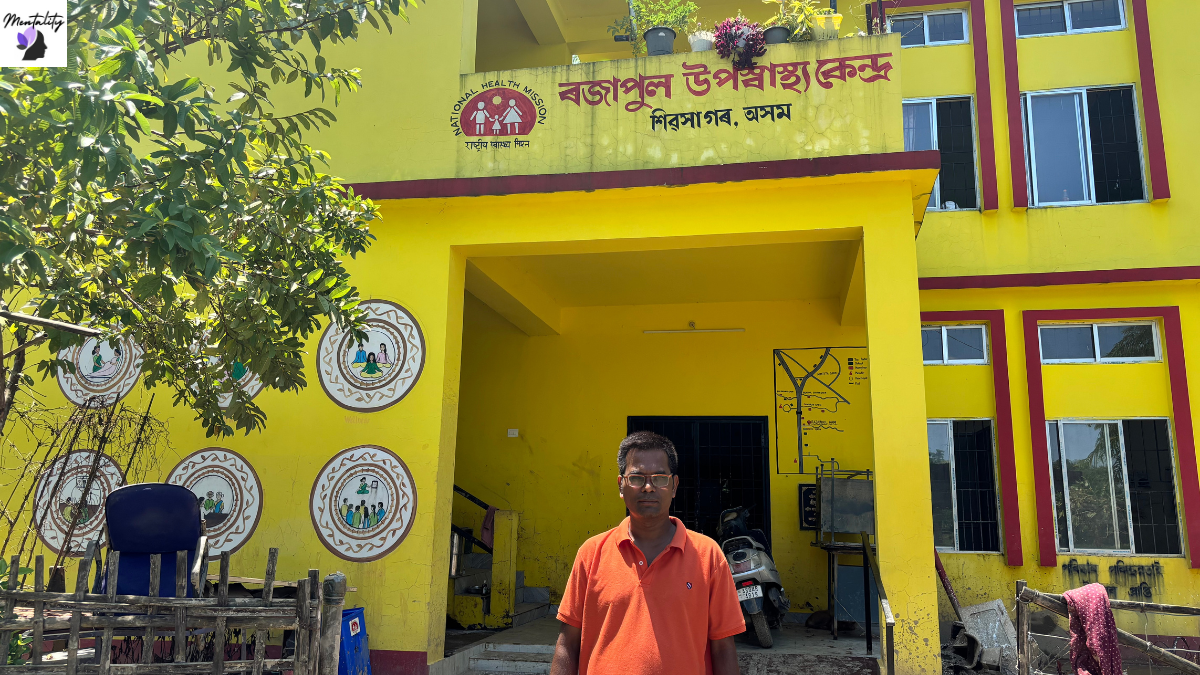
Forty-five-year-old Amarjyoti Borgohain, a partially blind resident of Rajapul, lost more than just his home in the flooding. “I still get goosebumps when I remember that evening,” he said. “Within five or ten minutes, everything around my house was submerged and suddenly I found myself in chest-deep water.”
Borgohain with the help of his brother managed to make his way out and took refuge at a nearby health centre but is constantly worried about his dream project: Uttaran Jatiya Vidyalaya, a school for children with disabilities.
The school had 69 students, all of whom have been affected by the floods. He has also had to close the school. “I have not slept much since the floods,” he said.
Fears for the future
When people lose everything that was built over decades within decades, evidence suggests they become susceptible to suicide, said Mohite. “That is concerning,” he said.
Even those unborn face the impacts of such a sudden disaster. Studies have shown that unborn children experience anxiety when the mother does, said Sahu. “So, if the pregnant lady is experiencing anxiety, trauma, depression or PTSD then there is a high chance the unborn baby is too [experiencing the same]” she added.
After learning about Sikha’s pregnancy, Accredited Social Health Activists (ASHA) visited and provided immediate care. However, she has not been able to see her doctor since. “As the days pass by without being able to see a doctor, I am getting more and more scared and anxious.”

Author: Sayantani Deb
An award-winning journalist based in Guwahati, Sayantani Deb takes keen interest in exploring and highlighting grassroots stories on social, cultural, and developmental issues from Northeast India.