
By Monish Upadhyay
As Delhi’s air quality dips, a temporary ban on construction work affects migrant construction workers, living in precarious housing, without healthcare benefits and under extreme stress. But they have no avenues to address their mental health.
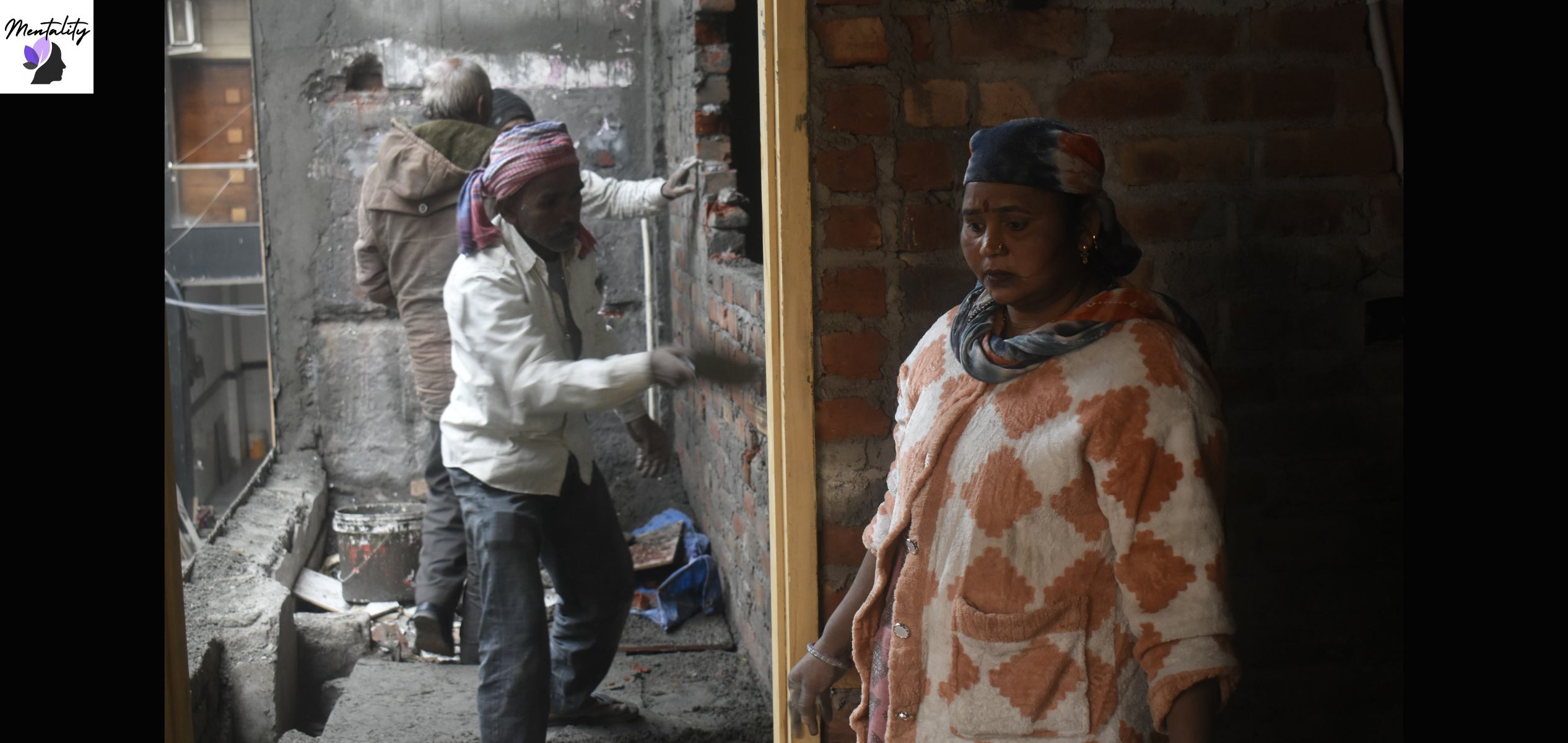
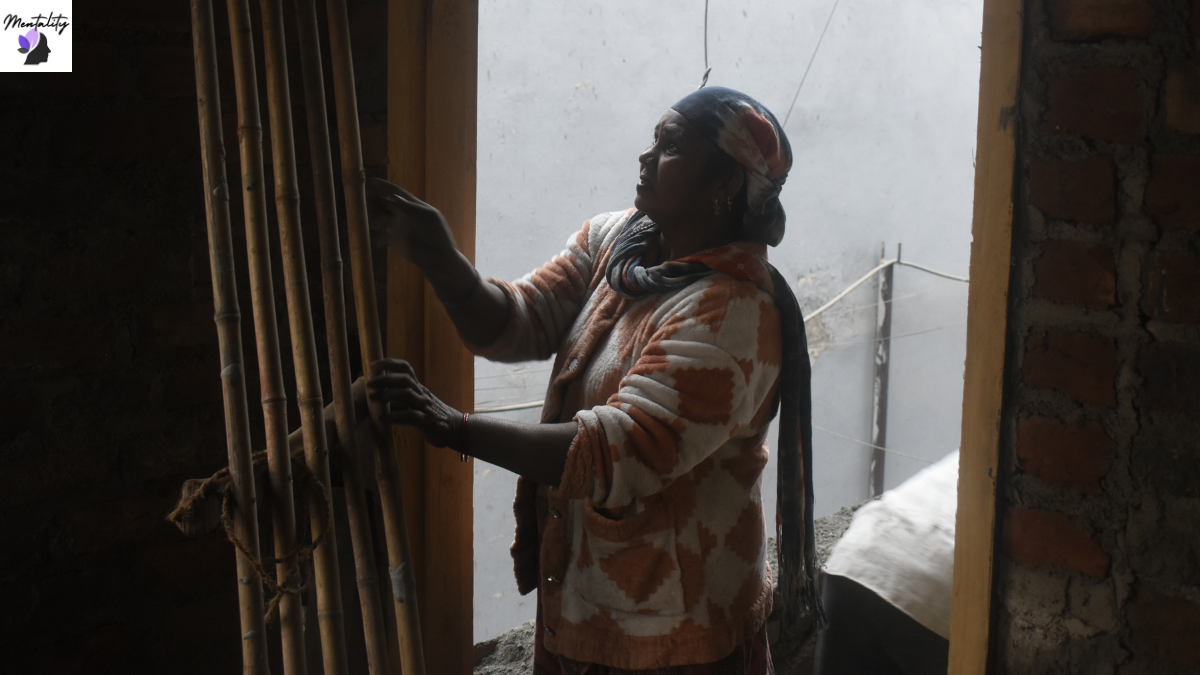
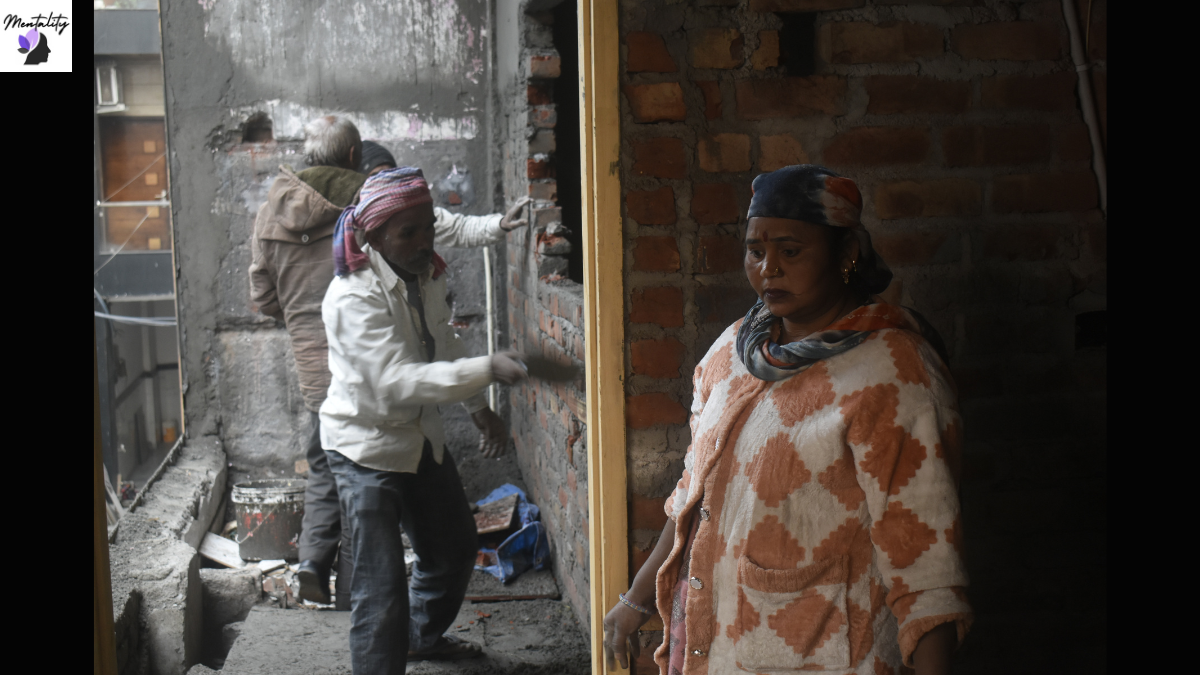
On a smoggy January day, 44-year-old Baby, a construction worker who goes by one name, returned to work after about a month. She is a ‘masala mixer’ or a person who knows exactly how much cement and sand should be mixed for a structure to remain strong. She was one among eight construction workers, building a large house in north Delhi’s Badli Gaon.
Baby had been out of work thanks to Delhi’s government’s Graded Response Action Plan (GRAP), which puts different restrictions on urban activities in the National Capital Region, based on how bad the air pollution is. Just days after Diwali, on 19 October 2025, Stage 2 of GRAP was activated, which put a limited ban on construction work. Thousands of workers like Baby were left unemployed overnight.
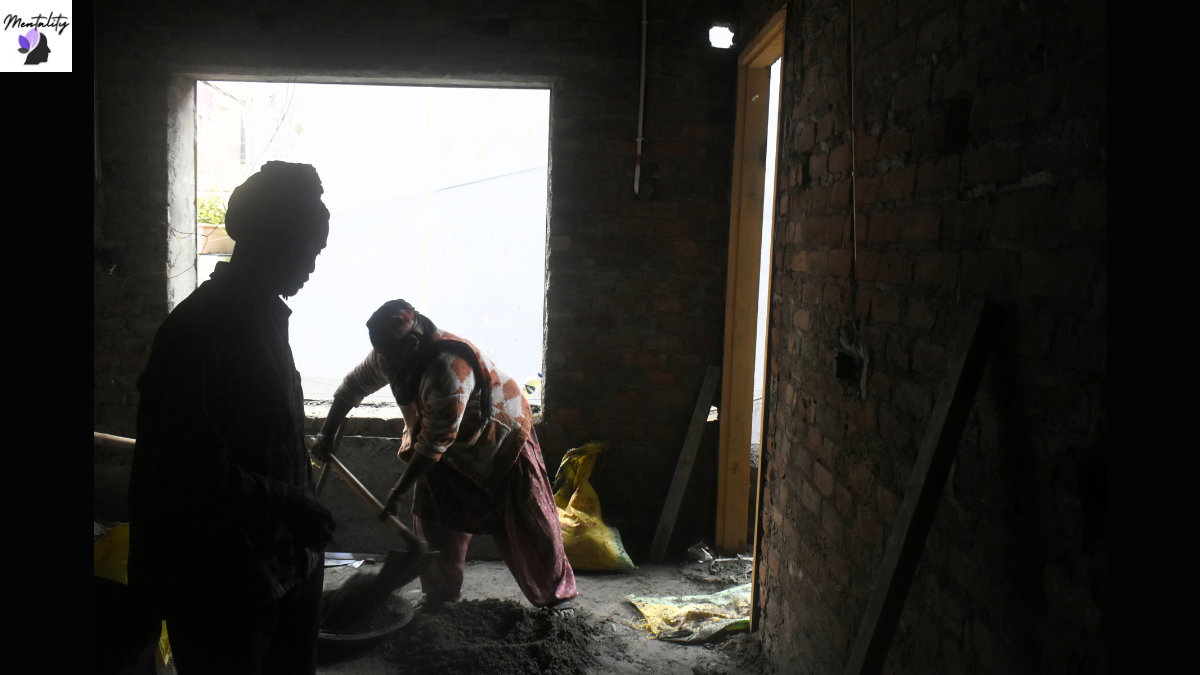
Her first day back at work ended with a fight with her employer, the ‘thekedaar’, who usually recruits Baby for a daily wage. The ban on the work had affected his cash flow; therefore, he offered to pay Baby a fourth of what she otherwise makes. “These are the conditions we work under,” she said.
Remarkably, work is the least of Baby’s worries. “We have heard that our neighbourhood may be cleared in an eviction drive,” she said. Informal settlements are often cleared with limited notice for infrastructure building or for political reasons. Baby is not clear who wants to demolish her home and why.
Even as she worried about where she will take her family of six if her tenement in northwest Delhi’s Haiderpur is demolished, she complained of regular headaches. “My symptoms definitely increase as we enter the winter months,” she said. She didn’t experience frequent aches in her home district of Bhagalpur in Bihar.
Tougher for first generation migrants
Most construction workers in Delhi have migrated from elsewhere, said Megha Yadav, a doctoral researcher at O.P Jindal Global University, who works on “resilience in the workplace.”
The nature of the construction industry is such that there is often no job security, as most labourers are daily wage workers. Add to this, the disregard for safety regulations on construction sites and lack of affordable housing or healthcare pushes them into a polycrisis that takes generations to get out of.
A polycrisis is when economic, social, environmental, political and other crises occur simultaneously, amplifying each other, and thus creating a far worse outcome than the sum of their individual effects.
Yadav added one more factor into the mix: gender. “Especially for women, the manifestation of these stressors in the form of anxiety and depression are severe.”.
Baby moved to Delhi in search of work about 30 years ago and continues to struggle for a stable income, especially since her husband has been unemployable after falling from a building he was helping construct.
Even as multiple reports point to how prolonged exposure to toxic air links to “anxiety, low mood, sleep disruption, and cognitive fatigue” among residents of Delhi, caring for one’s mental health often becomes a luxury that one, like Baby, cannot afford.
When asked about mental health, Baby simply shrugged. Working for years on end for about 10-12 hours a day often leaves her body in great pain. She said she takes some medicines her doctor gave her for the knee pain, but she has little time to think about the anxiety that might be equally crippling.
Inter generational crises
56-year-old Minne Raj is a third generation migrant and is slightly better off than Baby.
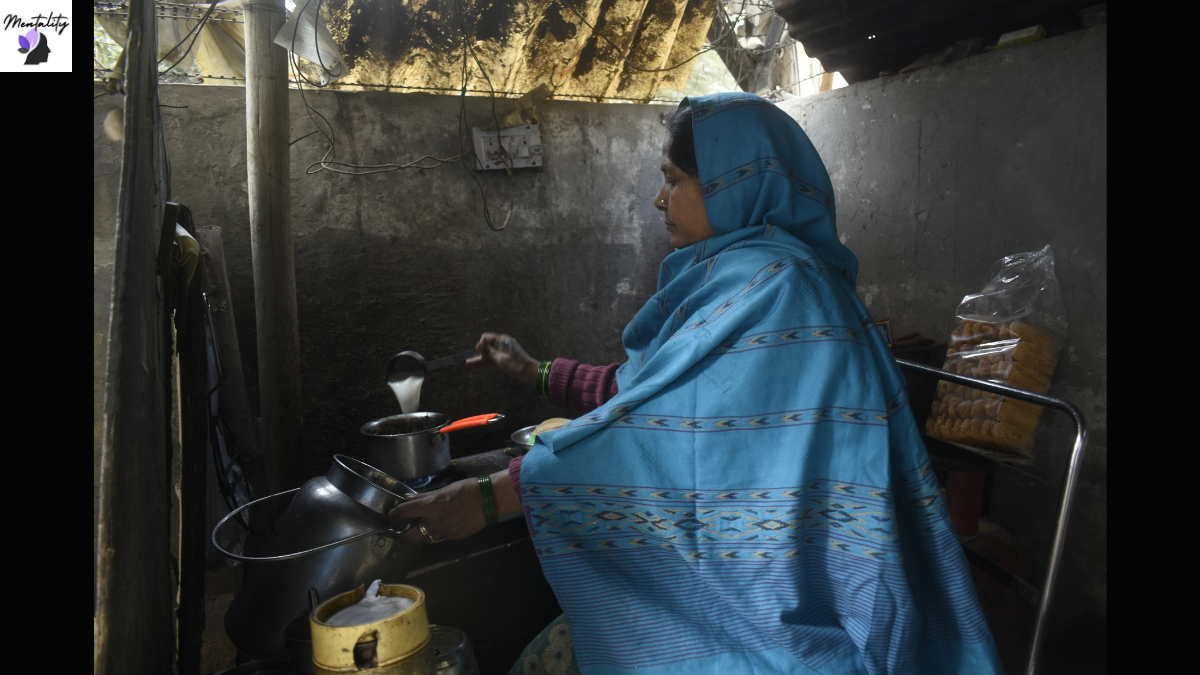
For the past 15 years, Raj has done the same job that Baby does. However, she also has a side hustle that pays some of the bills to maintain a family of ten: a makeshift tea stall in north Delhi’s Mangolpuri, where she sells multiple glasses of the sweet concoction every day.
“There is no chance we would have been able to run the household if I did not have this little shop going on,” she said. Her husband is a carpenter, and her sons and daughters work to meet the household expenses.
Raj is also more comfortable talking about how she feels. “As the winter season approaches, I feel more tense,” she said, explaining that it was a combination of the fact that restrictions on construction would mean job loss and a general sense of despair. As she waited for the ban to be revoked, she added that in the last few years, she has been out of work for weeks in the winter. “I think there are multiple reasons for the toxic air, a ban on construction work alone will not solve the problem,” she said.
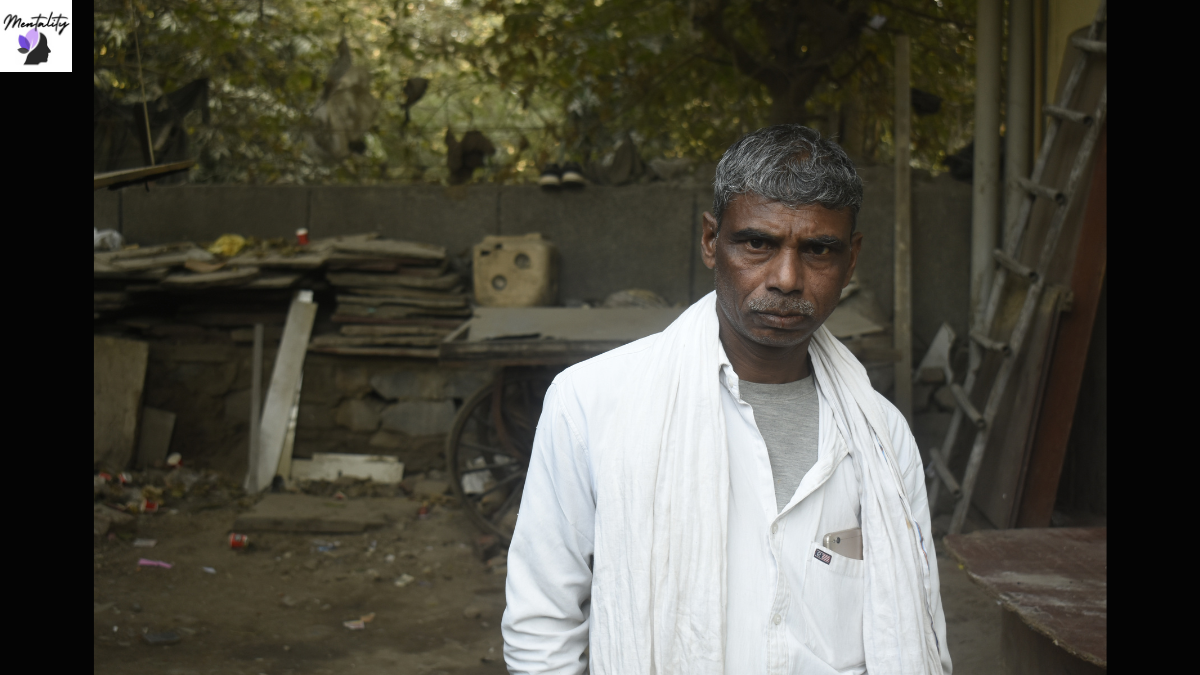
Ramdhari Bhind, a stone cutter, rents out a small room from Raj but has not paid rent for a few months. “I wake up in the middle of the night in cold sweat,” said Bhind, who is approximately 40 years old.
Bhind, who moved to Delhi from Jaunpur, Uttar Pradesh, invested about one lakh fifty thousand rupees on heavy machinery. A ban on construction has kept him from working or from going back to his village, where he might take years to make good on his investment.
Unemployment and mental health
Although working outdoors in the toxic air affects their health, many daily wage workers said that unemployment is their primary concern. Research suggests that unemployment can have a huge impact on the mental health of people.
A December 2025 study by Swapnanil SenGupta at the Department of Economics, Goethe University, shows unemployed individuals are at a high risk of suffering psychological issues. “The results also suggest that men are more affected by unemployment and low wages than women,” it reads.
Around the large marble market in Mangolpuri is a decrepit public park, where a lot of young men of employable age loiter as they don’t seem to have jobs to get to. “I have to hear my wife and family complain every day about how tough things are,” said Vijay Sahu from Lakhisarai, a town in Bihar. Sahu was out of construction work and prefers to be in the park instead of his home. “We do not have enough to eat,” he added. “Who wants to be at home in such a condition!” Sahu said the multitude of practical problems did not leave him the luxury to think about what stress might do to his body.
Subhash Bhatnagar, founder of NIRMANA, an NGO working for the welfare of daily wage workers, said that the Building and Other Construction Workers Act, 1996 doesn’t do much to ensure construction workers get their due, let alone address their mental health conditions. He said anybody who has been employed in construction work for more than 90 days in a year shall be deemed a construction worker, according to the law. “However, many workers simply do not register,” he said, owing to bureaucratic red tape and corruption.
A senior official with Delhi’s Department of Labour, who requested anonymity as he was not authorised to speak to the media, said that mental health checkups for construction workers may be conducted in the future but there were no firm plans yet.
Workers in the informal sector have had to rely on the kindness of the community to sail through the tough winter months. Bhind said he is thankful to Minnie Raj for giving him more time to pay his dues. “Otherwise, I would be homeless,” he said.

Author: Monish Upadhyay
Monish Upadhyay is an independent journalist based in New Delhi. Interested in arts, cinema, environment and human rights, he also enjoys photography as a medium of storytelling.