
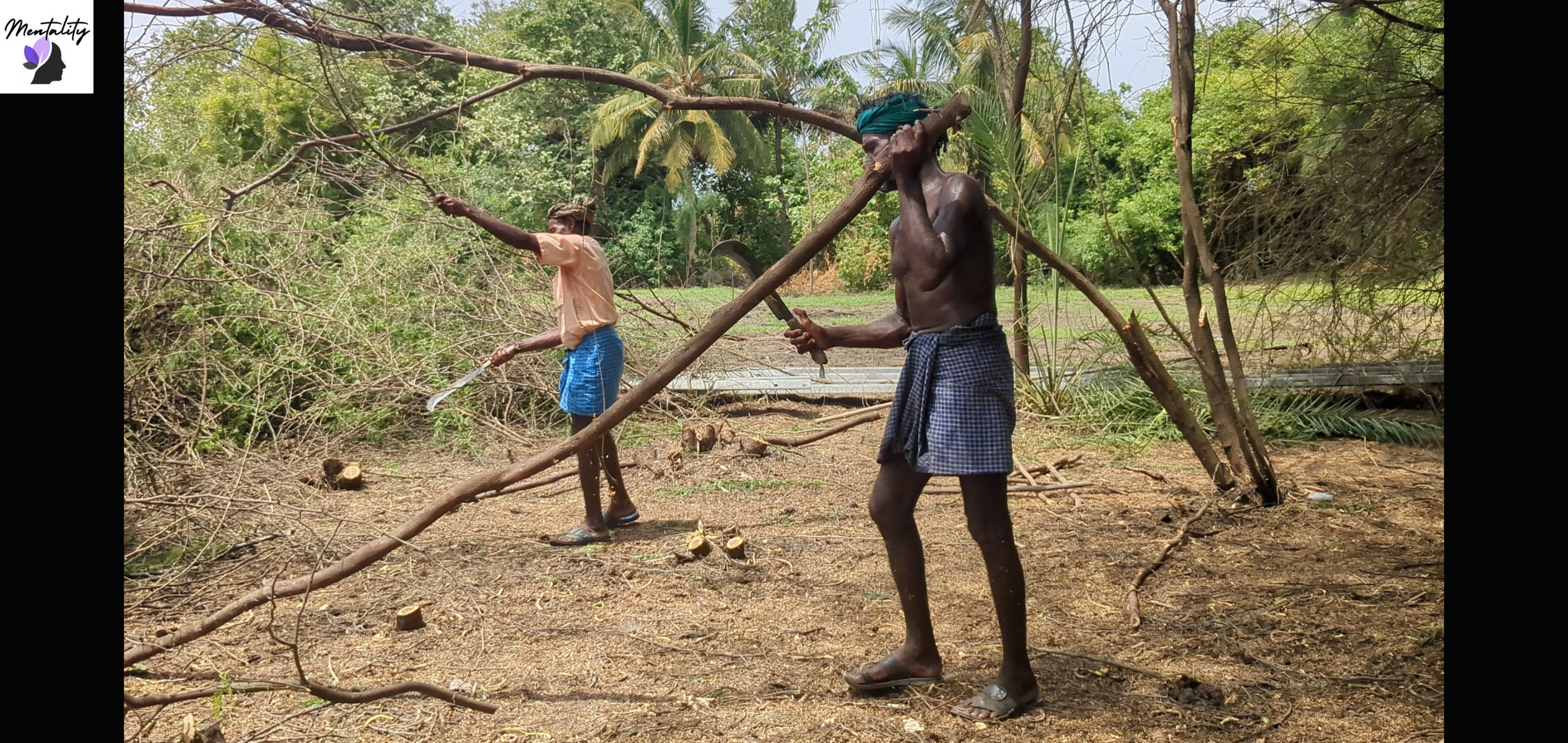
Workers cut wood in a village in Vridhachalam under the hot sun (Image Credit: Subasree)
By Subasree
The Irular community in Cuddalore cuts trees in the harsh sun during the day and burns the wood to make charcoal at night. Many in the community attribute relentless heatwaves and rising nighttime temperatures to their lack of productivity, irritability, and anger.
For decades, 62-year-old K Poomalai spent all his days cutting a shrub locally known as seemai karuvelam in Agaram village of Cuddalore district of Tamil Nadu. These shrub-sized trees are often found in arid regions of Tamil Nadu, where the punishing sun burns the skin of those exposed to it.
He said he begins work at around 7 AM, rhythmically putting his axe to the wood until the shrub is broken down into smaller parts. Its hard, slow-burning wood is well suited for making charcoal.
Off late though, he said, he has begun to get angry often. “Our family members are often at the receiving end,” he said, adding that he can’t put a finger on why that happens.
Poomalai belongs to the Irular community, a Dravidian ethnic group, many of whom do the same thing he does to feed their families. According to the 2011 census data, 11,773 Irular tribal individuals live in Cuddalore district.
Although he said he cannot be sure about it, Poomalai hesitatingly attributes his erratic temper to the rising temperatures. A bunch of different studies from around the world have shown that heat can induce anger and even aggression.
Cuddalore has experienced heat waves for the past three years.
Making charcoal
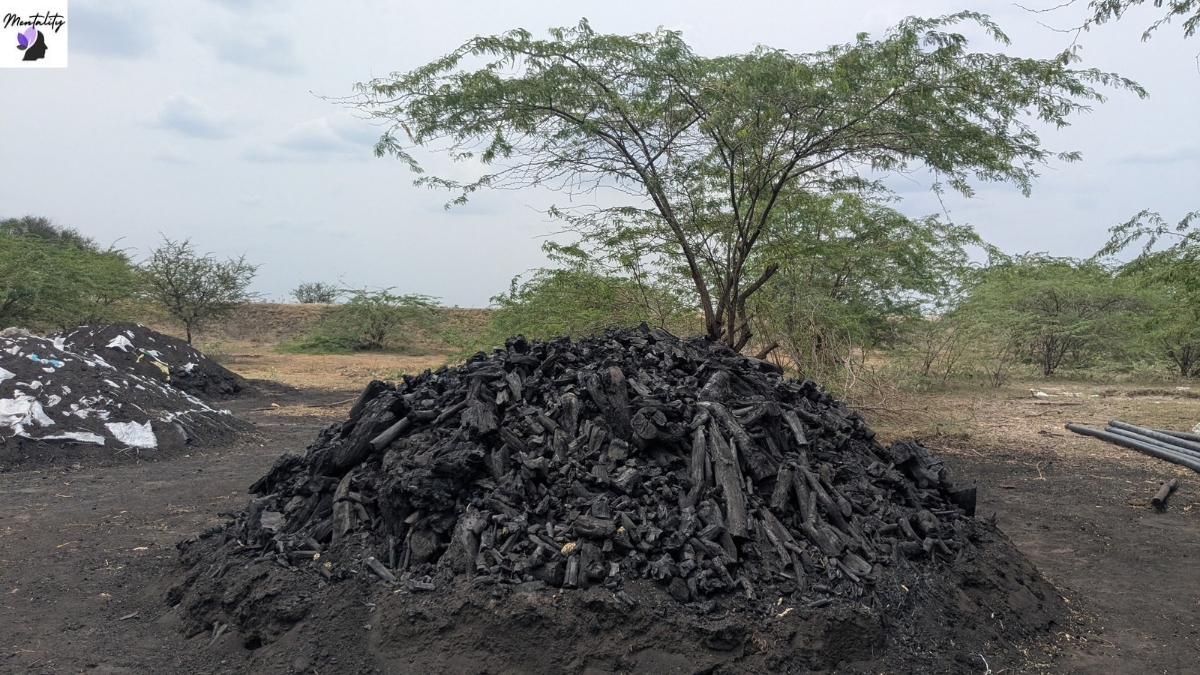
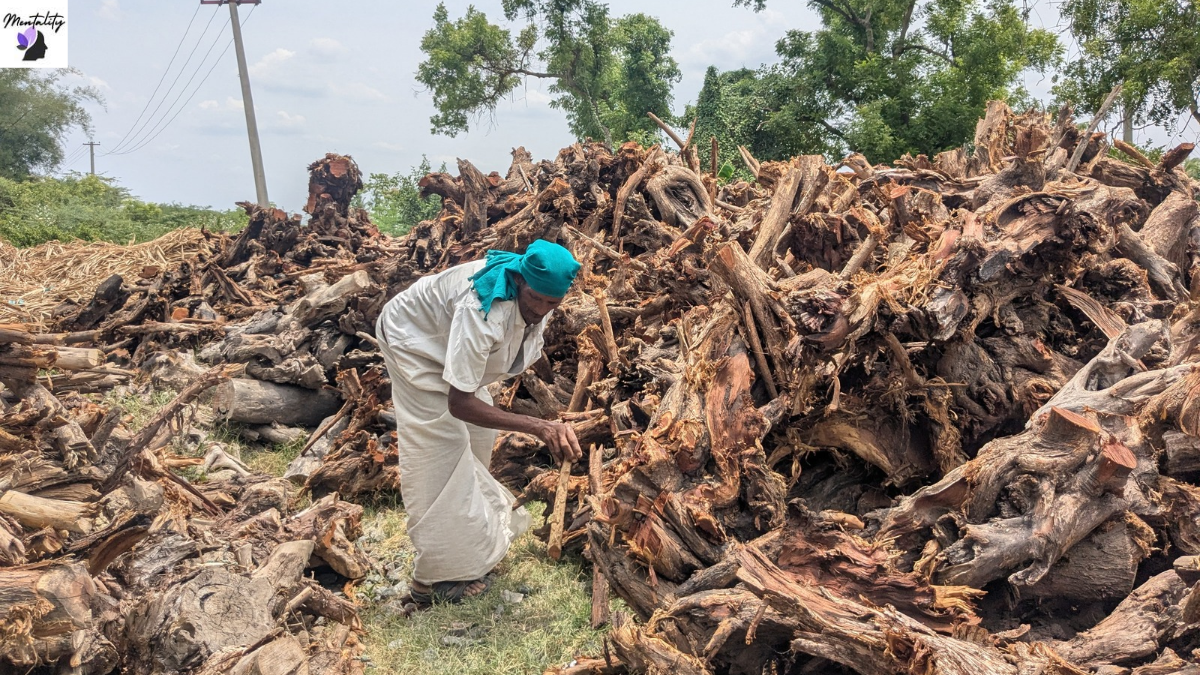
Once the trees are cut, they gather the wood, bring it to a designated spot, and arrange it into large heaps. In a traditional charcoal-making process locally known as karimootam poduvadhu, the wood is covered and slowly burnt over a week, often at night. Someone has to remain nearby to tend the fire and prevent it from spreading. “If we don’t stay awake at night, we don’t earn much,” said Poomalai.
Once the wood is reduced to charcoal, it is packed into sacks and sold to buyers. Their work, therefore, exposes them to harsh sun during the day and heat from burning the charcoal at night.
Night temperatures in Cuddalore have also been reportedly higher than normal in recent years. For Poomalai and his community, this means that they work in relentless heat for most months of the year.
The effects of rising temperatures can range from mood changes, anxiety and depression to post-traumatic stress, insomnia, and the worsening of existing mental-health conditions, said Dr. Padmavati Ramachandran, Director of Schizophrenia Research Foundation India, who has examined how environmental changes and heat can affect mental well-being. “I work with people who have serious mental disorders, and I have seen people with mental illness dying during summer months,” she added.
Productivity matters
One way heat certainly affects the mental health of daily wage earners like Poomalai is by bringing down their productivity.
Dr Ramachandran said productivity is one of the variables that needs greater attention when studying heat and mental health among communities that largely depend on daily wages.
Fifty-eight-year-old P Rangan, another charcoal producer from Cuddalore, said the amount of charcoal they produce directly determines their income. In a good month, he can make up to 50 sacks making him about 60,000 rupees. When production falls, household finances are affected. The loss of productivity can therefore become a source of anxiety.
Often, production reduces because physical health deteriorates when exposed to extreme heat.
After hours of cutting wood under the harsh sun, 25-year-old Maheshwari, walks home to Agaram, approximately 5–15 kilometers away.
Off late, Maheshwari has had headaches regularly, she said. “It has become so common that we start treating it as a normal thing now,” she said.
When the heat waves return every year, the motivation of the workers to get out for work also reduces, Dr Ramachandran said.
Adapting to extreme heat
For many Irular people, anxiety around climate change doesn’t lie in the distant future. It is a daily struggle, and so is the anxiety about making ends meet every day. “Will they be able to work?” “Will they be able to work enough and are there alternatives?,” are some of the questions that most people in the community constantly ask.
Mahesh Subramanian, founder of the Chennai-based non-profit Peace and Happiness, has worked to get Irular communities in mangrove restoration in the Pulicat region of Tamil Nadu and employed them to care for native trees. He said that the knowledge of indigenous communities needs to be harnessed when it comes to adaptation to climate emergencies. “That will ensure better mental well-being of communities,” he added.
For the Irular community in Cuddalore, adaptation means the freedom to choose another livelihood. “We don’t want to do this job,” said Poomalai. He wants to rear cows and goats, he added, since that can provide a more stable income without requiring families to spend long hours beside burning charcoal.
Rangan already owns four cows and four goats. But he wants to be able to transition completely towards animal husbandry and sought the government’s help in doing so. Some others said they want to become farmers.
Although he understands that every livelihood option comes with its own struggles, Poomalai hopes that changing his profession would bring down anger and fights at home.

Author: Subasree
Subasree is an independent journalist writing on environment, policy, human struggles, empowerment and social justice.