
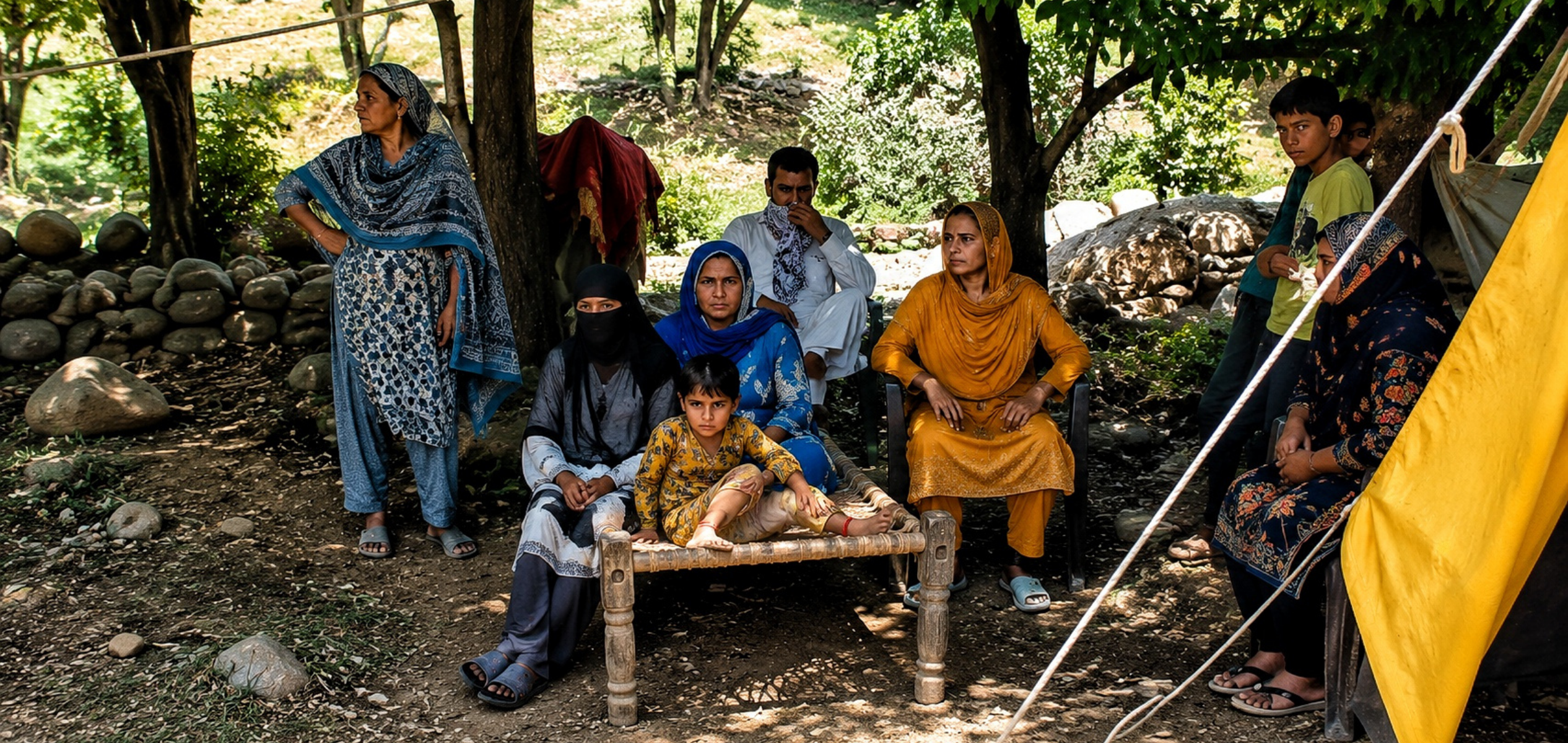
Members of an affected Gujjar-Bakarwal family sit beside a makeshift shelter after their home was demolished at Bandhi Sidhra in Jammu (Image Credit: Majid Maqbool)
By Sajid Raina, Tauseef Ahmad
We spent a day with the residents of Sidra Bandhi, a Gujjar and Bakerwal settlement outside Jammu, which was allegedly demolished without prior notice. Repeated evictions keep the younger generation on edge and cause long term trauma.
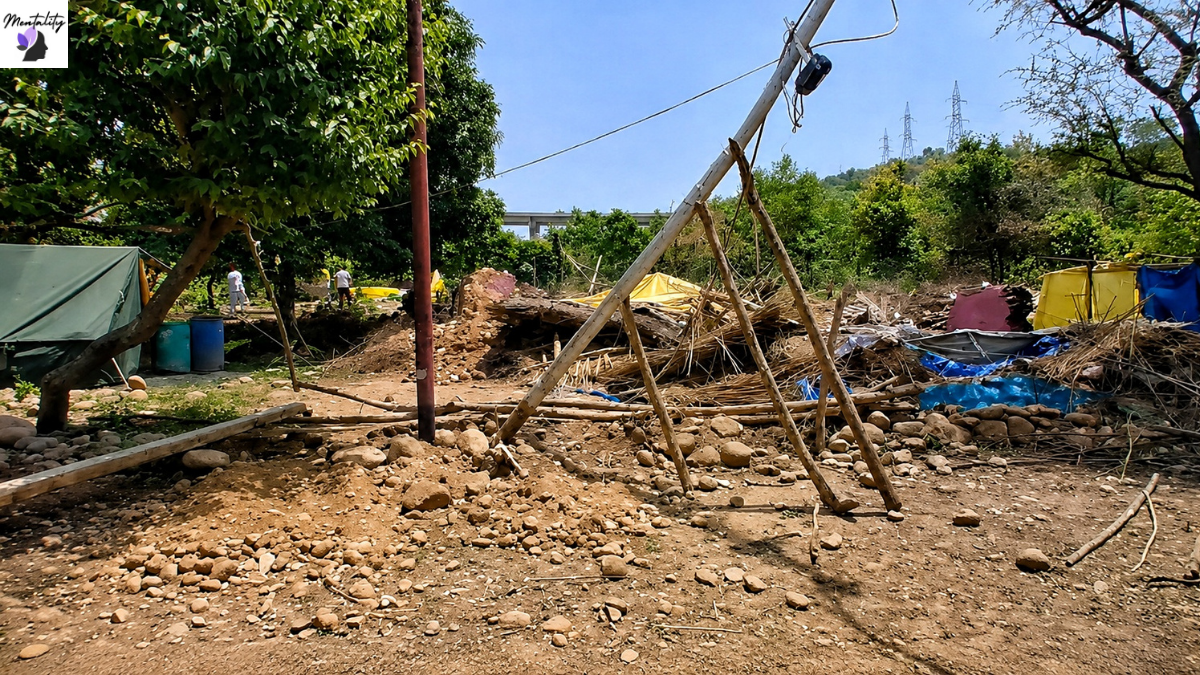
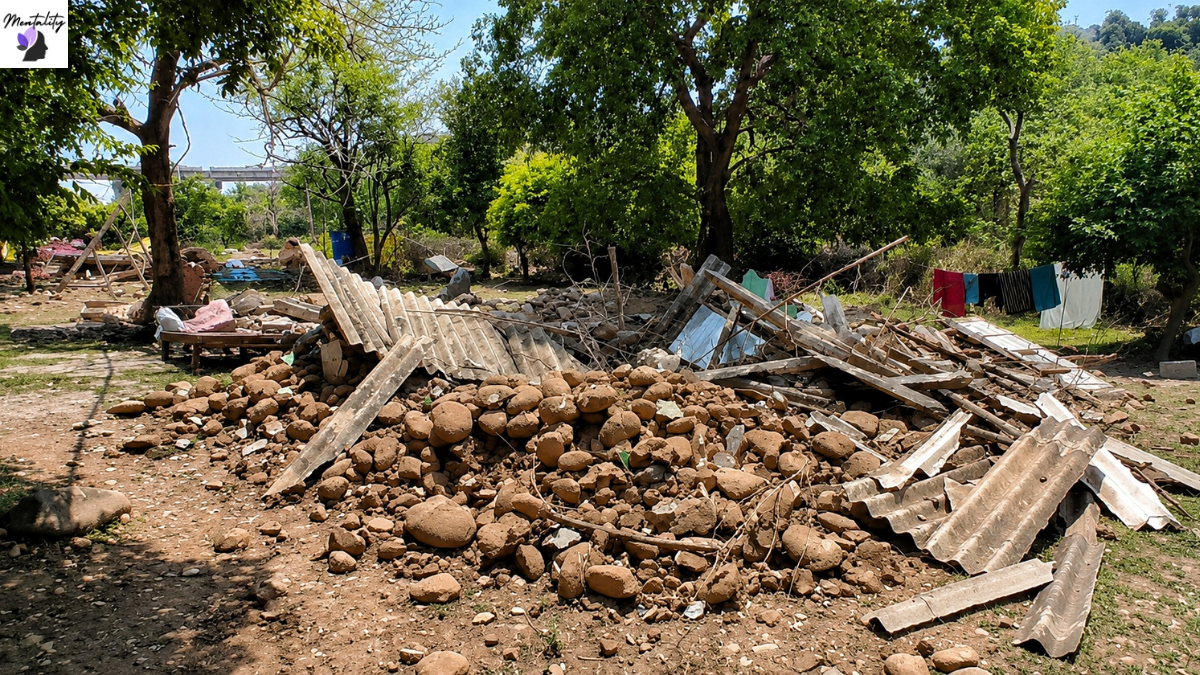
In mid-May this year, just before sunrise, bulldozers, police vehicles, and teams of officials entered Sidra Bandhi, on the outskirts of Jammu, and brought down 28 houses of Gujjar-Bakarwal families, claiming they were encroaching forest land.
Children woke up shouting. Women rushed outside carrying utensils and blankets. Elderly residents stood in shock watching bulldozers moving towards their homes.
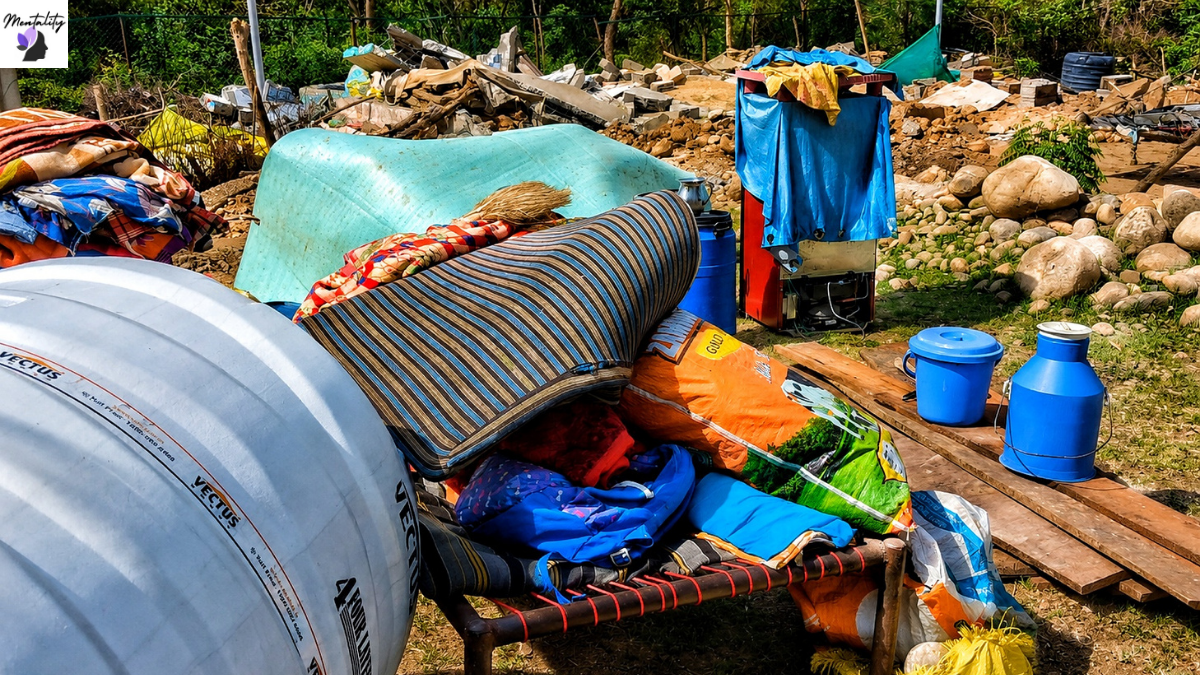
By noon, piles of broken bricks, twisted tin sheets, wooden beams, and scattered clothes were all that was left.
The Gujjar-Bakarwal communities, classified as scheduled tribes, are nomadic tribes who have spent generations migrating between the plains of Jammu and the higher regions of Kashmir. They form about 15% of the Union Territory’s population.
In the 1950s and ‘60s, they began settling down in places like Sidra Bandhi for stability, education, and access to public services. “My father lived here. We protected these forests and grazed our livestock here for decades,” said 68-year-old Mohammad Sharief. “Now, they call us encroachers.”
Moving from a mobile, kinship-based survival system to fixed, state-regulated spaces has brought about massive psychological shifts in the community, said Sajad Hussain, an independent researcher who has studied the social and psychological experiences of Gujjar-Bakarwal communities. “Leaving a nomadic system means leaving behind a social world built on mobility, kinship, and survival patterns,” he said. “When that is disrupted suddenly, it creates identity loss and uncertainty.”
While settlement can offer security, it can also create a sense of loss of identity, social dislocation, and dependence on uncertain land tenure.
When such settlements are suddenly dismantled, Hussain said, existing vulnerabilities are compounded, triggering trauma responses linked not only to loss of shelter but also to disrupted life choices and interrupted aspirations.
The community’s survival
The demolition drive took place during a severe heatwave sweeping northern India, with temperatures in Jammu crossing 40 degrees Celsius. Hours after the demolitions, families—including children, women, and elderly residents—sat in the open under the scorching sun, trying to gather whatever remained of their lives.
While they were sitting in the scorching heat, they had little to say about their mental wellbeing, finding shelter and their physical belongings was at the top of their minds.
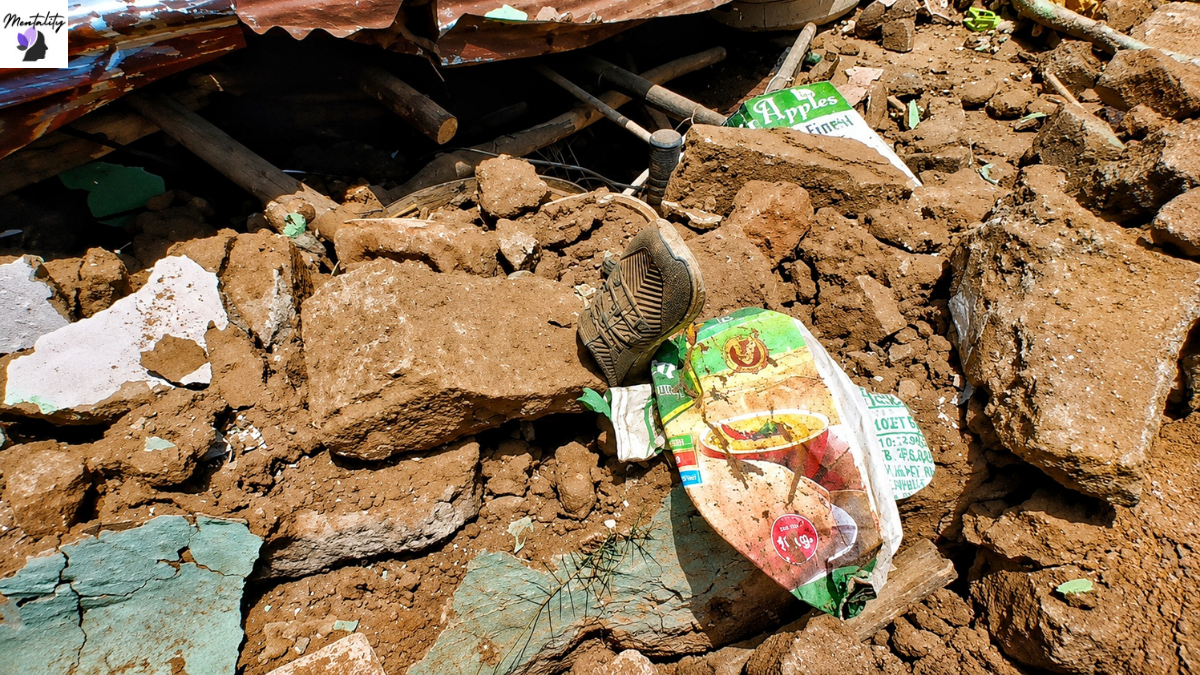
A broken steel trunk lay open beside heaps of rubble. School notebooks were buried under stones. A child’s slipper rested near a collapsed wall.
“We had no time,” said 42-year-old Fatima Bano, whose two-room house was among the first structures demolished that morning. “They arrived with bulldozers at dawn. We were still sleeping. Everyone started screaming and running outside.”
Bano’s family had lived in the area for over three decades. Her husband’s parents, who were seasonal nomadic herders, had built the house years ago after gradually settling in Sidra so their children could attend school.
Sharief said his family of eight had been forced to split up after the demolition, with relatives taking in some members temporarily. “Elderly people often experience helplessness because their emotional identity is tied to their homes,” said Dr Priya Sharma, a Jammu-based clinical psychologist who has worked with tribal populations.
Years of being landless
One of the reasons for the community to settle down was because their traditional migration routes were disrupted over time. Highways, new residential layouts of towns, and large infrastructure projects have come up on the paths they used to take in the past. This has also kept them looking for newer livelihoods, making their homes the only permanent aspect of their lives.
“For Gujjar-Bakarwal families who already experience economic insecurity and social marginalisation, such events can create long-term psychological trauma,” said Dr Ahmed Khan, a Kashmir-based psychiatrist who has worked in conflict-affected areas of the union territory.
Forest Rights Act
Forest dwelling communities are protected under the Forest Rights Act of 2006. Gujjars and Bakarwals had been refused the FRA’s benefits because central laws did not apply to Jammu and Kashmir, the state administered under Article 370 until 2019.
However, even after the region was brought under New Delhi’s direct rule, the law has not applied to them.
Thirty-nine-year-old Mushtaq Ahmed said that he had submitted a claim under the Forest Rights Act a few years ago. “It has still not been approved,” he said. He has lived near Sidra for six decades.
Since there are no legal guarantees for their settlements or land ownership, the community remains on edge. Reports of such evictions come in from time to time.
“Although I have lived here for 60 years, I have not managed to secure proper documents or ancestral records,” said Ahmed, and therefore, he fears that officials could come and demolish it anytime. “Until my claim is recognised, I feel I have no security over the land where my family has lived for generations,” he added.
When displacement happens again and again, it does not sit as a single event. It reactivates older memories of dispossession, said Hussain. “In such cases, demolitions are experienced not only as loss of shelter but as a break in long-term efforts to build permanence and dignity.”
Children worst affected
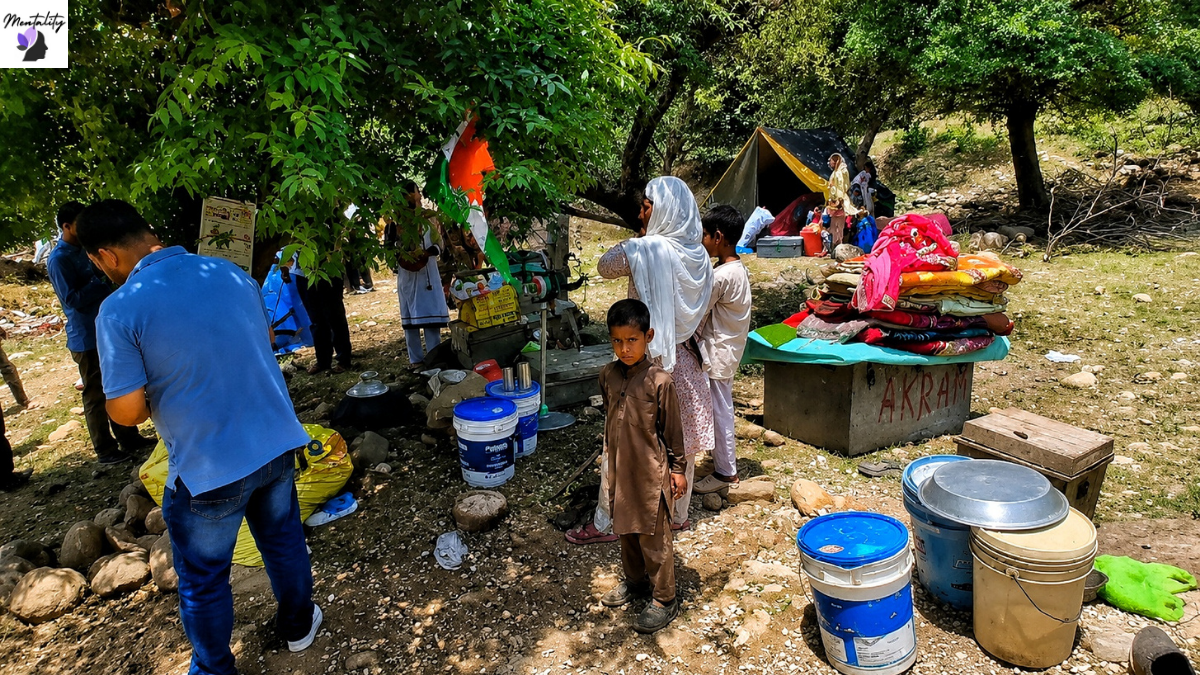
By evening, children wandered barefoot through debris searching for books, clothes, and utensils. Women cooked meals over makeshift wood fires near broken walls. Some residents erected temporary tarpaulin shelters using bamboo sticks salvaged from demolished homes.
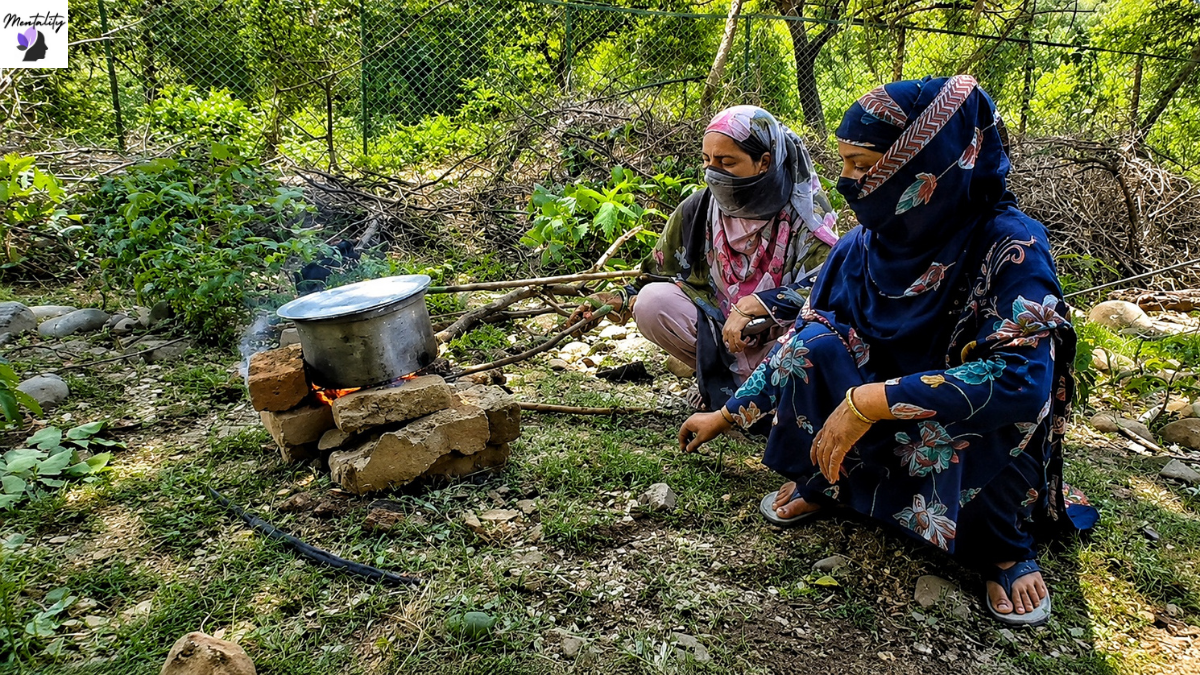
Bano stood beside the remains of her home and searched through debris for a small metal box containing jewellery and clothes saved for her daughter’s wedding.
As darkness fell over Bandhi Sidhra, families gathered near the remains of demolished houses under dim emergency lights and phone torches. Children slept on mats spread across open ground, while the adults remained awake discussing legal notices, politicians’ statements, and rumours of further demolitions.
As dust swirled around the demolished site, Bano’s seven-year-old daughter sat quietly beneath a plastic sheet tied between two wooden poles. The child had developed fever after spending two nights outdoors in the intense heat, her mother said.
“When children watch bulldozers destroying their homes, they lose their sense of safety and stability,” said Dr Sharma. “Many develop anxiety, nightmares, withdrawal or aggression.”

Author: Sajid Raina
Sajid Raina is a Delhi-based journalist whose reporting has been published in Al Jazeera, TRT World, The Guardian, and The Diplomat.

Author: Tauseef Ahmad
Tauseef Ahmad is a Delhi-based journalist whose reporting has been published in TRT World, Al Jazeera, The Guardian, News Decoder, and other outlets.