

By Amarpal Singh Verma
In the past, community spaces in villages offered informal emotional support systems to people. With increased individualised screen usage, young men in this Rajasthan village carry the burden of unemployment but have no one to share it with.
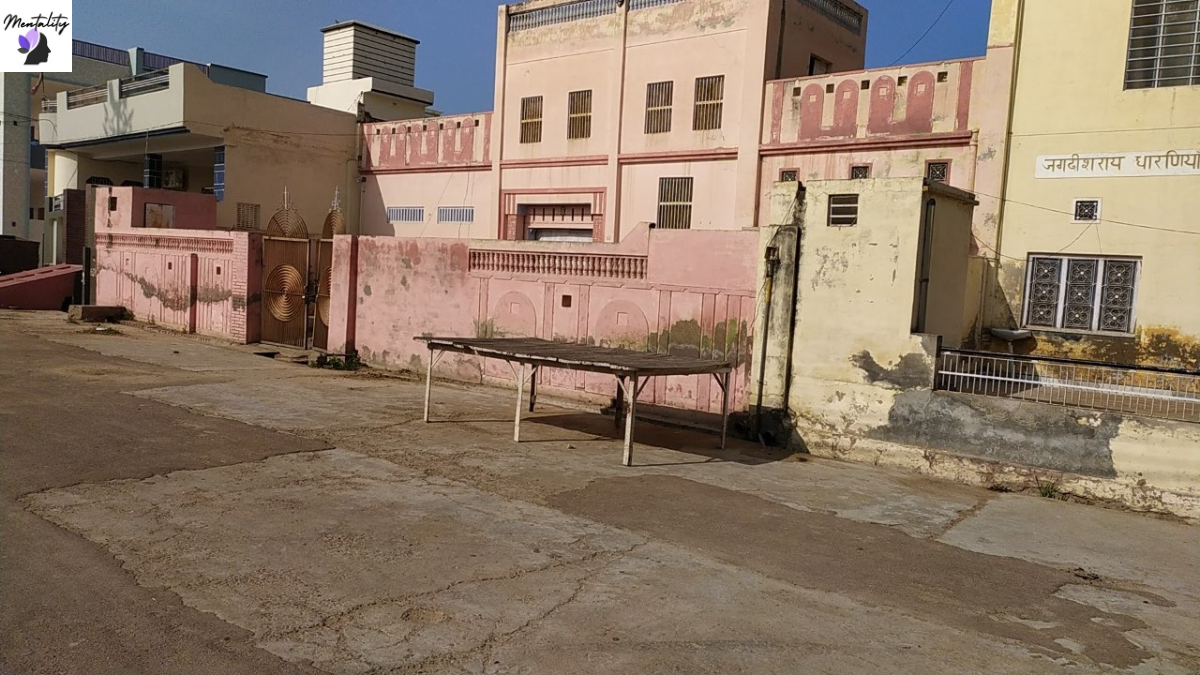
At the corner of an old lane in Ward 13 of Sangaria, a raised concrete platform outside the house of Kaur Singh, a village elder, stands abandoned.
Sangaria, a town in Hanumangarh District in northern Rajasthan, borders Haryana and Punjab.
Kaur Singh died a few decades ago, but his son Bahadur Singh felt nostalgic about the platform which was the centre of social activity in Sangaria. “There used to be such a crowd here that there was hardly any place to sit,” he said on a nippy January day.
The practice of sitting on stone platforms, under the open sky to meet, greet and share was an everyday affair in Sangaria even until a few years ago. “If one person left, two more would arrive,” said Bahadur Singh, a 72-year-old local farmer.
While this tradition was thriving in all the villages of the subcontinent, in Sangaria it was called hathai. People stopped at the platform on their way from slogging it out in the fields or after closing their shops in the evening. Conversations began organically and went on for hours. Women usually gathered indoors.
“Hathai was not just a social habit but a part of life,” said 80-year-old writer Govind Sharma, a Sahitya Akademi winner and author of 62 children’s books.

Hathai once served as an informal emotional support system in small towns, said Dr. O.P. Solanki, senior psychiatrist at Hanumangarh District Hospital. According to a 2025 World Health Organisation report, loneliness is linked to an estimated 100 deaths every hour. “Strong social connections can lead to better health and longer life,” it says.
“Hathai is how people steady themselves,” said Dr. Manish Baghla, a psychologist at Tantia University in the neighbouring district of Sri Ganganagar.
Large scale migration, fragmented land ownership and easy access to communication technologies are few of the reasons for the gradual decrease in communal practices like hathai. People are more isolated and weaker. Especially young men who are looking for jobs.
Unemployment woes
Sangaria is teeming with educated young men who face severe pressure to contribute to their family incomes but end up spending years looking for a job.
A few steps away from the platform outside Kaur Singh’s house, in a small room in Ward 10 of Sangaria, 36-year-old Poonam Chand struggled to concentrate on his studies. “I have been stuck on the same page for a long time,” he said. He studies for 10-12 hours in a day.

Poonam Chand, 36, has been trying to secure a government job for 10 years without luck. Lack of community spaces leave him isolated (Image Credit: Amarpal Singh Verma)
For the past twelve years, Chand has had one goal: to secure a government job. After graduating with a bachelor’s degree in arts, he went on to get a bachelor’s degree in education and then postgraduate degrees, in geography and Punjabi. He has even taken about two dozen exams for various government jobs such as primary school teacher and forest guard. But he remains unemployed. Frustration grows with every single day, he said.
In the past, someone like Chand would have strolled down for hathai in the evenings. He would have spoken about his unsuccessful attempts at finding jobs and might have heard a curt or encouraging word from others in the village in response.
“Sitting together and talking in a group is no less medicine,” said Dr Solanki, even if the other person is not necessarily empathetic. Villages were built on caste hierarchies, therefore not every person would get a kind ear during hathai. However, the human connection itself brought about a sense of belonging, he added. “Stress begins when a person cuts himself off from society and becomes isolated.”
Chand had to separate from his wife too. “My unemployment increased the distance between us,” he added.
According to the Center for Monitoring Indian Economy data, Rajasthan has recorded one of the highest unemployment rates in India. According to the MNREGA website, employment has been sought steadily under the scheme in Sangaria, indicating the high demand for informal work in the town.
Chand worked as a painter for a brief period, painting walls of people’s homes. But he gave that up to look for a stable government job. Sometimes while studying, Chand said he wonders “how long can this go on?”
Increasing mental health issues
According to Dr Solanki, anywhere between 150 to 200 people walk into the Hanumangarh District Hospital with various mental health concerns every day. “40 to 50 percent are young people,” he said. Many are like Chand, he said, unemployed or have been preparing for competitive exams for years with no result in sight.

For seven years now, Ravi Kumar, 30, has written exams to secure a job as a teacher in a government school. He works for a daily wage as a construction worker sometimes, but his mother runs the house with the Rs 1000 a month she receives under the government’s social welfare scheme. “My mother wants me to get married, but unemployment is the biggest obstacle,” he said.
Kumar said he doesn’t go to hathai, in fact, meets less and less people. “If someone asks what I do, it becomes hard to answer [without shame],” he said.
Chand said he just doesn’t feel like meeting people. “Where should I go? What should I say?”
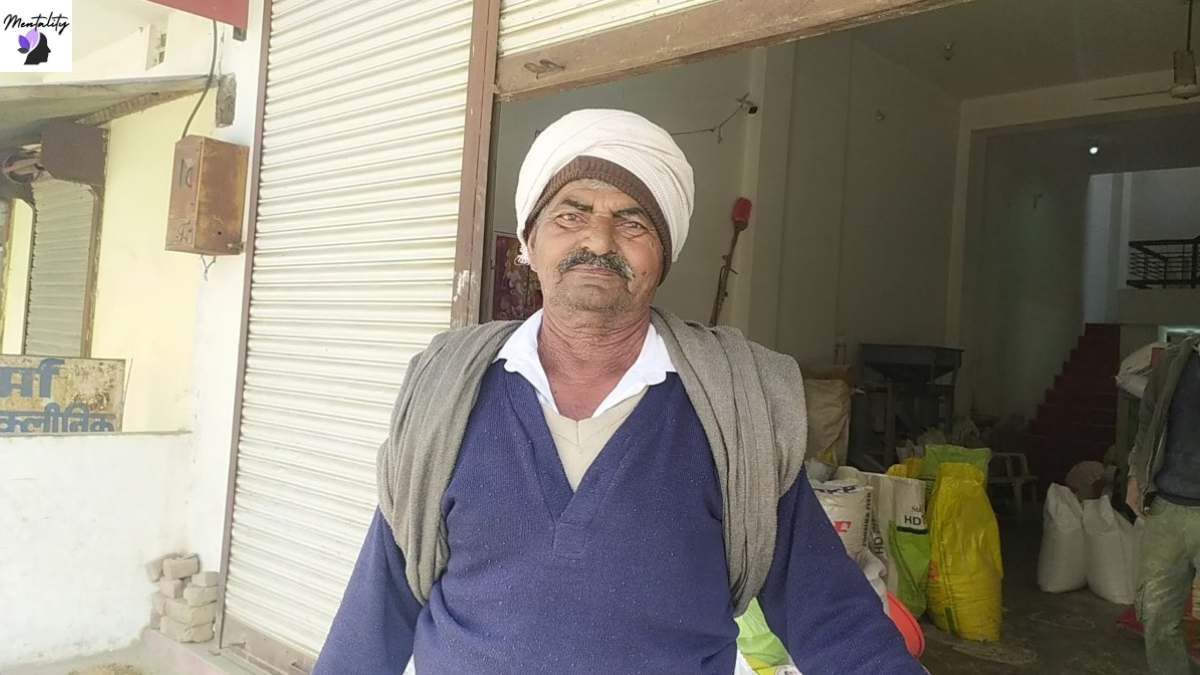
The desire to join hathai should come from within; it cannot be forced, said author Sharma. Social interaction is not imposed, he said. But once a person experiences the freedom hathai offered to individuals, it would be hard to look away from, he said. “Politics, farming, weather, family, even jokes — everything was discussed.”
In Bishnoi Mohalla, a wooden platform still acts as a location for hathai, a few elderly men gather there. “Conversation is the simplest and most effective medicine for stress,” said Dr Solanki.

Author: Amarpal Singh Verma
Amarpal Singh Verma is a Rajasthan-based independent journalist. He has worked with Rajasthan Patrika for nearly 24 years. He writes on politics, mental health, environment, and agriculture. He received The Statesman Award for Rural Reporting, Sarojini Naidu prize and Udayan Smriti Patrakarita Samman