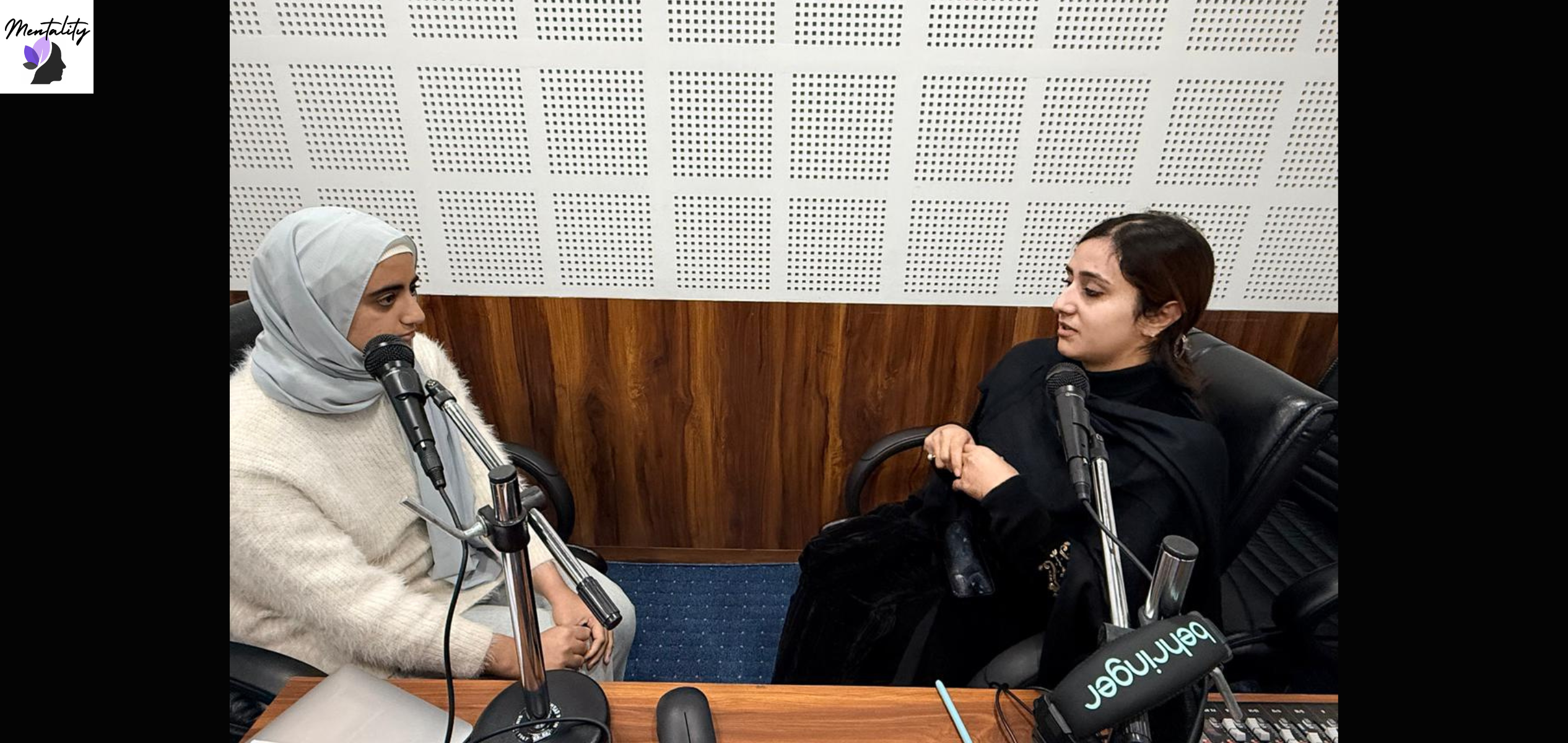
A mental health counsellor interacting with a student in the IUST radio station in Awantipora, Kashmir in December 2025. (Image Credit: Irfan Amin Malik)
By Irfan Amin Malik
Anxiety, stress, and frustration run high among Kashmiri youth because of alarmingly high rates of drug abuse and unemployment in the region. Community radio talk shows have become an unusual but effective medium to share their experiences and challenges.
Syed Aidah enrolled in the undergraduate course in computer science at the Islamic University of Science and Technology in Kashmir in the summer of 2023. The massive campus surrounded by the Pir Panjal, large lawns and brick red buildings seemed a bit unsettling at first, she said, not to mention new people and a new course. “You sit in a class, but you are not really there.”
Slowly, anxiety built up and converted itself into emotional exhaustion, she said, and a sense of disconnect from everything and everyone around followed. “I cannot fully explain that feeling.”
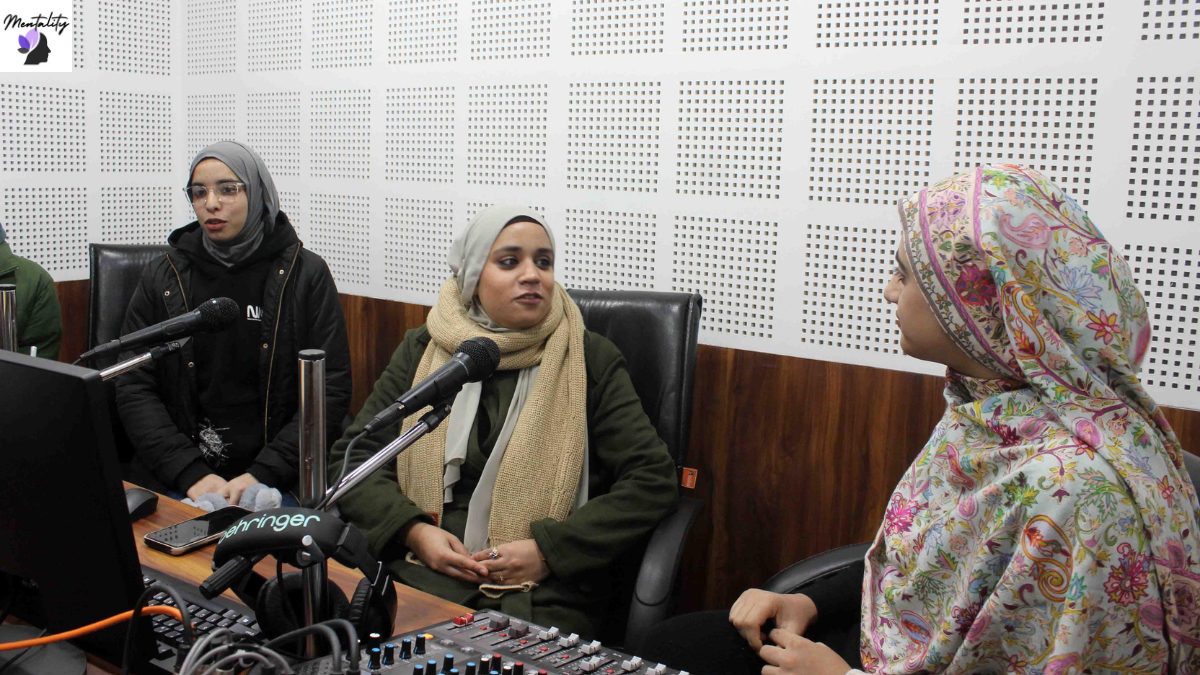
After almost two years of being in a disturbed state of mind, Aidah sauntered into the university’s community radio station by chance. She said she spoke to the host about stress, academic pressure, and the strain of adapting to a new life. “When I came out of the studio, I felt relaxed,” she said. “The 20-minute radio talk felt like therapy.”
Community radio in Kashmir
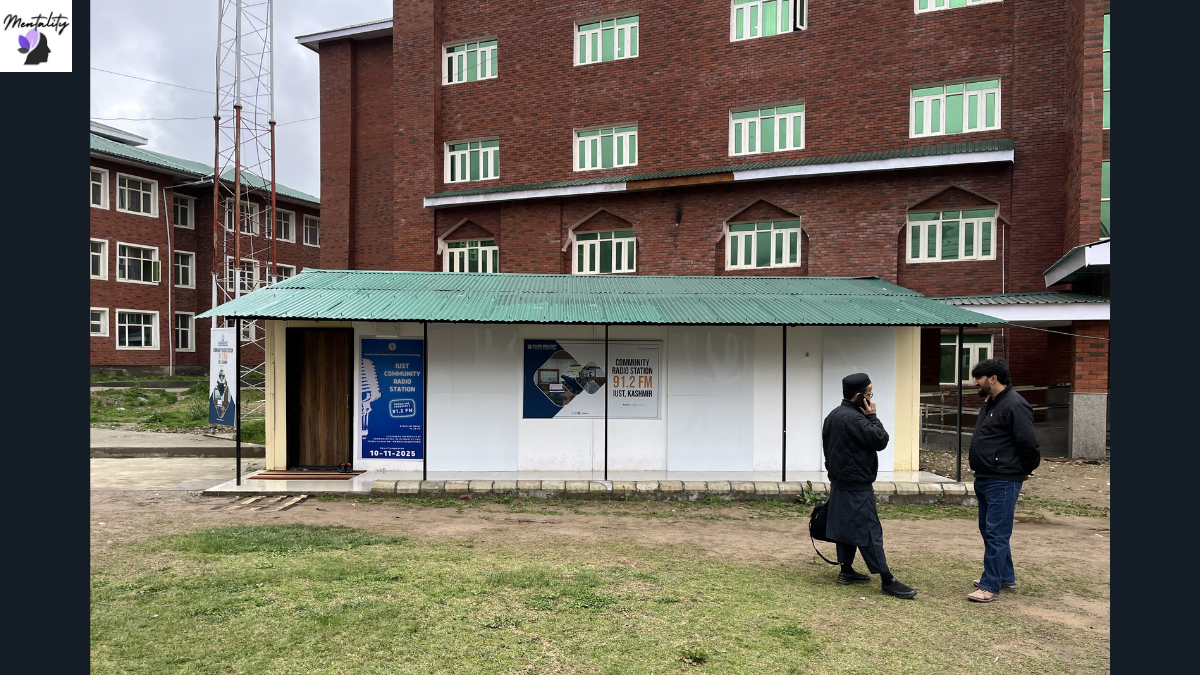
Currently, fifteen community radio stations operate across Jammu and Kashmir, including three based in universities: Radio Dhwani at Jammu University, Radio 90.8 FM at the Central University of Kashmir, and 91.2 FM at the Islamic University.
Community radio stations broadcast programmes to a 5–10 kilometre radius and are usually operated by local communities, not-for-profits, or educational institutions to address community issues.
Since the medium helps connect with an audience who is intimately familiar with the community and offers a desired level of anonymity, it has emerged as the right one to discuss mental health.
Dr. Abrar Guroo, a senior consultant at the Institute of Mental Health and Neurosciences in Srinagar, compared talking on community radio to the way people express themselves in places of faith.
“At shrines, people talk even though no one responds directly,” he said. “Still, they feel lighter. When emotions come out, the burden becomes less.”
Muskan Beigh, 23, a mass communication and journalism postgraduate student at Central University has hosted programmes on women empowerment and mental health. “When you speak about these things, especially from your own experience,” she said, “it gives you a sense of release.”
Mental health in Kashmir
In Kashmir, where decades of socio-political instability, conflict, and trauma have contributed to alarmingly high rates of depression, anxiety, and post-traumatic stress disorder, nearly one in two adults suffers from mental health issues, according to a paper in the International Journal of Indian Psychology.
In 2025, Mentality reported that the fragile mental health system in Kashmir is struggling to keep up with the patient influx.
In such a dire situation, community radio programmes are cathartic to those who feel lighter after discussing their situation with others who can relate to it. However, doctors recommend that if people feel the need for more than just talking it out on radio, they must seek immediate medical help.
Muzaffar Ahmad Ganie, a clinical psychologist, said that the stigma around mental health keeps people from talking about mental health. “In many cases, young people suppress what they are going through because of fear of judgement,” he said. That is not the case with community radio.
Ummi Haani, 20, a student of English literature in Islamic University, said radio discussions on mental health helped her feel that her struggles are shared. “You realise you are not alone,” she said.
Drug abuse among the youth
At the Central University of Kashmir, radio programming often follows the academic calendar, but mental health has become a recurring theme throughout the year.
Shahzad Wagay, 29, the production in-charge at the Central University of Kashmir station, said a group of students regularly anchors these programs, often in conversation with experts. “We mark days like World Mental Health Day, World Heart Day, and World Stroke Day with special broadcasts,” he told Mentality. “But, beyond that, we also run regular programs on educational psychology, drug abuse and even how sports can help in managing stress.”
Wagay said the station is now working on programmes exclusively on drug abuse.
Prof. (Dr.) Shahid Rasool, Dean, School of Media Studies at the Central University of Kashmir, said when students are involved in something creative and meaningful, it helps them stay away from negative influences, including substance abuse.
Kashmir’s only government-run drug de-addiction released a report that showed a 2,660% increase in patients between 2016 and 2022. Moreover, there is significant self-medication reported among the youth.
A 2019 AIIMS report said that close to 5% of the total population in J&K, that is 600,000 people, were consuming drugs. It further said 4.91% of the population use opioids, of whom 0.62% are dependent on them.
Prof. Rasool said community radio gives the youth a sense of purpose, which is required in a state with staggeringly high unemployment rates.
Shubham Choudhary, a 21-year-old mass communication and journalism postgraduate student at Jammu University, said discussions with experts helped students understand their own experiences better. “It is not just about talking,” he said. “It also helps in understanding what you are going through.”
Sayed Humayun Qaisar, a veteran broadcaster and former director at All India Radio, Srinagar, said radio offers a sense of connection that other media do not. “It is a live medium,” he said, “It feels immediate.”
Community radio has not only helped Aidah with general well-being but has also boosted her confidence. She started with one programme but now hosts a weekly show on mental health. “It is a way of being heard,” she said. “Even by people you cannot directly talk to.”
Author: Irfan Amin Malik
Irfan Amin Malik is an independent journalist based in Jammu and Kashmir, reporting on business, politics, health and climate change.