
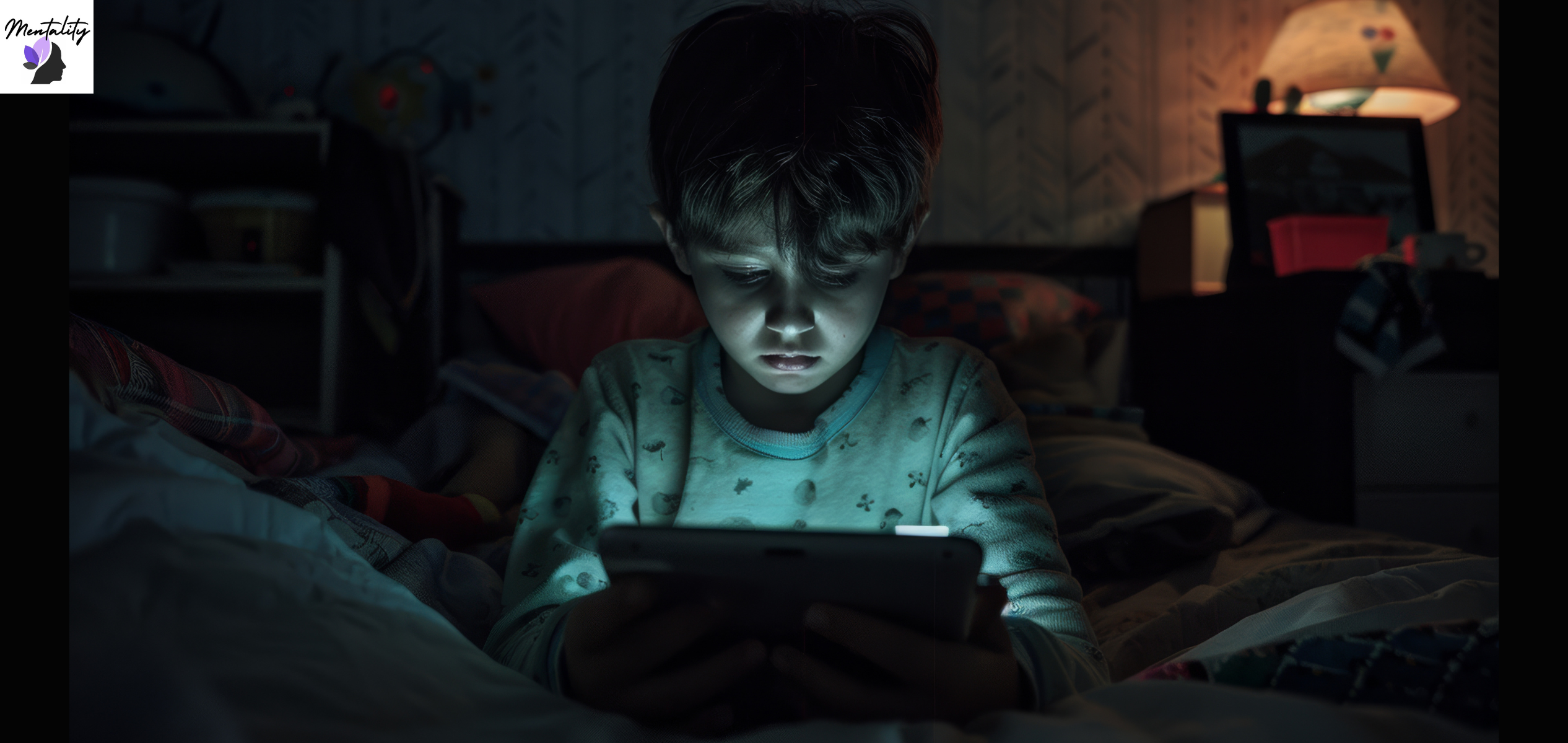
A representative image of a child on a tablet (Image Designed by Magnific)
By Hanna Paul
As screen time increased, withdrawal from society, rule breaking, and aggressive behaviour were noted among children. There is little impact of socio-personal factors such as gender, area of residence, family background, and academic performance on screen time addiction.
Fifteen-year-old Elizer Jacob Koshy used to be fascinated by birds, wanted to read every book about them, and would quiz anyone he met about the wonders of the animal kingdom.
The COVID-19 pandemic changed everything.
Since schools moved online, screens were forced on even kids like Koshy who played outdoors regularly. “At first, he would log in only for classes,” said his mother Yamuna Jeffin, who worked as ground staff at Emirates before becoming a homemaker during the pandemic. The family lives in Ernakulam.
“When online classes got over, I couldn’t even go out to play. So, I started watching some educational videos,” Koshy said. A friend introduced him to Mr. Beast on YouTube, the most subscribed YouTube channel, where videos are about extreme endurance tests, resulting in massive philanthropic giveaways. “Soon, it started showing up in my recommended videos,” he said. “I started watching it regularly.”
Jeffin said she slowly realised watching videos had become a habit for Koshy.
Kerala’s per capita income far exceeds the national average, making it one of the richer states. Around 98% of students in Kerala have access to a mobile phone at home, the highest in India, according to the latest Annual Status of Education Report (ASER) by Pratham, a non-governmental organisation. Over 80% of those children use the smartphone for educational activities, and over 90% to access social media.
“Instagram is our main source of information as well. I won’t have anything to say in my friend group if I don’t stay updated with the trends,” said Koshy.
Restricting social media
In March 2026, the neighbouring state of Karnataka banned social media usage for children under 16 years of age. Karnataka’s policy has come under severe criticism as it is tough to implement. Goa and Andhra Pradesh are both considering bringing about similar legislations, but Kerala has not publicly considered such a move.
Countries like Australia have already brought in such a ban, with varying degrees of success.
Parents and teachers across Kerala said they are doing what they can at an individual level.
At first, Jeffin subscribed to a limited Wi-Fi package, but soon that was not enough, she said.
“For school projects, we are asked to compare charts of crop patterns in Kerala and Chhattisgarh, where else do we get that information from?” she asked. “Apart from Google?”
She doesn’t keep tabs on her son’s social media use directly, but since he logs in with her account, related videos show up. “So, that’s how I keep tabs,” she added.
“We used to allow only an hour of screen time,” said Manitha Nair, a scientist from Aluva, Ernakulam, whose son is 14 years old. “We would take away the Wi-Fi router’s charger when we went to work.”
She found that her strict rules had loopholes. “There was a time when we caught him using our phones sneakily, like when we stepped into the washroom!” she said. “But we had open, honest conversations about it with him and put an end to that behaviour.”
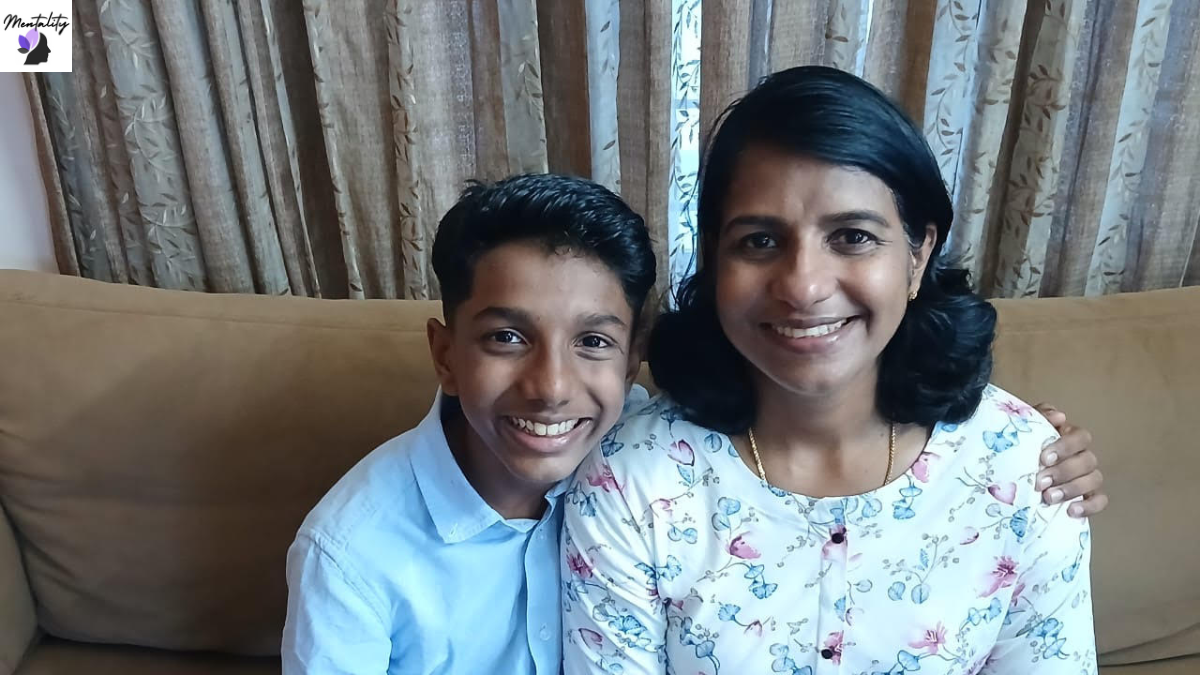
Adults using screens excessively in front of kids also normalise the behaviour for them, said Nair.
“A lot of issues that children have are rooted in the environment at home and the relationship between their caregivers,” said Hannah Masood, a counsellor working with the Choice School, Kochi.
A 2025 study by the Kerala chapter of the Indian Institute of Paediatrics concluded that over 89% of toddlers had regular screen exposure and nearly 70% of the parents used screens while feeding them. They studied infants under the age of two attending immunisation clinics. “There is a stark difference between education and awareness.” said Soby Johnson, a school counsellor turned psychology teacher at Choice School. She said that even if parents had higher education or higher income, it does not translate to having more awareness or being more proactive about their kids’ relationships with screens.
Harms of social media
Being overly dependent on social media, makes kids live in a virtual world most of the time, said Johnson, “they have a lot of information, but they lack the knowledge or the ability to make this information usable.”
“Social media is an unconscious audition for daily validation,” said Masood.
A 2025 study conducted on 100 school students in Thiruvananthapuram between the ages of 10 and 13 showed that as screen time increased, behavioural changes also increased. Internalising information, withdrawal from society, rule breaking, and aggressive behaviour were noted. The study found minimal effects of socio-personal factors such as gender, area of residence, family background, and academic performance on screen time addiction.
Jeffin said Koshy’s teachers complained of his reduced attention span, compared to two years ago. “A big change I saw was irritability, especially when we take the phone away,” she said.
“Constant exposure to digital content may influence how the brain responds to reward and attention,” said Pooja Jagdish, a consultant psychologist. They tend to find simple tasks like doing chores around the house and cleaning their room difficult, because they are used to instant gratification, she added.
Ann Maria Aji, 15, agreed. “It’s easy to ignore other things, especially chores, because social media is just more entertaining,” she said. Earlier, when she had free time, she admitted she would do her homework or creative writing, which she really enjoys.
If the child stops doing things that they usually enjoy, it could mean they are spending too much time in front of a screen, Jagdish said.
Explicit content
Aji was messaging her friends on Instagram one evening, when a message request popped up. “I like your curves.”
She said she froze for a second when she saw that. The account name looked unfamiliar, she said. It had a weird username: a bunch of letters and numbers that didn’t sound like an actual name, no posts and just over 60 followers. “I wanted to break my phone, but I just kept it away. I sat down, took some deep breaths, and blocked the account.”
She was only 13 years old then. “I felt helpless and insecure,” she said. Even though life went back to normal in a few days, the experience stayed with her, she said. “I felt attacked and realised there was nothing else I could do other than block it and ignore it.”
“Do not rush to protect [your child],” Johnson advised. “Instead, try to understand.” It’s a collaborative responsibility, and parents should find a space and manner to communicate with their children in a way they feel heard and understood, she said.
Koshy said social media was not all bad. “I learned about new subjects like artificial intelligence and hacking and started going for inter school competitions that test kids on their skills in coding, ethical hacking and artificial intelligence.”

Author: Hanna Paul
Hanna Paul is a journalist based in Kochi writing on the intersection of mental health, food, economy, climate and culture.