
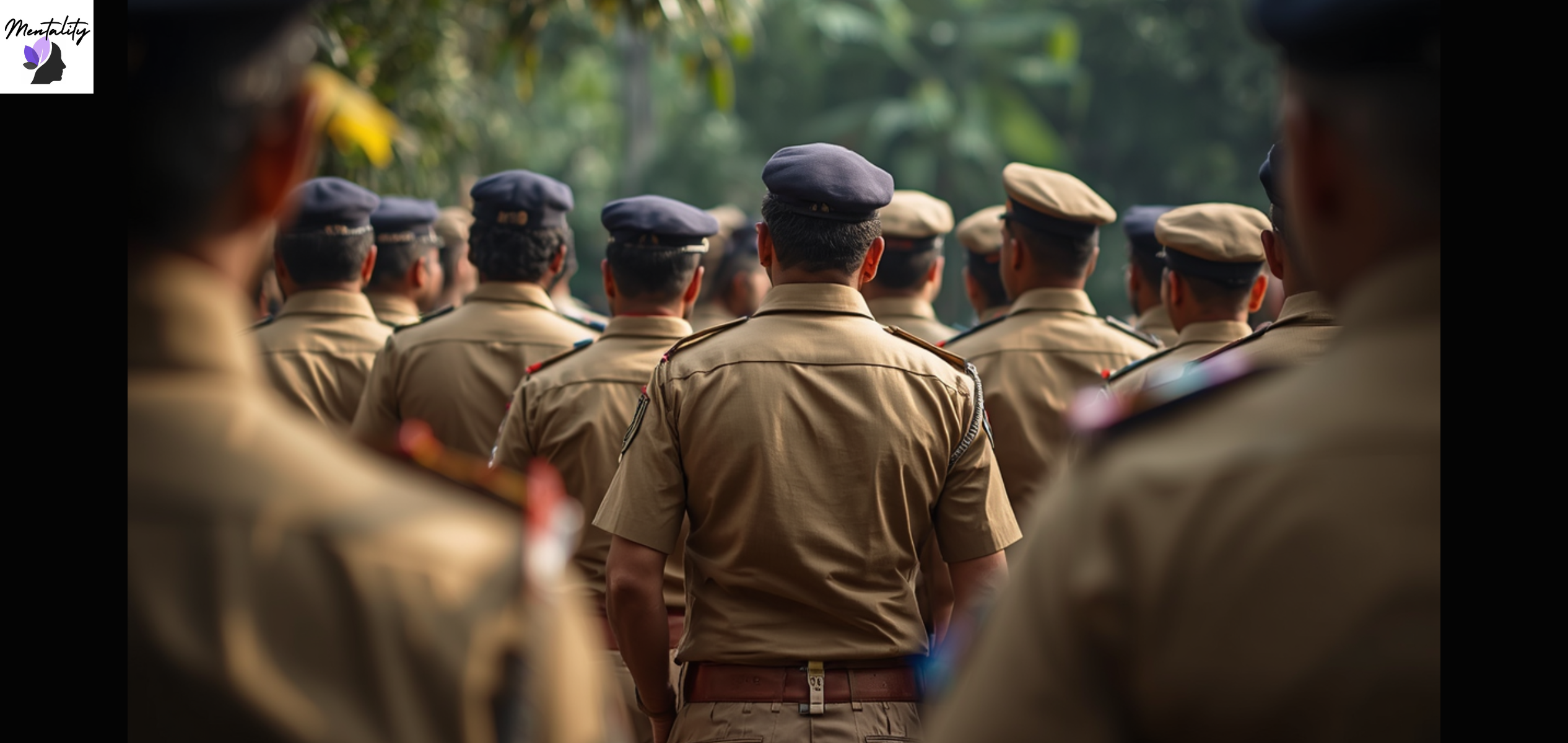
Representative Image of Indian police (Image created with Canva)
By Abhijit Mohanty
The image of a police officer as fearless and emotionally strong is deeply ingrained. That leaves very little space to acknowledge vulnerability, even when someone is struggling. Mental health support should become a part of the policing system itself, just like training, welfare, and discipline.
In June 2025, 32-year-old Odisha police constable Subrat Kumar Sahoo of Odisha’s Keonjhar district was in Kolkata for a special training programme when he was found hanging in a rented apartment. Reports said he had been struggling with depression. In February 2026, 27-year-old constable Sunil Sethi was found dead at the Nayagarh Reserve Police barracks. While official accounts pointed to personal distress, his family alleged workplace harassment had led to his death.
In March 2026, Sarathi Pradhan, a jail warden from Gajapati district, was found dead in his quarters at Jharpada Jail.
Around the same time, Sumitra Biswal, a havildar (constable) posted in Angul, resigned from service, alleging prolonged mental and physical harassment by senior officers.
“Despite my sincere efforts to perform my responsibilities with dedication and integrity, the situation has become unbearable and is adversely affecting my mental well-being and professional performance,” Biswal wrote in her resignation letter.
To add to the mental health stressors, recent reports of custodial violence has further eroded public trust in the police.
In 2026, within four weeks, three incidents of custodial torture raised concerns about the powers the state’s police force being in a “complete breakdown.”
Human rights activist Pradip Pradhan told the media that such cases are a result of systemic failures. “These days, police officers presume that they are immune to accountability,” he said.
The United Nations agreed.
In February 2026, United Nations experts warned India that reports of deaths and torture in custody point to systemic failure. “If substantiated, they reveal grave violations of the right to life, the absolute prohibition of torture, and the right to non-discrimination.”
Another Odisha-based activist Biswapriya Kanungo added that the criticism over deteriorating law and order situation has been pushing the police officers to resort to extreme violence because they want to obtain confessions from the suspects quickly.
Public trust shapes the emotional well-being of those who wear the uniform, said Akanksha Adya, Assistant Professor of Psychology at Krea University. “These incidents make people less willing to cooperate with the police or seek their help,” she said. “Over time, that distance grows, making effective policing even more difficult.”
Personnel shortages
Advocate Shivasankar Mohanty filed a Public Interest Litigation before the Orissa High Court on 5 September 2022 seeking intervention on issues including workplace stress, administrative harassment and the absence of mental health support within Odisha Police. “Police personnel work under tremendous pressure. They put in long hours. They often have very little time to rest or spend with their families.”
Odisha’s Director General of Police Y B Khurania told reporters in July 2026 that against a sanctioned strength of around 89,000 personnel, nearly 33,000 posts in various ranks remain vacant.
It also points to shortages of sub-inspectors and constables, arguing that understaffing has increased workloads and reduced opportunities for leave and recovery. “Due to the large number of vacancies, personnel posted in police stations and outposts work more than their counterparts in other states,” he said.
In his nearly 30 years of service, Arun Bothra, IPS, Additional Director General, Railways and Coastal Security, Odisha said, he has hardly seen police personnel avail all the leave they are entitled to. “The provisions exist. But because of manpower shortages and the nature of policing, officers often find it difficult to take leave.”
The burden of being the protector
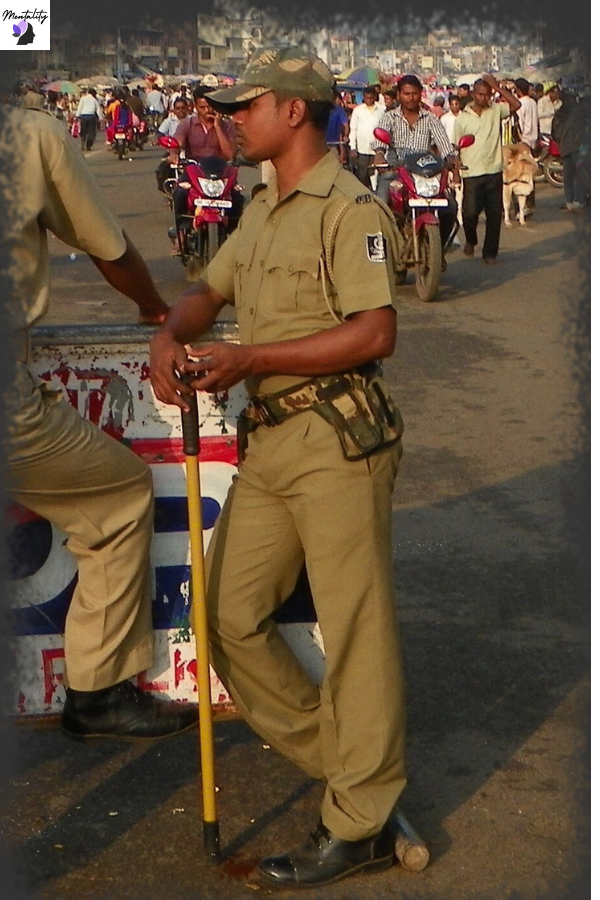
The public sees the uniform, but they rarely see the person behind it, said Binay Mohanty, a constable posted at Madhupatna Police Station in Cuttack, Odisha. “Khaki is our identity.”
Even when they are at home or asleep, there is a feeling that duty can call at any moment, said Mohanty. “During festivals, when I see my friends and relatives celebrating with their families, I often find myself on duty. It hurts. We are human too. We also want to spend time with our loved ones and be part of those moments.”
This pressure, Bothra said, builds over time. “It eventually affects both mental and physical health.”
In 2014, a Bureau of Police Research and Development study found that nearly 90% of police personnel work for more than eight hours a day, with many officers reporting duty hours of 11 hours or more. LIttle has changed since.
Odisha also has one of the country’s lower police-population ratios, with around 129 police personnel per 1 lakh population against the national average of 153.
Police personnel are regularly exposed to violence, conflict, traumatic incidents, and human suffering, said Bhubaneswar-based psychologist Isha Ipshita Satpathy. “Those experiences cannot simply be left behind at the end of a shift. They need safe spaces where they can process them without fear of judgement.”
The emotional burden, Binay Mohanty said, does not end after duty hours, “The pressure of the job follows us home. Sometimes it comes out as frustration. Family arguments become more frequent. Relationships suffer,” he added. Important moments with family are missed and gradually he feels distant from his family, he added.
Public perception can make that burden even heavier.
“Many people don’t always understand the pressures we work under. Sometimes it feels like a thankless job,” Mohaty said. “But we continue because it is our responsibility.”
Mental health professionals say prolonged exposure to such conditions can gradually erode psychological well-being.
“Human beings are not designed to remain alert all the time,” said Satyakam Mohapatra, a Cuttack-based psychiatrist. “Everyone needs time to rest and recover. Without that, stress begins to build up. It may start with poor sleep, fatigue, or irritability. Over time, it can affect mental health, relationships, and professional judgement,” he added.
“We often speak about the responsibilities of the police. But we rarely speak about the support systems available to them,” said Shivshankar Mohanty. “Mental health must become an essential part of police welfare. Support should reach personnel before they reach a crisis.”
Seeming weak
Several serving officers said that seeking psychological support remains equally difficult.
“Many police personnel go through emotional distress and anxiety. But they rarely speak about it,” said Sunil Kumar Dalai, Inspector-in-Charge of Badambadi Police Station, Cuttack.
“There is always a fear that colleagues or senior officers will think you are weak or incapable of handling the job,” added Dalai. According to him, policing has long been associated with toughness. “The image of a police officer as fearless and emotionally strong is deeply ingrained. That leaves very little space to acknowledge vulnerability, even when someone is struggling.”
Confidential counselling, peer-support networks, regular mental health screenings, and stress-management programmes should be built into the system, said Satpathy. “Seeking psychological help should be seen as a sign of responsibility, not weakness.”
In 2022, the Commissionerate Police established the Basic Life Improvement Skills and Strategies (BLISS) Centre in Bhubaneswar to help personnel dealing with stress, addiction and other psychological challenges. The Centre offers counselling, therapy, meditation, breathing exercises, and other life-skills programmes.
While some officers said they didn’t know about such facilities, others said they didn’t want to comment on how they might be using the facility.
“A humane police force begins with a humane workplace. Mental health support is important, but it cannot remain an afterthought. It should become a part of the policing system itself, just like training, welfare, and discipline,” said Shivshankar Mohanty.
Author: Abhijit Mohanty
Abhijit Mohanty is a Bhubaneswar-based independent journalist who reports on sustainable food, livelihood, women’s leadership and climate change with a special focus on tribal and other marginalized communities of India.