
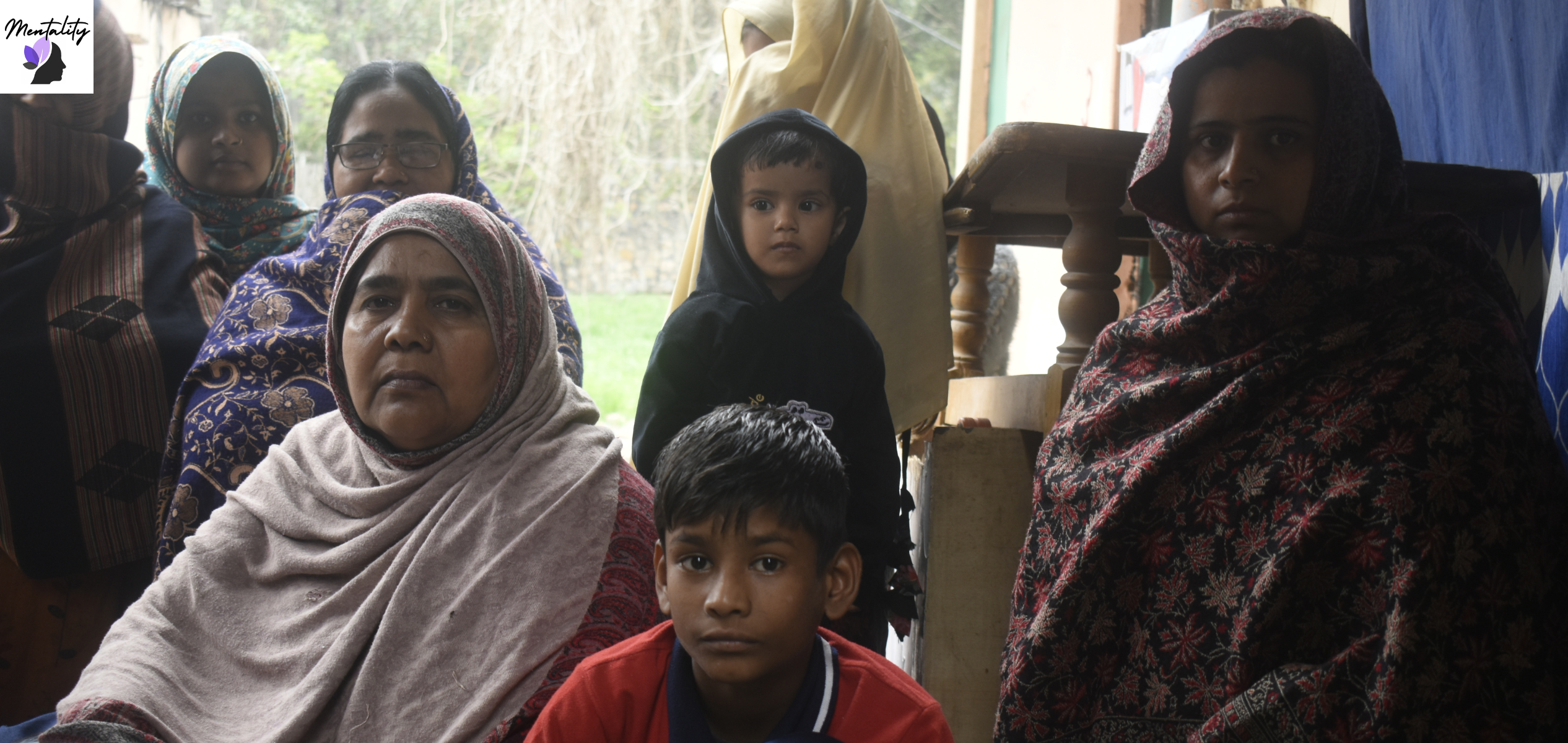
Ever since the eviction drive, women and children have been forced to spend their days and nights in open conditions (Image Credit: Monish Upadhyay)
By Monish Upadhyay
In Delhi’s Aali village, 300 houses were sealed and marked for demolition. In areas facing routine demolition drives, the ‘assailant’ isn’t a person but an unpredictable administrative process, which causes extreme relentless stress to the residents.
For about six months now, 60-year-old Nasreen has been living outside her house in South-East Delhi’s Aali village, located in the floodplain region of the Yamuna.
First, her family of over a dozen members spent the freezing winter evenings huddling around a fire on the streets. Now, they are spending punishing summer mornings trying to find shade under the trees near what used to be their homes.
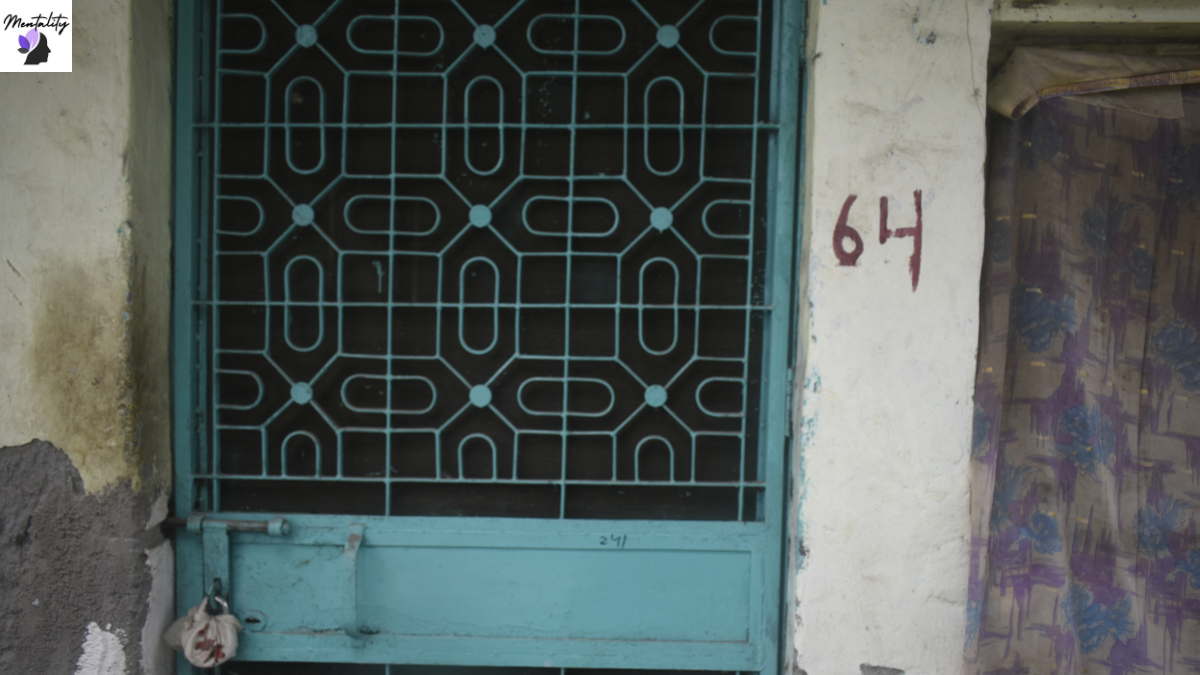
On 15 December 2025, Uttar Pradesh’s Irrigation and Water Resources Department, accompanied by police forces from both Delhi and Uttar Pradesh, sealed about 300 homes in Masjid Colony of Aali village. They claimed that about 8.48 acres of the land was encroached.
Hundreds of families in the neighbourhood have Aadhar cards, Voter IDs, and electricity and water bills, along with land ownership papers. Residents claim they were not served a notice and were suddenly left without their belongings. They challenged the matter, which is pending in both the Delhi High Court and a district court in Saket.
“An eviction or demolition drive is akin to a man-made disaster,” said Dr. Irfan Fayaz, Assistant Professor of Psychology at the Jindal Institute of Behavioural Sciences. He said mental stressors manifest themselves in physical ailments.
Nasreen’s husband is bedridden due to the stress and her daughter-in-law, Ameer Jahan, has very high blood pressure, which eventually led to the formation of a clot in her stomach.
Constant threat of demolitions
Sixty-year-old Shamsuddin, who goes by one name, has lived in Aali village since childhood. He has worked for decades as a construction worker and brought up his four children in the neighbourhood.
All the while, the status of his village on government records was changing. Unaware, for generations, people built homes, shops, and places of worship, all of which could be under the threat of demolition if the authorities so decided.
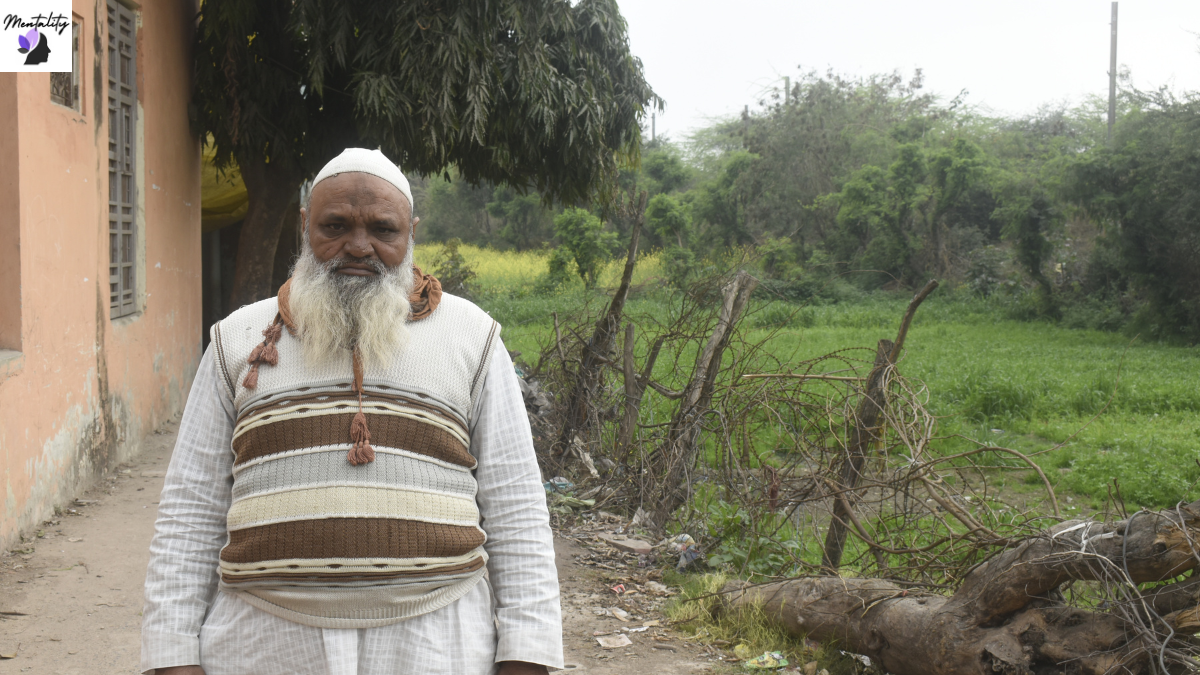
In 2010, the Delhi High Court directed the Municipal Corporation of Delhi and the Delhi Development Authority to prepare layout plans for all the villages of the national capital. However, since that has not happened until now, the houses painstakingly built by its residents are technically still considered unauthorised.
Aali village is categorised as an ‘urban village’, that is, villages located near urban clusters that continue to be governed by agricultural land-use norms typically applied to rural areas.
Paras Tyagi, a co-founder of Centre for Youth Culture Law and Environment (CYCLE), a non-governmental organization that works on essential services reaching Delhi’s villages, called this “manufactured illegality.” Unaligned paperwork, complicated bureaucratic structures, and lack of transparency have caused the residents of such villages to live under constant anxiety, he said.
“We live in Delhi but, in some sense, we are far away from the national capital,” said Mohammad Shahrukh, 30, a village resident. “I could never imagine something like this could ever happen to us.”
In areas facing routine demolition drives, the ‘assailant’ isn’t a person, said Dr Neelam Mishra, a psychologist who practices in Delhi’s Sri Gangaram Hospital. “It is an unpredictable administrative process that threatens the core of one’s stability,” she added.
While a natural disaster is a one-time phenomenon, demolition drives are cyclical. Residents live in a permanent state of “waiting for the blow,” which prevents the nervous system from ever returning to a baseline of safety, she said.
“I had even recently bought land for my two daughters. What am I supposed to do now?” asked Shahrukh.
Loss of livelihoods
Authorities often claim that granting villages ‘urban’ status would improve civic infrastructure and development. Of the 357 villages in Delhi, 224 are classified as ‘urban’, while 133 continue to be classified as ‘rural’.
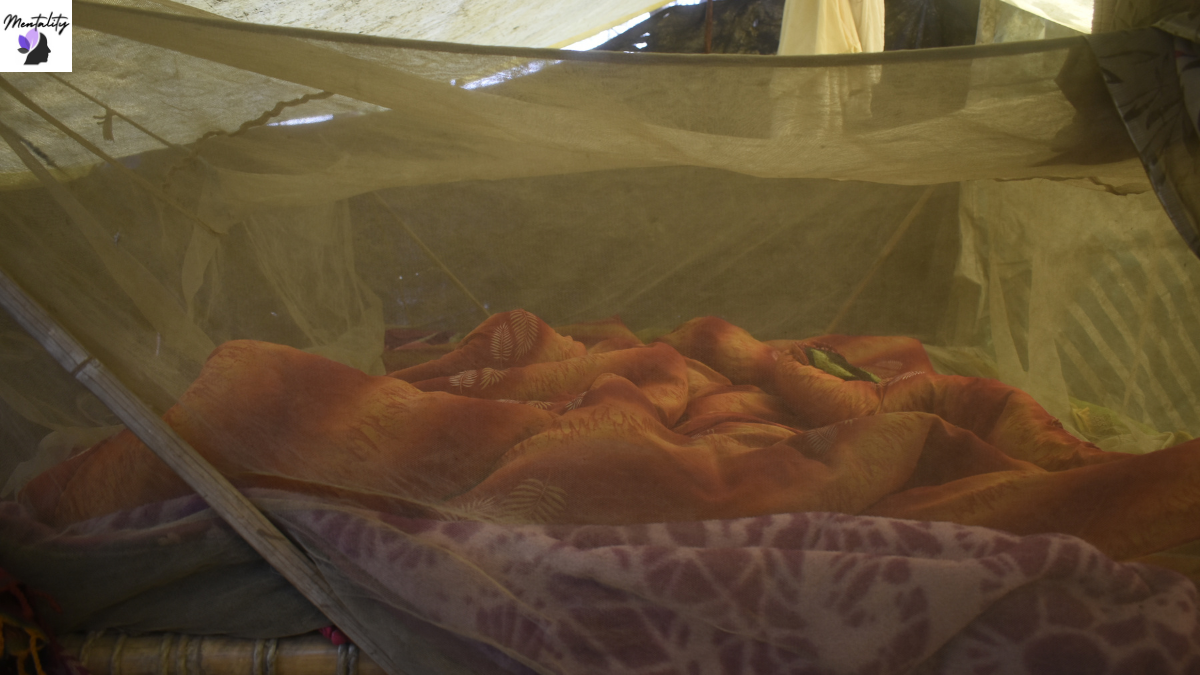
Most of these villages were built by migrants. “When I first came here from Benaras, there were no demolition drives,” said 70-year-old Vimla, who uses only one name. She has lived in Chilla Khadar, a low-lying settlement on the floodplains of Yamuna in East Delhi, since the 1980s.
Today, parts of Chilla Khandar are claimed by the Delhi Development Authority, Delhi Revenue Department, and the Uttar Pradesh Irrigation Department. The threat of demolitions continues to loom over Vimla, who has seen a fair share of demolitions in her lifetime. In 2024, her tea stall was demolished along with her house. “We are directly greeted by bulldozers,” she said, claiming that no notice is served in advance.
50-year-old Sultana makes plastic toys in her home from the material supplied by her employer. Migrating from Samastipur in Bihar, she has lived in Aali since she married a man there. But now that her home is sealed, she has lost her livelihood as well. “The bosses do not want to give me any raw material for the work since they know the situation here and are apprehensive about the security of their materials.”
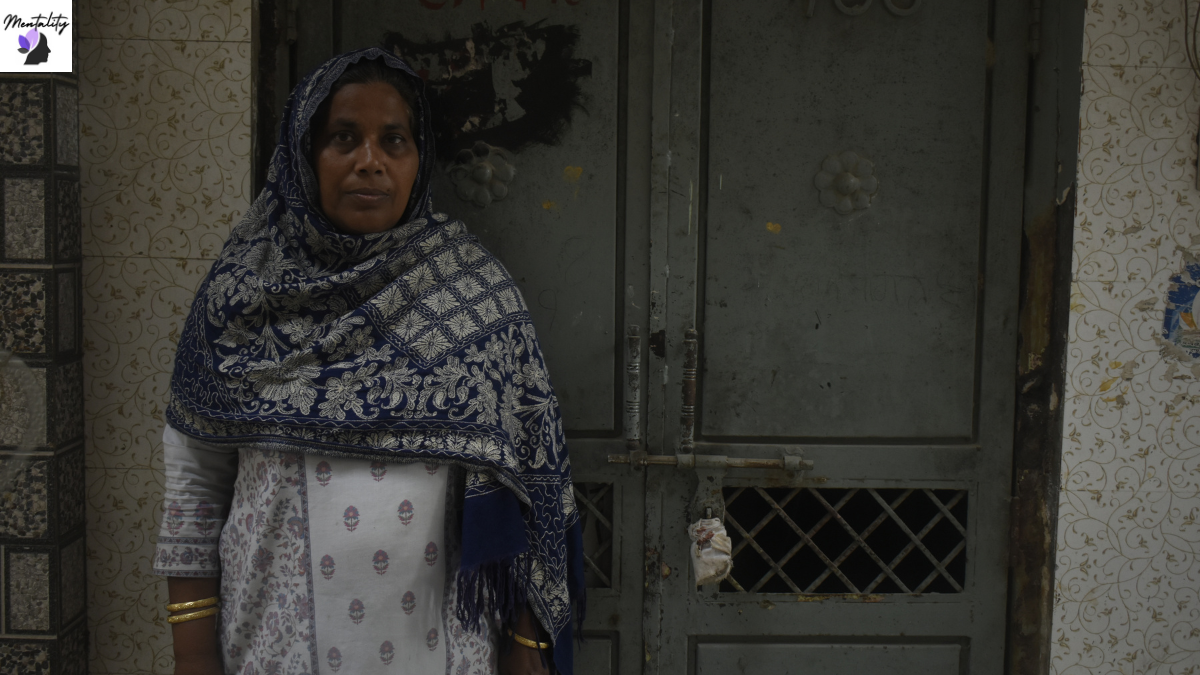
According to Dr Fayaz, women are affected a lot more with a looming threat of demolitions. “Women have more affection [for] and meaning attached to their homes,” he said.
Migration, economic insecurity, and lack of safe housing can lead to ‘complex trauma’, often referred to as C-PTSD (complex post-traumatic stress disorder) in clinical settings, he said.
“Unlike a single isolated event, this type of trauma is cumulative, repetitive, and often occurs within a context of powerlessness,” said Dr Mishra.
Complex trauma can often be more challenging due to the absence of a ‘safe zone’, she said. “In short-term trauma, you can often return to a safe environment to recover. But, with recurring demolitions, the environment itself is the stressor. You cannot heal in the same place that is making you sick,” she added.
Moreover, for most people, it is not just the loss of a house; it is the repeated loss of memories, neighbourhood networks, schools, and financial investments. “Each subsequent drive retraumatizes the individual, making the psychological wounds deeper and harder to close,” said Dr Mishra.
Children and demolitions
Women band together to go to the toilet or to take a bath, finding safety in the community. Ameer Jahan said she noticed a lot of children in Aali village falling ill as they spent their days in the open. “In kids, distress is often expressed as physical pain,” said Dr Fayaz.
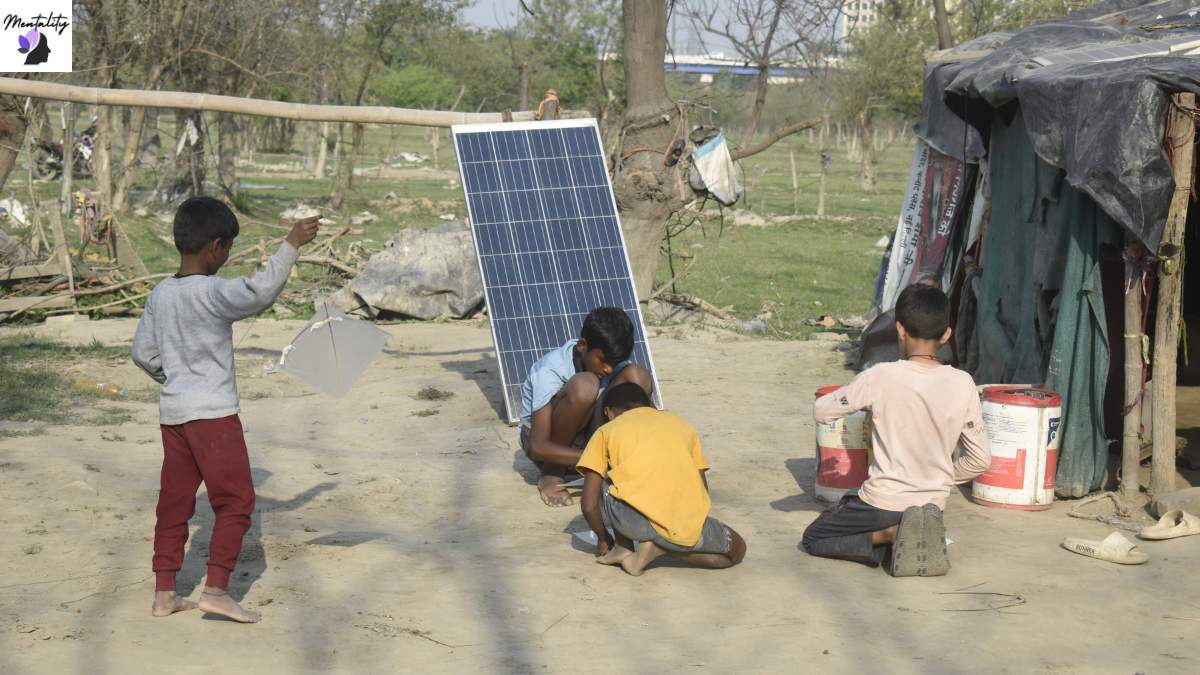
Aali is an urban village, but its residents cannot claim rehabilitation or compensation by the Delhi Urban Shelter Improvement Board because they consider rehabilitation only for those who live in the jhuggi-jhopdi (informal housing clusters or slums).
“Everything needs to be new and shiny in Delhi…new buildings, new laws, new bridges…but what about people? What about us?,” asked Nasreen.

Author: Monish Upadhyay
Monish Upadhyay is an independent journalist based in New Delhi. Interested in arts, cinema, environment and human rights, he also enjoys photography as a medium of storytelling.