
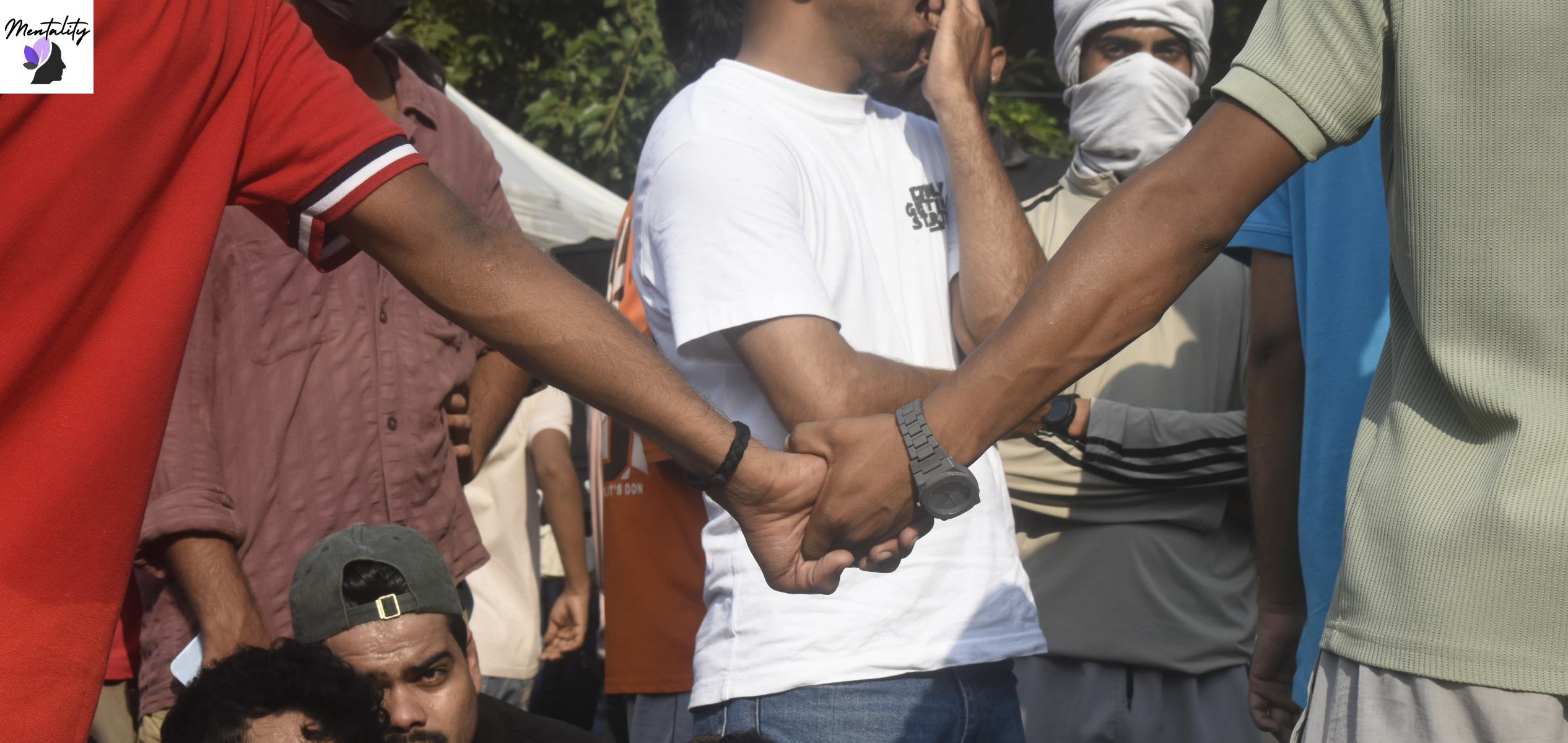
Volunteers forming human chains to better control people at the protest site (Image Credit: Monish Upadhyay)
By Monish Upadhyay
The protests were a collective psychological response to prolonged uncertainty, repeated disruptions, betrayal, loss of trust, and chronic stress among young people.
Seventeen-year-old girls, Ishrat and Musharrat, who only gave their first names, travelled from Panchgaon in Haryana to Delhi’s Jantar Mantar on 24 July 2026. “I just told my parents that I cannot take this anymore and decided to just hop on the train [to Delhi],” said Ishrat.
They were a part of millions of young people who had travelled from different parts of the country to seek accountability from the government. In Mumbai, Bangalore, Chennai and other cities, young people took to the streets in solidarity with those in Jantar Mantar.
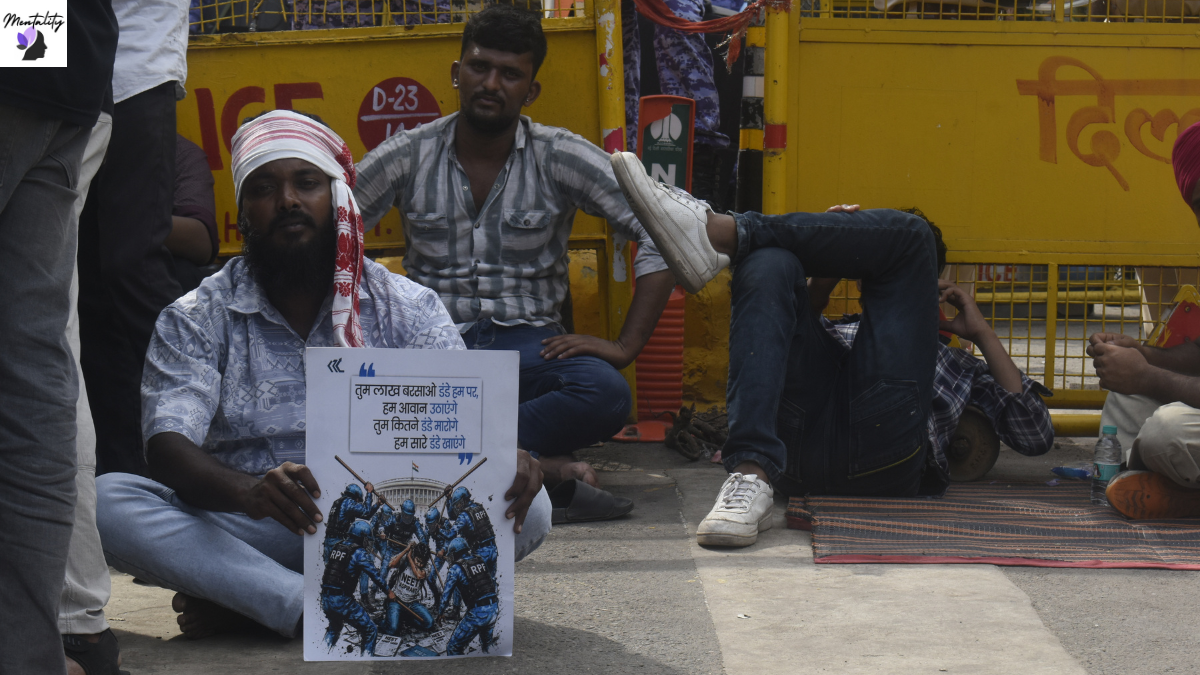
Delhi-based clinical psychologist Dr Amanpreet Kaur said the youth-led protests were not limited to anxiety around an examination. “It is a collective psychological response to prolonged uncertainty, repeated disruptions, betrayal, loss of trust, and chronic stress among young people,” she said.
In May 2026, question papers of India’s biggest medical entrance exam, NEET (National Eligibility cum Entrance Test), were leaked. The exam was cancelled, forcing nearly two million students to retake the exam. Dozens of students died by suicide, blaming the paper leak as the cause. Rajesh Gupta, from Begusarai, Bihar was at the protest after his brother who was studying to become a doctor killed himself when the question paper was leaked. “I am here to ensure others don’t go through something similar,” he said.
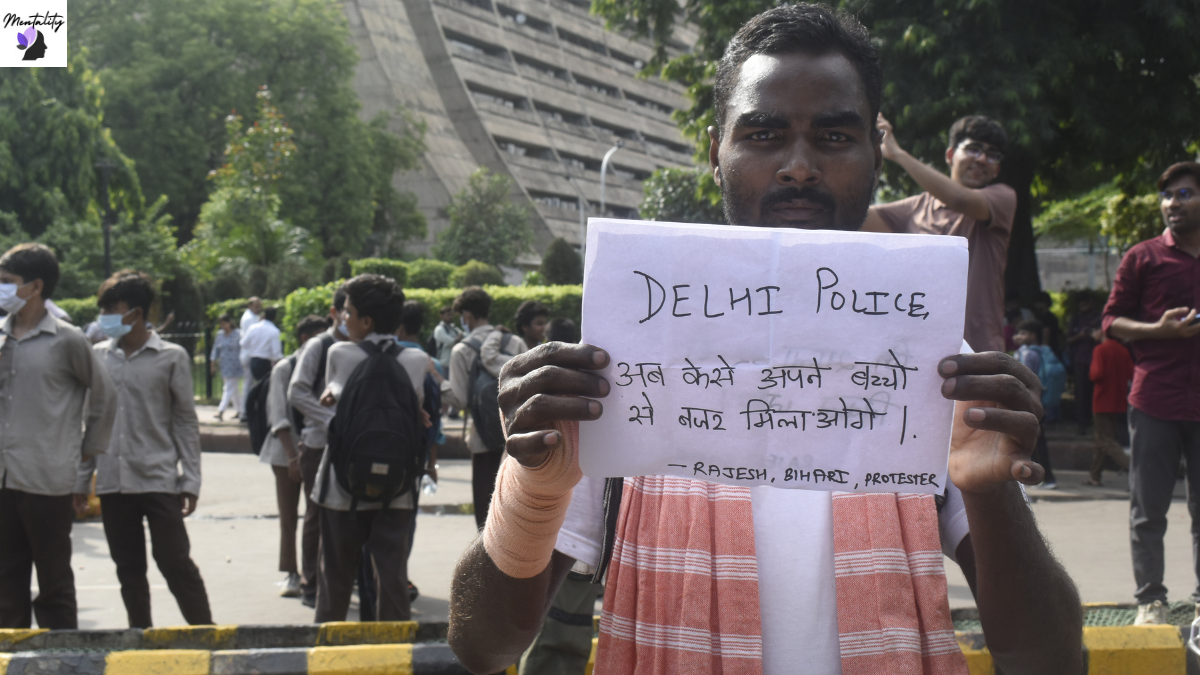
Rajesh, who lost his younger brother to a Bihar Police paper leak, travelled all the way from Begusarai to be a part of the protests (Image Credit: Monish Upadhyay)
Paper leaks have become an annual affair in the past few years, raising questions about the integrity of the National Testing Agency, which administers the exam.
A youth-led movement, Cockroach Janta Party, began asking for accountability from the Education Minister Dharmendra Pradhan, by seeking his resignation.
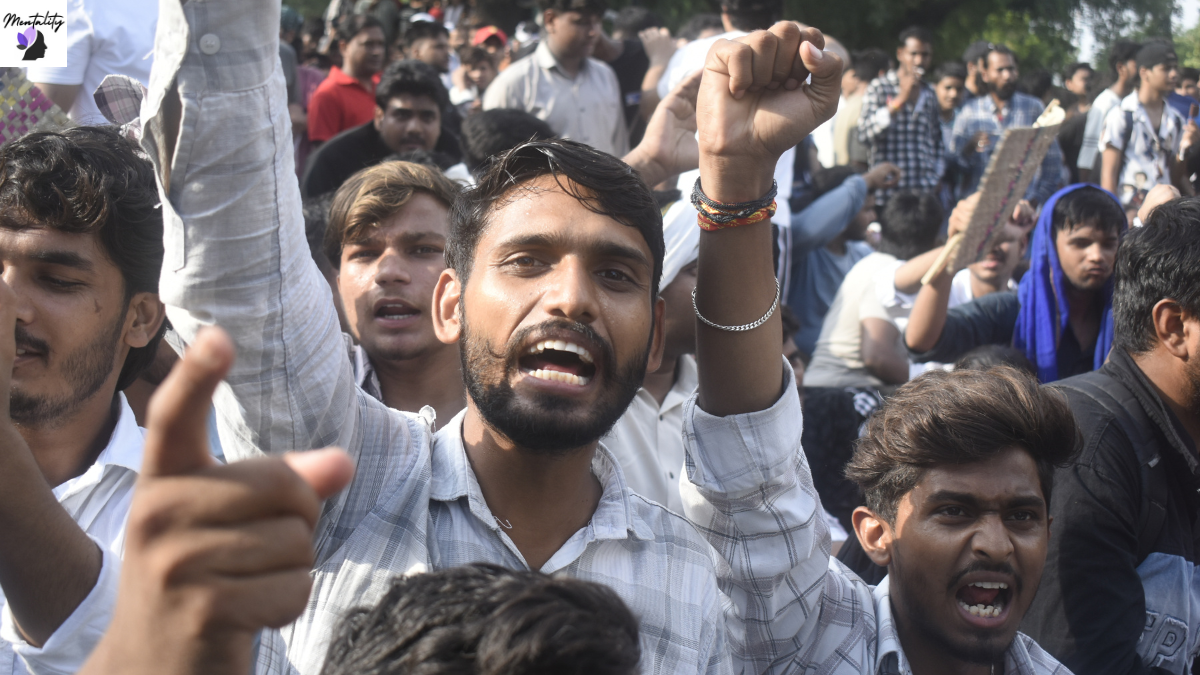
Protesters chant slogan against Education Minister Dharmendra Pradhan (Image Credit: Monish Upadhyay)
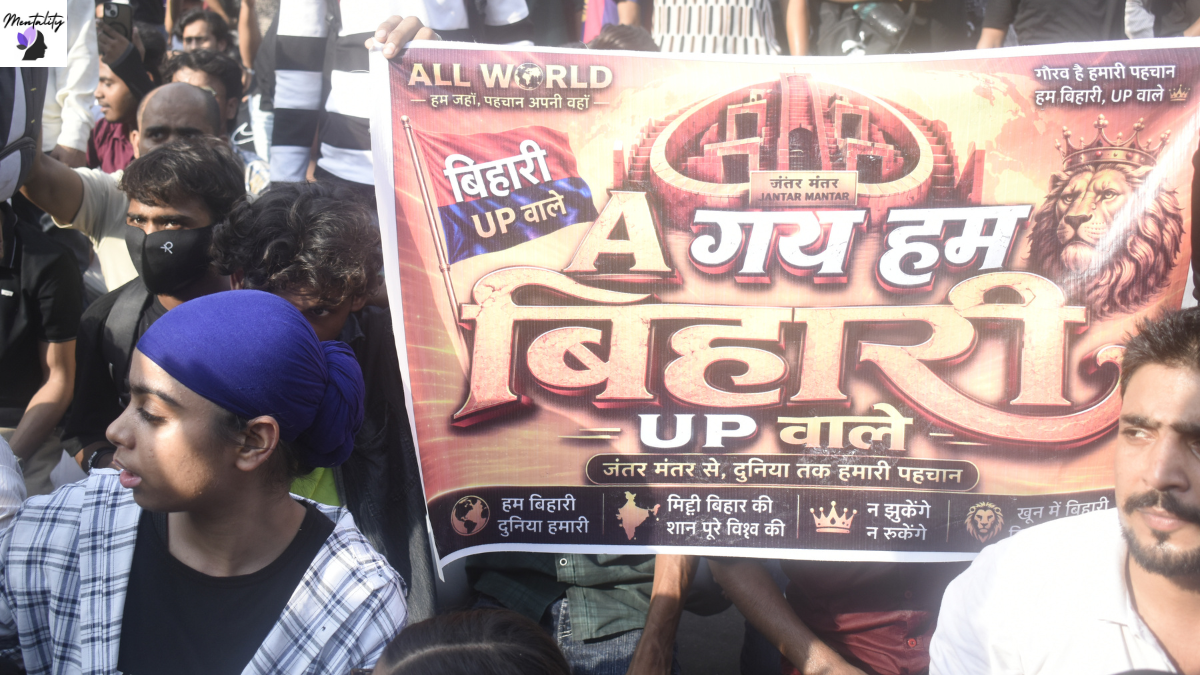
Many students also asserted their regional identity amid the protests (Image Credit: Monish Upadhyay)
Students are not merely stressed but are also grieving, said Dr Kaur. She has opened free of charge slots in her schedule for affected students and families. Many young people experience complete mental collapse, she said, since they believe that their hard work would be fairly rewarded, which did not happen in this case.
However, many young people said they felt cathartic at the protest site, almost as if their deepest thoughts were being collectively voiced. “The solidarity and the love being shown here has helped uplift my spirits,” said Bhumika, a 26-year-old IT professional who wanted to use only one name.
Battle on despite victory
On 20 July 2026, a few weeks after students began gathering at Jantar Mantar and some of them were sitting on hunger strike, many tried to march towards India’s Parliament, which was in session. The administration responded by closing metro stations, cutting off the internet, and unleashing plainclothesmen on the protestors.
The Delhi Police then used tear gas and beat the protestors with batons. Social media videos of the violence went viral. This only seemed to enthuse more and more young people to join the demonstration. “I came here after watching those reels…I was so sad and depressed about what happened,” said Ishrat. Musharrat said she was left shaken after watching the treatment meted out to the demonstrators. “We will fight for our cause since we are no longer isolated,” she said.
Many expressed guilt for not being able to participate in the protests, said Sagar Menon, co-founder of Citta, a non-profit organisation focused on student mental health.
In the days that followed, Pradhan resigned, and the Cockroach Janata Party called off its five-week-long protest.
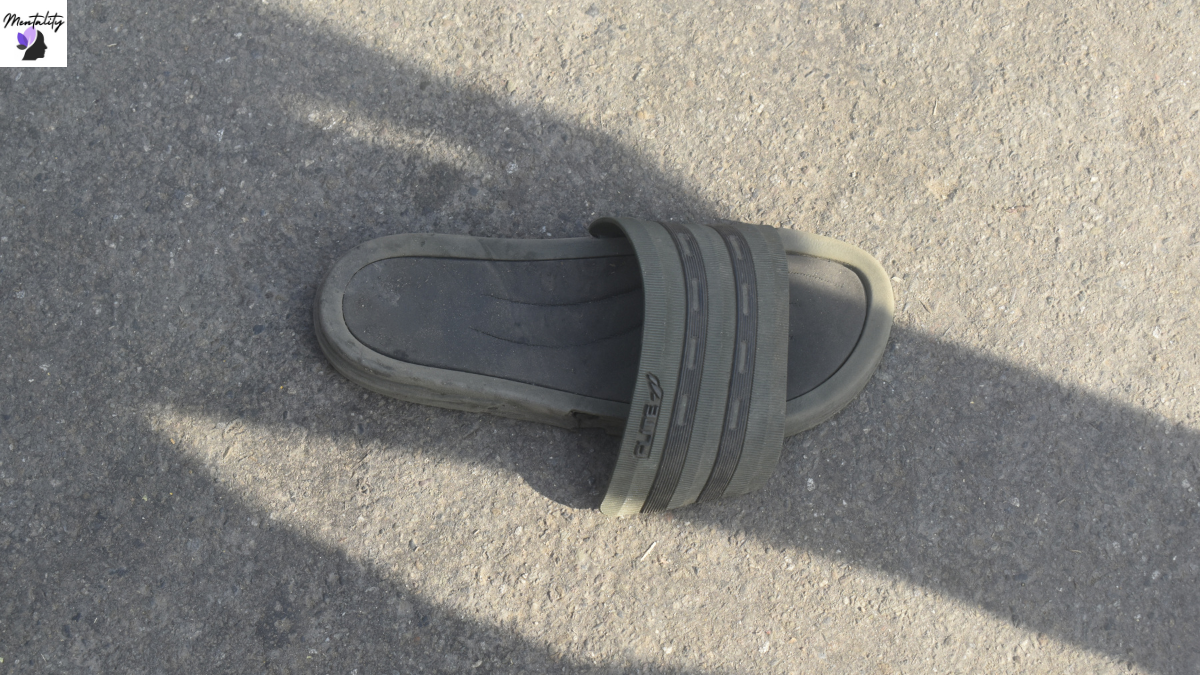
A lost slipper on the grounds of Jantar Mantar (Image Credit: Monish Upadhyay)
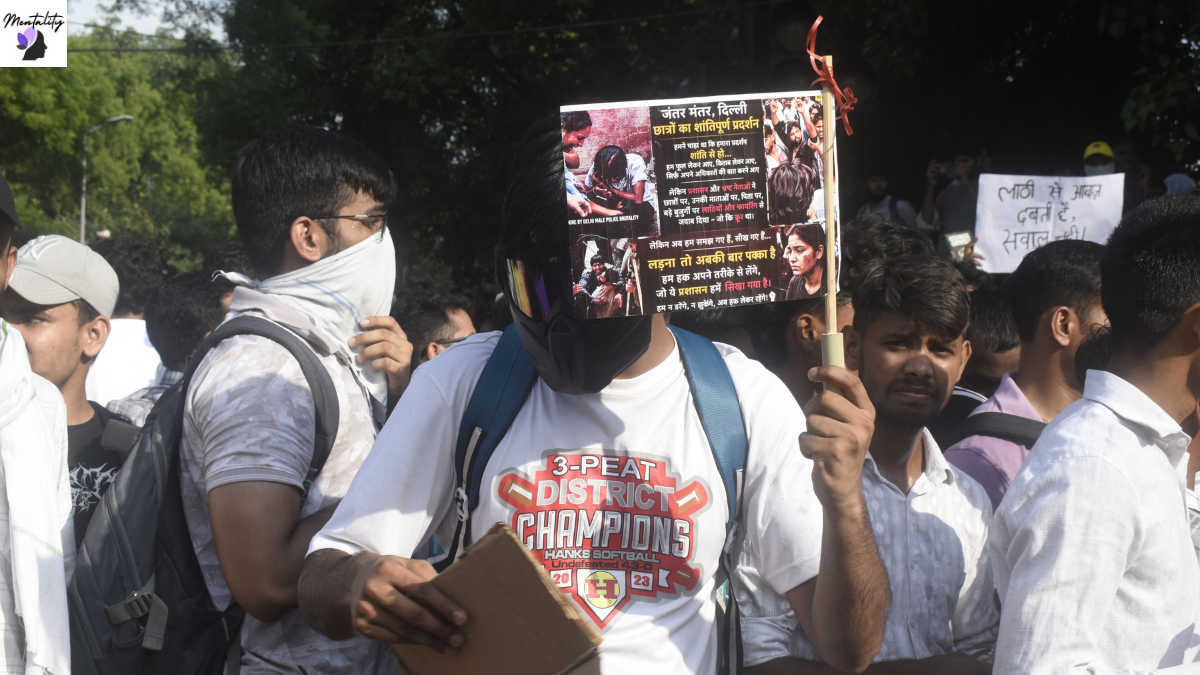
Many protesters wore masks and goggles as authorities earlier used tear shelling on students (Image Credit: Monish Upadhyay)
But the violence might leave students scarred for a long time, said Dr Neetu Rana, a Delhi-based clinical psychologist. “There is a very real chance that the children may live in constant fear and many might experience hyper arousal, wherein the victim’s mind and body is on constant alert mode,” she said. Such trauma can manifest in forms of flashbacks and nightmares, she added.
Many protestors also fear increased surveillance and wore masks as they were afraid of being identified and targeted by the authorities. On 29 July 2026, Cockroach Janta Party spokesperson, Saurav Das, said that the government had not given any assurance that the FIRs against the students would be withdrawn as was promised before the protests were called off.
A few states, Bihar, Assam, West Bengal and Maharashtra said they would initiate the withdrawal of cases and release those who had been detained.
The young lose trust in the system with repeated betrayals, say psychologists. The impact of this can be felt in institution building for the future.
“As you can see, people become mental slaves if they live long enough under an authoritarian government,” said Umang Choubey, a 22-year-old business student from Madhya Pradesh’s Rewa. It gradually destroys people’s sensitivity and motivation to have better conditions for living, he added.
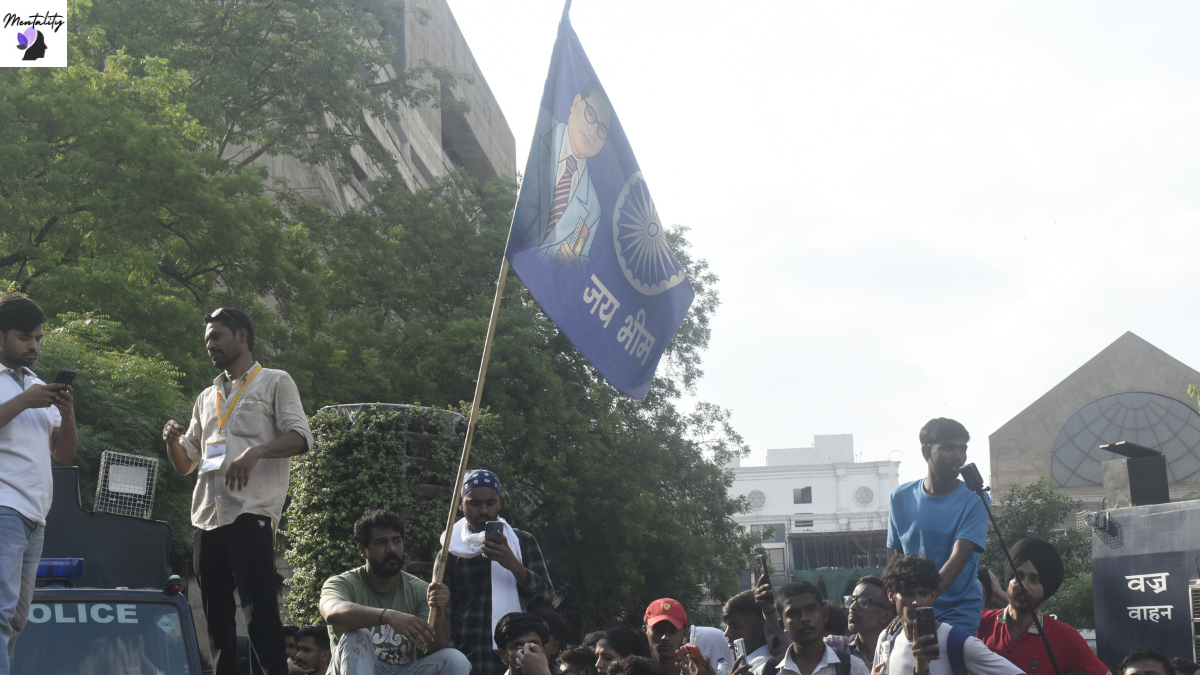
A protester waving a flag with the face of Dr. B.R Ambedkar on it (Image Credit: Monish Upadhyay)
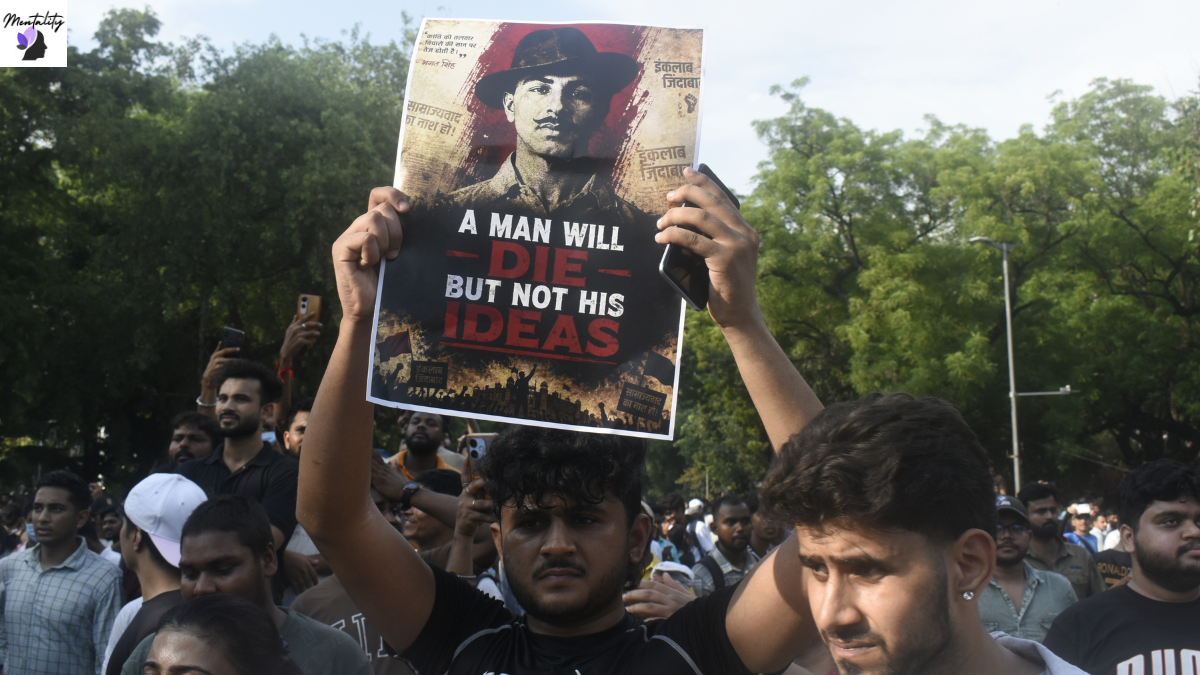
A protester carrying a poster of Bhagat Singh (Image Credit: Monish Upadhyay)
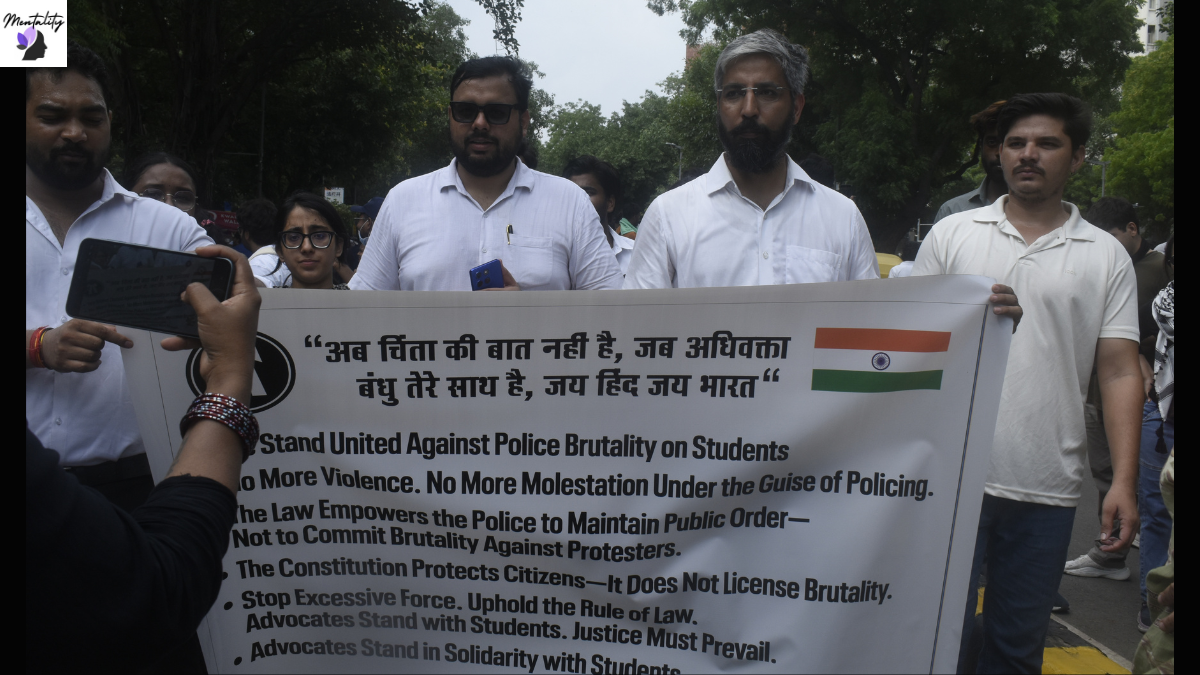
A group of lawyers make their way to the protest venue (Image Credit: Monish Upadhyay)
The older generations
Forty-year-old Manjna Soni came to Delhi, along with her husband Shafeer Ahmed from Uttar Pradesh’s Mahoba. “Initially we were coming to the protests alone; however, today, we decided to bring our son here as well”, she said. Her 11-year-old son, Ahil, stood watching as small clashes broke out between police personnel and protesters. “All our fears…about where our nation is heading, about the future of our son come crashing down on us,” she said.
Citta began online support groups for students, involving participants from all generations across 25 cities and towns. “We were actually going to conduct this only for students and relatively younger folks, but surprisingly millennials and boomers also participated,” said Menon.
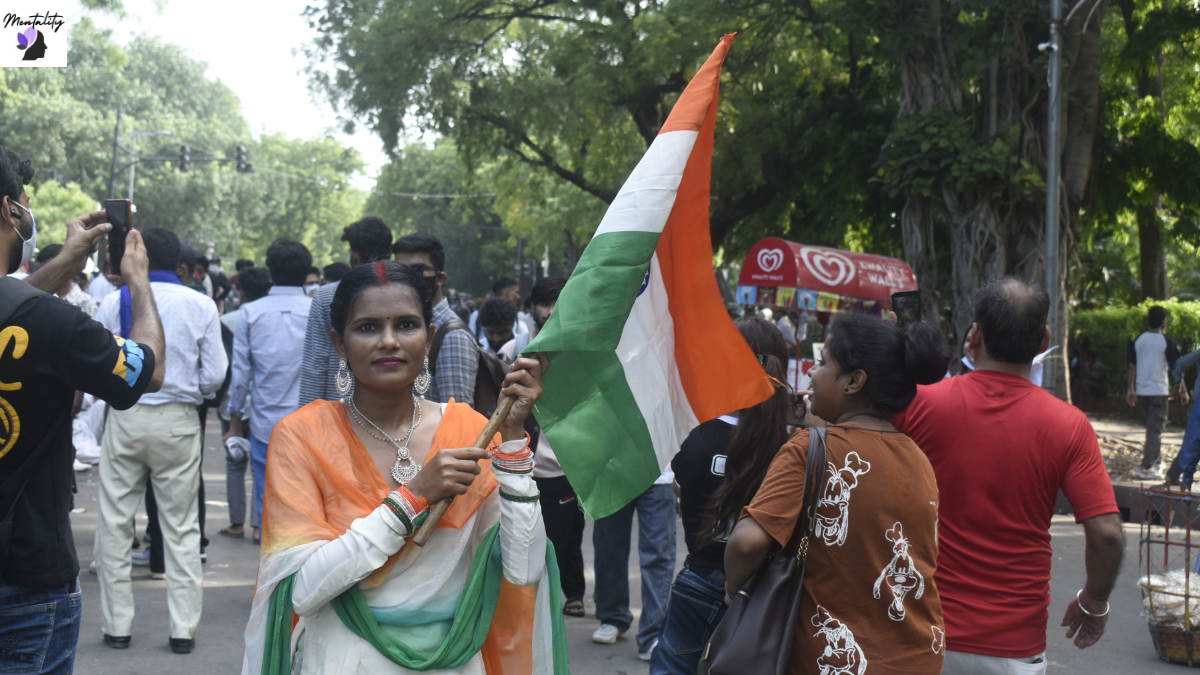
A protester carries the Indian national flag, a major visual element of the demonstration (Image Credit: Monish Upadhyay)
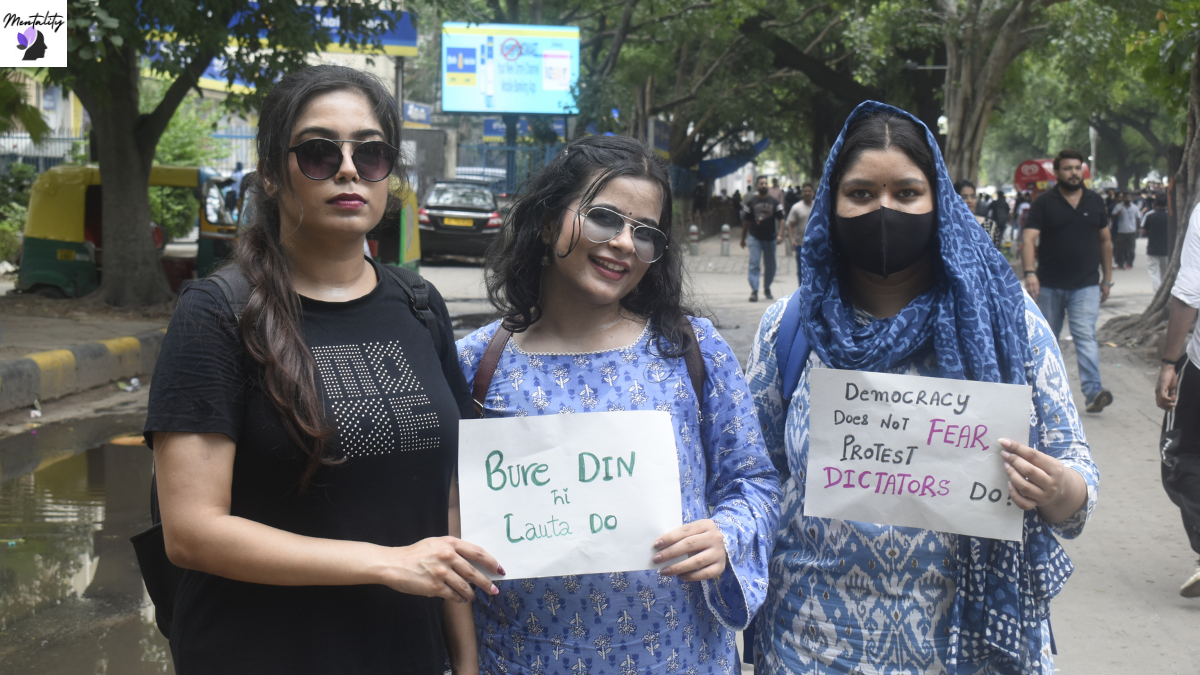
Protesters carrying placards at Jantar Mantar (Image Credit: Monish Upadhyay)
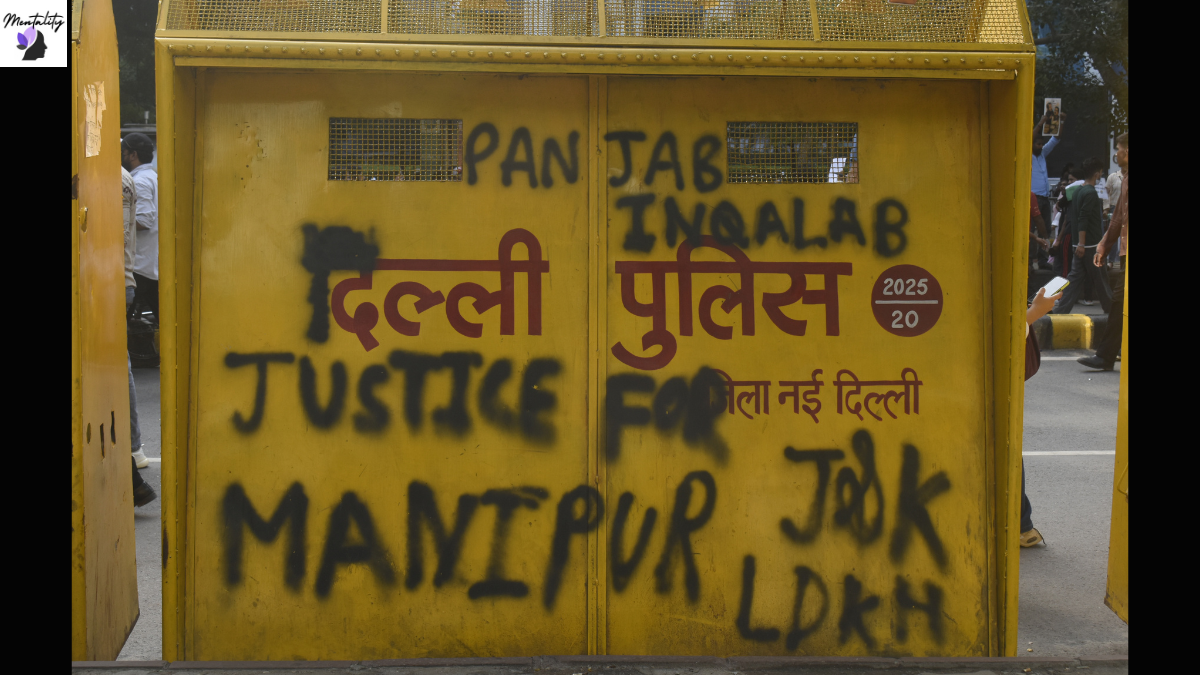
Political graffiti painted on the barricades which had been placed for crowd control (Image Credit: Monish Upadhyay)
“Is this the country we are leaving our children in?” was the common sentiment among older folks, said Menon. “We have had people in their 30s say how impressive the younger generation is and how they could never dissent in the same way.”
Even after the protests have been called off, Dr. Rana said the protesting students might take some time to transition to their normal routines. “Usually it might take some hours, days, or even weeks to find that old rhythm again.”
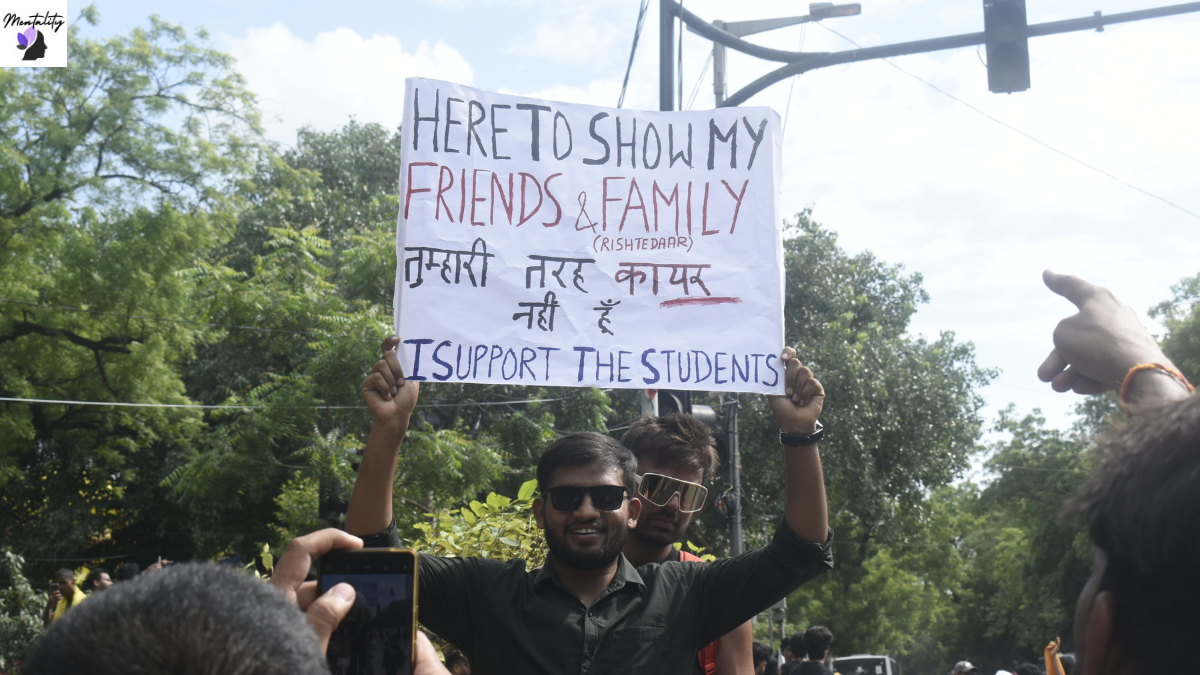
One of the many protesters who complained of disagreements with their families as they decided to be a part of the demonstration (Image Credit: Monish Upadhyay)
Students like Mushrrat have gone back to their towns. However, the question she asked points at a less spoken about mental stressor. “How long are we supposed to be the victims of injustice?”

Author: Monish Upadhyay
Monish Upadhyay is an independent journalist based in New Delhi. Interested in arts, cinema, environment and human rights, he also enjoys photography as a medium of storytelling.