
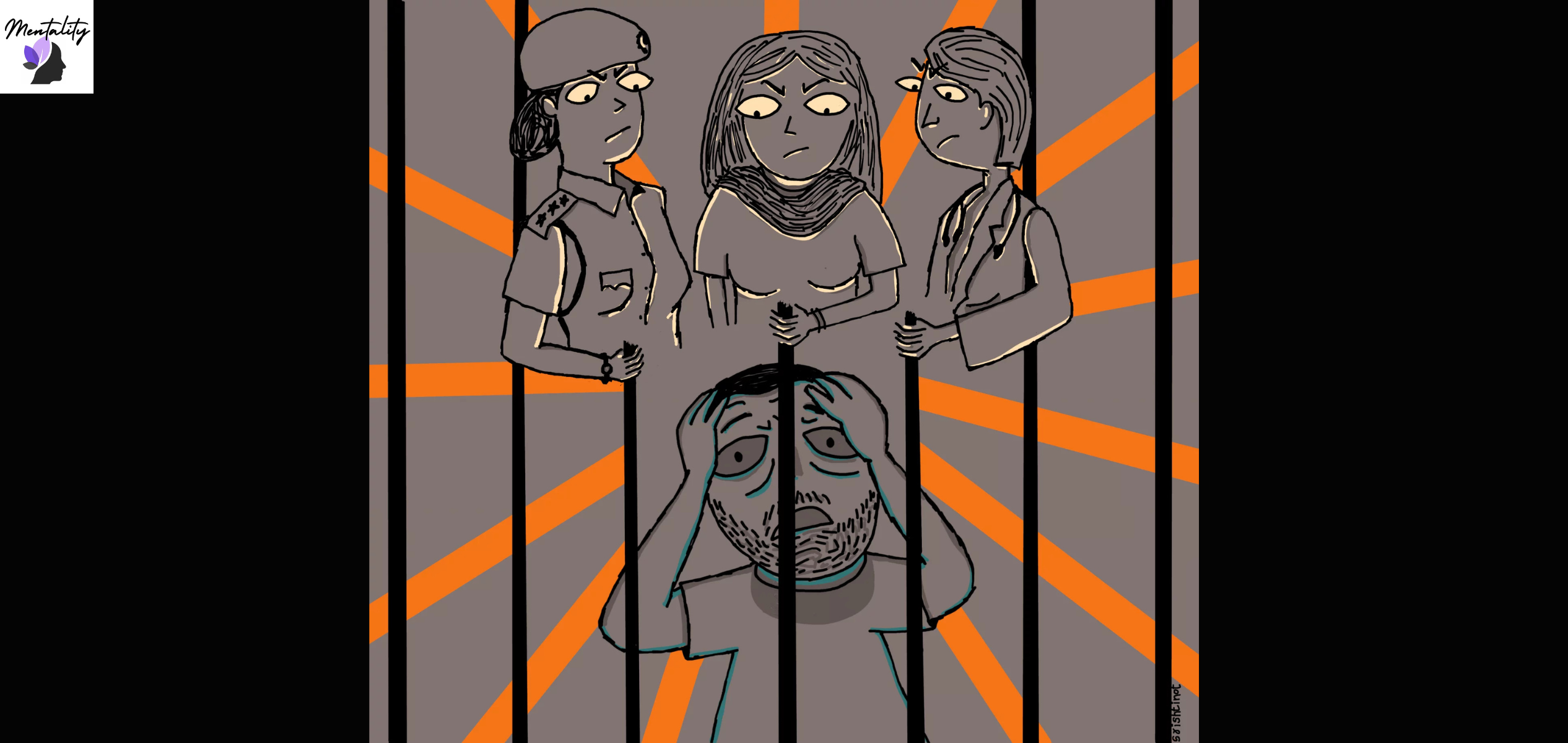
Perpetrator in Jail (Image Credit: Srishti Sharma/Feminism in India)
By Jigyasa Mishra
When victims see their perpetrators moving freely, even years after the incident, the victims often experience panic attacks, intrusive memories, breathlessness, and trembling. .
Content warning: This story contains content about sexual violence.
23 December 2025 was a regular nippy day for Riya who was going about cooking food, until a journalist messaged her some disturbing news. A few minutes earlier, the Delhi High Court had suspended the life sentence of former BJP legislator Kuldeep Singh Sengar, who was convicted of raping Riya in June 2017. “My life is very much in danger even today,” she said and added that she didn’t want to reveal her real name.
Riya was raped in Unnao district, which shares a border with Uttar Pradesh’s capital city, Lucknow.
Although the court had directed Sengar to not be found within a five kilometre radius of Riya’s house and to refrain from contacting or intimidating her, she said that his associates and collaborators were everywhere. “I fear his men would kill me by driving over me or shooting me,” she said. “I keep a watch all the time.”
When a victim realises that her perpetrator is not behind bars, her body goes into a state of hyper vigilance, said Delhi-based trauma-focused therapist Prabhjyot Kaur. “The nervous system of the victim is not in a state of calm, so they do not eat well, sleep well; their capacity to engage socially pauses, and they prefer isolation,” she said.
That has certainly been true for Riya. “I don’t go out much anymore,” she said.
But after she heard the news of Sengar’s suspended jail sentence, Riya, her mother and some supporters went to protest at India Gate. However, the police forcefully sent them away. This, Riya said, was a double blow to her. “I wanted to kill myself,” she told the media, a day after the event.
Blatant injustice often leads to tendencies of self-harm, said Apoorva Srivastav, a Lucknow-based lawyer, who has represented many rape victims in her career.
Ever since she protested with Riya, Yogita Bhayana, social activist and founder of People Against Rape in India, said she has been receiving hundreds phone calls from sexual assault victims per day. Imagine the number of pending cases and the ones who seek justice everyday, said Bhayana.
On average, in 2018, one woman reported a rape every 15 minutes across the country, but conviction rates were just 27%. Women who have fought battles to secure a conviction are destroyed again when there are paroles or suspensions of their perpetrators’ sentences.
Loss of bodily agency
In 2017, Riya was 17-years-old when Sengar raped her. For an entire year, she repeatedly approached the police to get a case filed against Sengar, who was then an influential politician in Unnao. Only after she tried to light herself on fire in front of the chief minister’s house did the police eventually file a case against him.
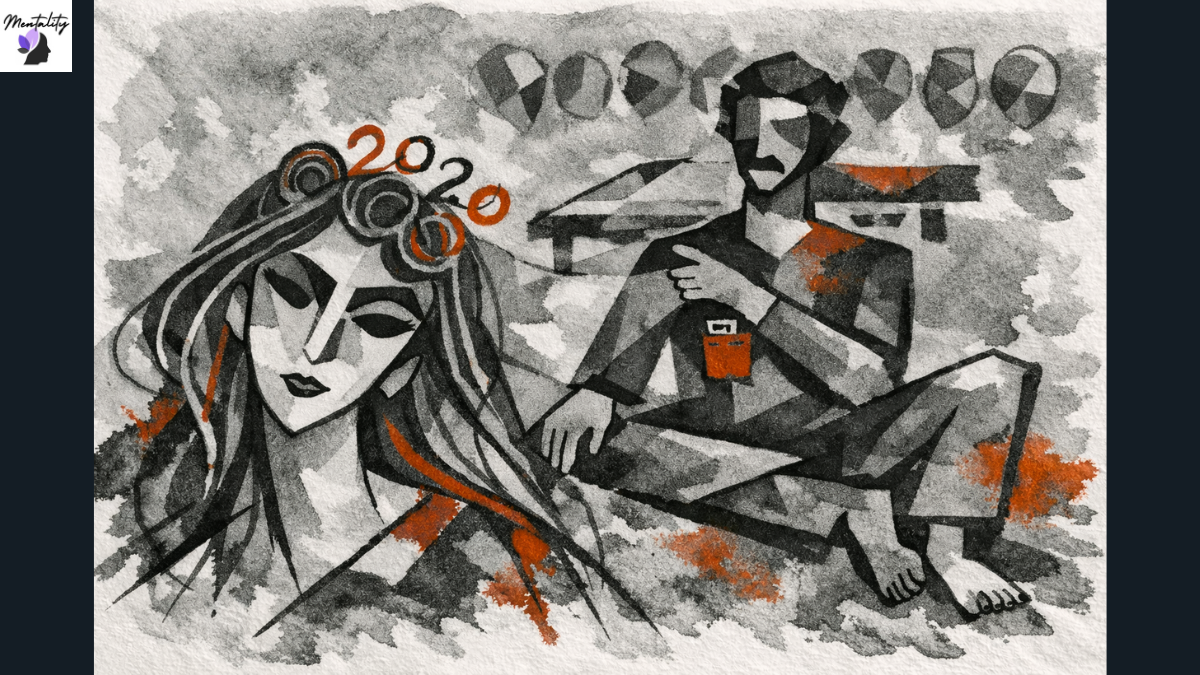
In 2018, Riya’s family had accused Sengar and his men of assaulting her father. When the men were charged, they also arrested her father for illegal firearms possession. He later died in prison.
“Trauma at a young age can shape a person’s mental health, relationships, and sense of self well into adulthood,” said Pawan Kumar Gupta, a professor in the Department of Psychiatry at King George’s Medical College, Lucknow.
Like Riya, another minor in Uttar Pradesh faced a traumatic incident early in life. She chose to call herself Yamini and not reveal her real name.
Extended periods of trauma
In 2010, 12-year-old Yamini was abducted outside her house in Lucknow, raped, and kept in captivity for an entire decade. A relative recognised her by chance and ensured the police rescued her in December 2020. “Our daughter does not live a normal life anymore,” said her father, referring to the fact that she shivers when a dog in the neighbourhood barks loudly and holds the chair she sits on tightly.
“Any sexual assault in childhood can have serious implications later in life, leading to multiple psychiatric conditions, sleep disturbances, persistent fear, and suspicion, especially around men,” said Rajesh Sagar, a professor in the Department of Psychiatry at All India Institute of Medical Sciences (AIIMS), Delhi.
It is hard to say if Yamini has seen her perpetrator face to face after she was rescued because details about her stay in a house in Lucknow are hazy. “Perpetrators moving freely often triggers panic attacks, intrusive memories, breathlessness, and trembling,” said Kaur.
She has lived with her parents since, and has been diagnosed with acute depression and obsessive compulsive disorder.
Childhood sexual abuse often leaves lifelong effects because it occurs at a stage when trust, safety, and identity are still developing, said Gupta. “In fact, when adults come to us with mental health issues, psychiatrists often explore their childhood experiences because early trauma can shape mental health outcomes many years later,” Sagar of AIIMS added.
That has been the case with Jamuna, a woman who was raped by Gurmeet Ram Rahim Singh, the head of Dera Sacha Sauda, a Sirsa-headquartered social group.
Singh was convicted for the rape of two of his followers in 2017 and is currently serving a 20-year sentence. This year, in January 2026, he was out for the 15th time on parole. “Every single time, the moment she hears he is out, she locks herself inside the house,” said a cousin of Jamuna.
Jamuna is the name the victim chose for herself, so that her real identity is not revealed.
Repeatedly seeing the name or face of the perpetrator in public spaces or on television can intensify feelings of helplessness and worthlessness, sometimes leading to severe depression, said Gupta.
“Even a knock on the door makes her jump and hide in the corner,” said the cousin, who also requested anonymity as they fear retaliation from the followers of Singh.
Singh was earlier convicted of two murders but was later acquitted in both.
Violence perpetuates
Jamuna’s cousin said that threats from followers of Singh began soon after the allegations were first made in the early 2000s and have continued over the years. The repeated paroles undo whatever fragile sense of safety the survivor tries to rebuild, they said. “She is trying to live a normal life, but every parole granted to this rapist pushes her back into the same terror she has been trying to overcome for years now.”
Some survivors develop diagnosable psychiatric illnesses, while others may not meet clinical criteria but continue to live with deep psychological distress, said Sagar from AIIMS.
Riya appealed the Delhi High Court’s sentence in the Supreme Court. And six days later, the highest court ruled in her favour. “My life changed a lot on the day I decided to speak up against injustice, more than on the day it changed when I was raped,” she said.

Author: Jigyasa Mishra
Jigyasa Mishra is an independent journalist and visual artist who reports on gender, health, culture, and human rights from across India.