
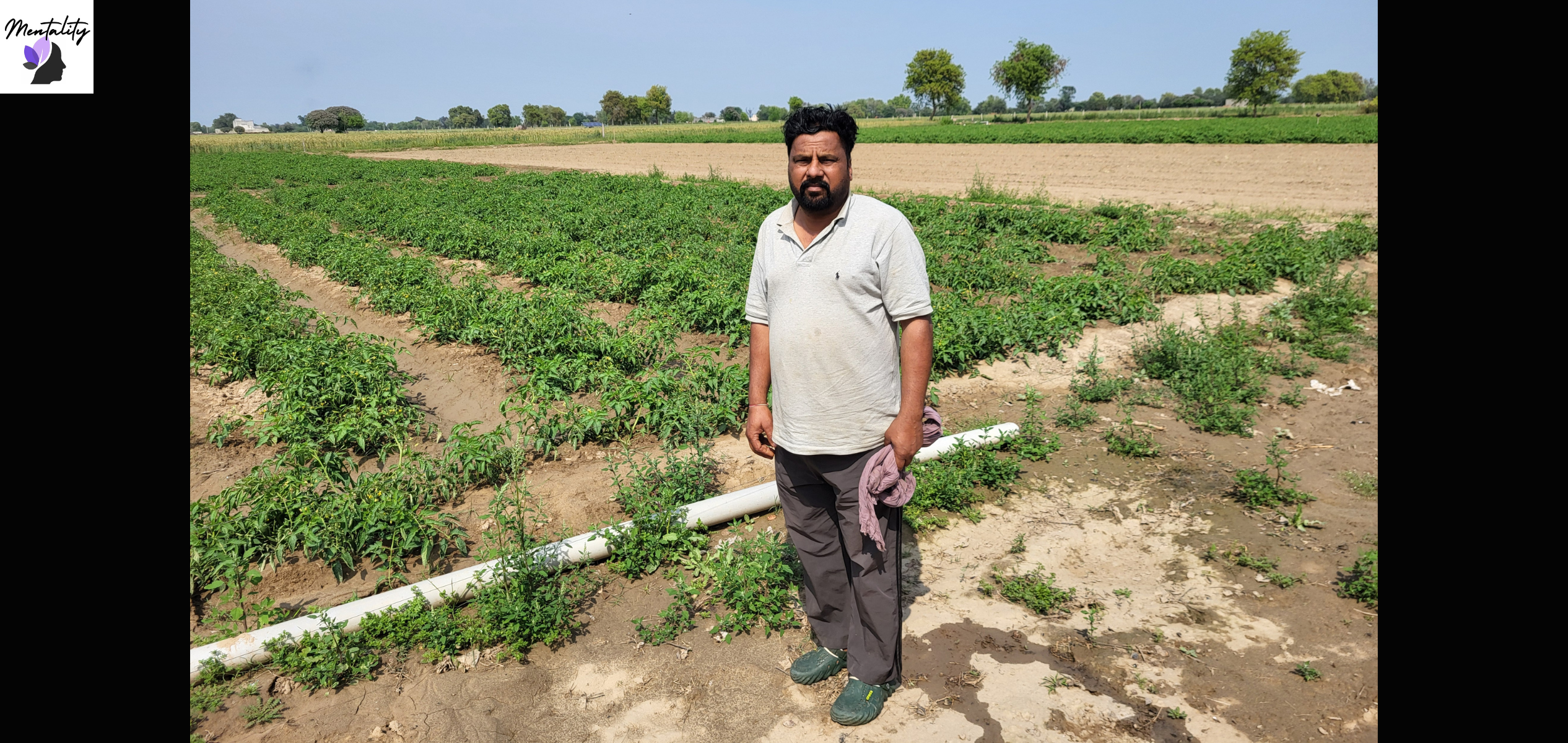
Randhir Singh, Village Sangaria (Image Credit: Amarpal Singh Verma)
By Amarpal Singh Verma
In the past decade, many farmers of Hanumangarh—an otherwise arid region—have moved to vegetable cultivation. Since then, they have had to deal with lesser uncertainty and stress.
The secret to 50-year-old farmer Randhir Singh’s mental well-being lies in vegetables like round guards, cucumbers, tomatoes, and capsicums. Seven years ago, Singh gave up growing cotton, mustard, and wheat on his land in Sangaria in Hanumangarh district of northern Rajasthan.
Traditionally, cotton and mustard were meant for sale and profit rather than for the farmer’s own subsistence or consumption. Wheat, a staple in these parts, is also usually sold for profit. But rejecting such cash crops has become a trend in Sangaria, where farmers said that the uncertainty of extreme heat and erratic rainfall resulted in debt accumulation and posed great mental health challenges for them. “With traditional crops, we had to wait six months to see any money,” said Singh, which increased stress and anxiety. Now, by selling vegetables in the wholesale market, he said he earns between ₹5,000 to ₹10,000 a day. “On some days, I’ve even sold produce worth ₹50,000,” he added.
Many farmers become anxious and withdrawn due to the uncertainty of changing climate patterns, said Roop Sidana, a Sri Ganganagar-based senior psychiatrist. “If these go unattended, it can lead to depression,” he added.
Although eco-anxiety—the fear or worry caused by climate change—is a growing mental health concern across India, farmers of Hanumangarh and Sri Ganganagar districts are uniquely placed to move out of the cycle of stress that climate uncertainty brings.
Irrigated land
Hanumangarh district was created in 1994 by dividing Sri Ganganagar district, and it is irrigated by the Indira Gandhi Canal, Bhakra, and Siddhmukh irrigation projects.
Sri Ganganagar district, often known as the “food basket of Rajasthan,” is irrigated by the Gang Canal, where water from the Sutlej River is diverted to feed this arid region which borders the Thar Desert.
Excellent colonial era irrigation facilities enable farmers of this region to grow vegetables even with unseasonal weather conditions. “Due to continuous losses and pest attacks, I almost gave up mustard cultivation,” said 60-year-old farmer Hansraj Bishnoi in Malarampura village near the Rajasthan-Punjab border. About seven years ago, he started growing radish seeds as an experiment. “When I saw good returns, I expanded,” he said.
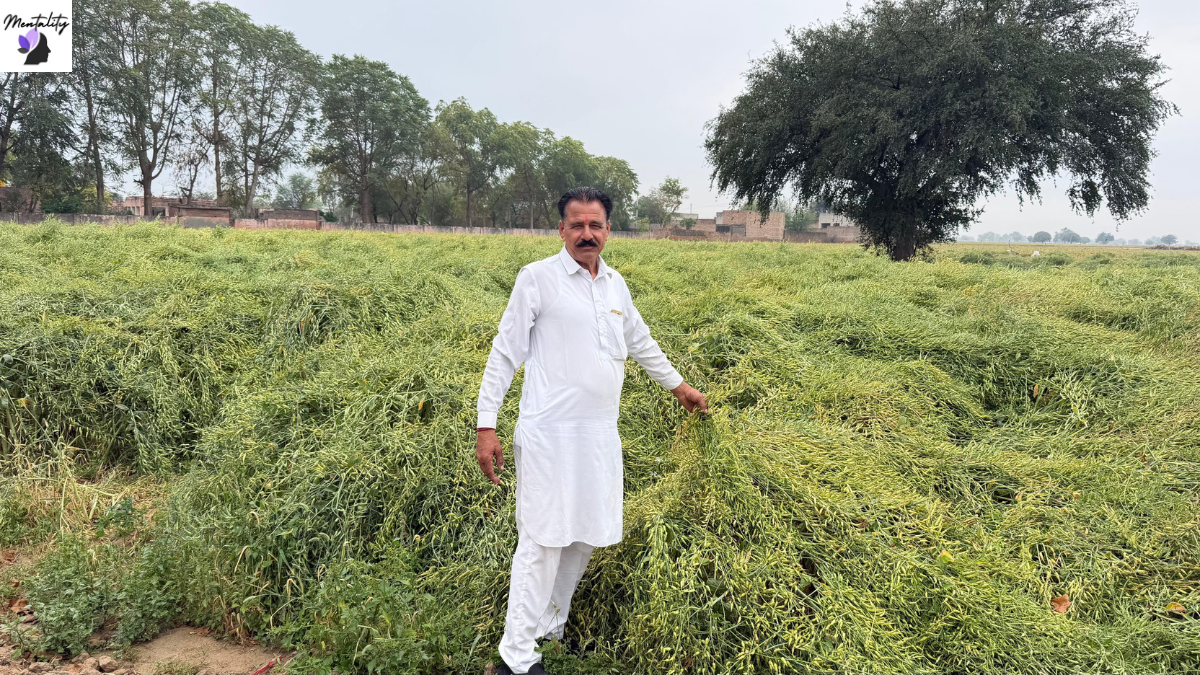
Today, Hansraj Bishnoi uses half of his 25 bighas (about 15.62 acres) to produce radish seeds. “On average, I get about 3.5 to 5 quintals per bigha,” he said. Private companies pay ₹10,000 per quintal, he added; therefore, he can earn up to Rs 12,50,000 during a good season.
Moreover, according to the agriculture census 2024, land holdings in this region are smaller than the national average. For small farmers, scaling up production is less of a concern, therefore vegetable farming is well suited.
Repeated losses
Sandeep Bishnoi, 40, said the recent past has been very tough for his produce in Bhagatpura village. “Pink bollworm infestations and unseasonal rains ruined our cotton crop repeatedly,” he said. “Costs kept rising…seeds, fertilizers, pesticides, tractor expenses…even without counting our labour, we were spending nearly ₹50,000 per bigha, and still not earning enough.”
Most farmers go into a cycle of depression when they do not change course, said Dr. Manish Baghla, a psychology professor at Sri Ganganagar’s Tantia University. “The root problem is repeated losses,” he said. “Once losses reduce or stop, the mental stress also begins to ease.”
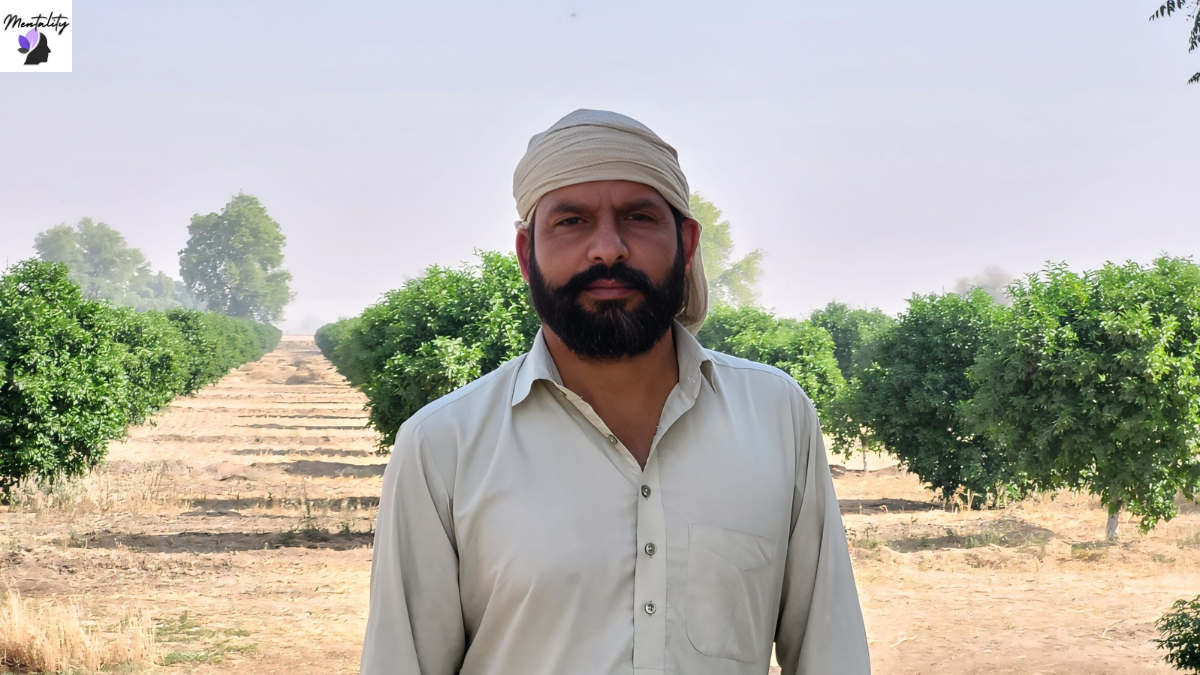
Sandeep Bishnoi had to find alternatives. About four years ago, he planted Kinnow, a citrus fruit cultivated in these regions. Since then, he said, there has been no looking back. In the first year, Sandeep Bishnoi said he earned nearly Rs 2.75 lakh. “Even if the weather affects it slightly, it still performs much better than traditional crops.”
Debt burden for farmers
Mentality has reported on the plight of the farmers in Marathwada as the traditionally drought-prone area saw erratic floods in September 2025. Repeated crop failures pushed farmers in the region to suicides. However, vegetable farming has saved farmers in north Rajasthan from the same plight.
Singh said he has not taken a loan since he began vegetable farming seven years ago. Before that, he had a loan of 2 lakh rupees every year, which he managed to repay.
In 2024, Sandeep Bishnoi borrowed 1.3 lakh rupees under the Kisan Credit Card scheme, in addition to borrowing 1.5 lakh rupees from local loan agents.
Thanks to his Kinnow crop, he has repaid 1 lakh rupees of that debt, he said. This year, he has not had to take out any loans at all.
Hansraj Bishnoi has also not taken any loans in the seven years that he has been growing vegetables, he said.
Challenges of Vegetable farming
Singh sells vegetables at the Ratanpura vegetable market, which is about eight kilometers away from his farm. But he has to get to the market on time as there are no cold storage facilities available in the village. This could be a major challenge for the farmers as they scale up production.
In the seven years that Singh has grown vegetables, his crops have suffered damage due to heavy rains on two or three occasions. “But never a complete loss,” he said. However, last year, the extreme heat damaged his newly germinated carrot crop, forcing him to sow the crop again.
Cultivating and maintaining vegetables requires skilled labourers who are not readily available in the region. Singh hires experienced labour from Uttar Pradesh and Bihar.
Despite the challenges Singh prefers to continue growing vegetables. “This year I sowed wheat on seven bighas, but due to unusually high temperatures in February, the yield dropped,” he said.

Author: Amarpal Singh Verma
Amarpal Singh Verma is a Rajasthan-based independent journalist. He has worked with Rajasthan Patrika for nearly 24 years. He writes on politics, mental health, environment, and agriculture. He received The Statesman Award for Rural Reporting, Sarojini Naidu prize and Udayan Smriti Patrakarita Samman